Hop rotary
epivyziva.cz/
Zobrazeno: 740
Hops are mainly known as a raw material for the production of beer and as a medicinal plant they are often somewhat overlooked. But that’s a big mistake, because its positive effects on the body are very interesting: it can help us to calm down and fall asleep more easily, it can alleviate the symptoms of menopause, and it even has anti-cancer effects.
Description
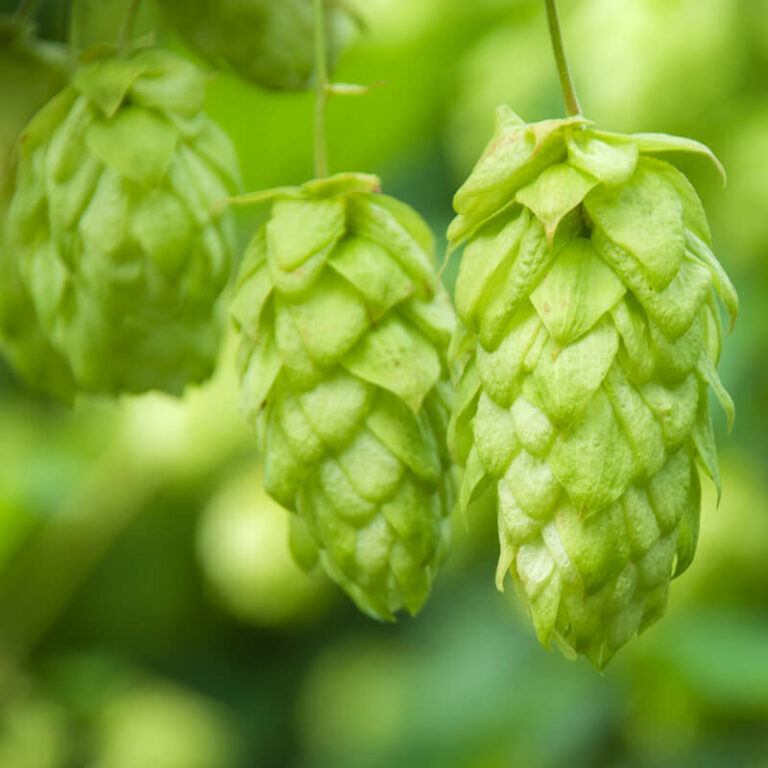
Hops is a perennial liana from the hemp family – it can grow in one place for more than 20 years. It has a thin quadrangular stalk that reaches a height of 3-5, but sometimes even 10 m, and leaves up to 20 cm wide. It is a dioecious plant – the male plants have spikes of flowers in the leaf axils, while the female inflorescences consist of short panicles that form ovoid cones with up to 2 cm scales. The wild hop is a humid-loving plant that grows mainly in alder and floodplain forests; as a cultivated plant, hops are most often grown on flat areas with slightly acidic soil. Only female plants are cultivated to avoid the formation of fruit, which are not commercially viable (1, 2).
History
Although the history of beer drinking and brewing is very long, hops have not been used in the preparation of beer for a long time. As an important raw material that not only gives the drink its flavour but also prolongs its shelf-life with its antimicrobial properties, it only appeared in the early Middle Ages – the first mention of its cultivation in Bohemia dates back to 859, and from then on it began to slowly replace the raw materials used earlier. It became widespread during the 11th century, but its medicinal effects were not yet known at that time – for example, the famous German abbess and herbalist Hildegard von Bingen (1098-1179) wrote of hops that they were of little use to man and that they ‘increased melancholy among men’ (1, 2).
The first significant references to the use of hops as a medicinal plant thus begin to appear from the 16th century onwards – for example, Paracelsus recommended it to aid digestion and Pietro Andrea Matthioli, author of the famous Herbarium, mentioned its diuretic and bilious effects. Its positive effect on calming and promoting sleep was first described in 1814, prompted by the fact that hop pickers often suffered from increased sleepiness, probably due to the transfer of resin that clung to their hands into their mouths. (2, 3)
Active ingredients
In 1813, the fine yellow resinous substance lupulin was isolated from hops for the first time. Gradually it became clear that this was not a single substance but a mixture of many compounds. The resins (humulone, lupulone and their derivative 2-methyl 3-butenol), tannins, essential oils (e.g. myrcene) and polyphenols with antioxidant properties are particularly important for their medicinal properties. Among the most important are the oligomeric proanthocyanidins, epigallocatechin, epicatechin, xanthohumol, rutin and quercetin (2, 4, 17).
Hops also contain compounds belonging to the phytoestrogens, which bind to estrogen receptors in the body and also have epigenetic effects. One of them – 8-prenylnaringenin (8-PN) – is even considered the most potent known phytoestrogen to date (8, 9).
Healing effects
Insomnia and irritation
The calming effect of hops and its ability to promote sleep is clearly the most widely used today. Interestingly, the substance responsible for this effect has not yet been identified, so it is likely to be a complex action of several components.
Previously, the soothing effect was most often attributed to a substance called 2-methyl-3-buten-2-ol, which is formed from the resins contained in the resin during storage or digestion. However, its content in hops is very low. One possible candidate is myrcene essential oil, which binds to GABA receptors in the brain, reducing excitation (irritation) of brain cells. Bitters also have a calming effect: alpha-acids have a hypnotic and sedative effect, while beta-acids have an antixiolytic effect (i.e. they reduce anxiety). These acids even have an analgesic and anticonvulsant effect. In addition, the polyphenols present affect the serotonin and melatonin receptors, which play an important role in disrupting circadian rhythms and can thus help synchronise our biological rhythms with the alternation of day and night. (3, 5-7)
Menopause, osteoporosis
Many of the polyphenols contained in hops are also phytoestrogens. One of them – 8-prenylnaringenin (8-PN) – is even considered the most potent known phytoestrogen to date. There are a number of phytoestrogens, but in choosing them it is important to know that there are two types of estrogen receptors in the human body. Type alpha is found, for example, in the endometrium (uterine lining), ovaries, bones and mammary gland, while type beta is more abundant in adipose tissue, brain, kidneys and prostate (yes, men have estrogen receptors too). And while most phytoestrogens preferentially bind to beta-type estrogen receptors, 8-PN preferentially binds to alpha type, and with very high affinity. Consequently, its effects may also be slightly different from other commonly used phytoestrogens (9).
Animal experiments have shown that hops could be very effective in relieving hot flashes, the most common negative symptom of menopause. When administered to mice with removed ovaries, they experienced a significant drop in skin temperature. Studies on human volunteers showed similarly promising results, with the use of hops extract leading to an alleviation of the most common problems associated with early menopause (as assessed by the Kupperman Index), including hot flushes. In addition, no adverse side effects were reported in any of these studies (9-12).
The ability of 8-PN to bind to estrogen receptor alpha, which is found abundantly in bone tissue, is also why hops are very effective for osteoporosis, or thinning of the bones. It is significantly more effective than other commonly used phytoestrogens in the prevention and treatment of this problem. For example, it effectively suppresses the production of osteoclasts, which are cells that break down bone mass, and promotes their cell death. (13, 14)
Cardiovascular disease
8-PN has been shown to be effective in preventing cardiovascular disease in postmenopausal women, the risk of which increases greatly after sex hormone production ceases (15).
However, it may also be effective in this regard in other populations because it can effectively reduce LDL cholesterol levels and oxidation rates (19).
Protection against free radicals
This ability of hops is mainly due to its high content of polyphenols – thanks to them, for example, its extract has a greater antioxidant potential than green tea extract. In addition, it has a strong anti-inflammatory effect (2, 17).
Tumour diseases
The extract of hops can effectively inhibit the so-called proliferation, or rapid multiplication of cells, which is typical for cancer cells. It also suppresses angioneogenesis (the growth of new blood vessels needed to supply a growing tumour) and promotes apoptosis, or programmed cell death, which is often disrupted in cancer. It has been very effective, for example, in prostate and kidney cancer, but also in hormone-dependent breast cancer, for which most phytoestrogens are otherwise inappropriate (9, 17).
Diabetes
So far, only animal experiments have shown that hops could be useful for diabetics. In diabetic mice, for example, it was able to prevent weight gain and improve insulin resistance and glucose tolerance, and in tests on human volunteers, fasting glycaemia was reduced after just four weeks of use (2, 16).
There are several mechanisms by which hops counteract diabetes, most of which are due to the polyphenols they contain. Some of them (such as quercetin) promote the production of the enzyme AMPK, which is essential for the absorption of glucose from the blood into the tissues. Catechin, epicatechin, rutin and quercetin promote the proliferation (i.e. division) of pancreatic beta-cells, where insulin is produced, and thus help to increase the production of this hormone. Other flavonoids promote the production of incretins, peptide hormones that control the production of insulin. (19)
In addition, in diabetics, it may also work to prevent cardiovascular disease, for which they are more at risk. This is because insulin is needed in the body not only to store glucose from the blood into the storage polysaccharide glycogen, but also to activate the enzyme lipoprotein lipase. If insulin is deficient, activation of this enzyme does not occur, resulting in increased levels of fats and cholesterol in the blood. (19)
Antimicrobial effect
One of the reasons hops were once used in beer production was their antimicrobial action, which extended the shelf life of the drink. But it is just as effective at killing pathogens in the human body. This is true for bacteria including, for example, Streptococcus mutans, Staphylococcus aureus or golden staph, Listeria monocytes, and even the causative agent of tuberculosis, Mycobacterium tuberculosis. In fact, statistics from England and Germany in the first half of the last century showed that the death rate from tuberculosis among brewery workers was more than 70% lower than in the general population! Hops are also effective in killing yeasts and moulds – Candida albicans, Trichophyton mentagrophytes and others – as well as some viruses (2, 17).
Obesity
Hops contain the polyphenol xanthohumol, which effectively promotes weight loss. It affects fat transport in the liver, suppresses the processes leading to the formation of mature fat cells (called preadipocyte differentiation) and promotes apoptosis (cell death) of mature fat cells. In addition, bitter acids from hops promote thermogenesis (heat production) in brown adipose tissue, thereby facilitating fat burning and increasing energy expenditure (19).
Psychological difficulties
A recent clinical study showed that hops can reduce the intensity of anxiety, depression and stress levels. (21)
Use and contraindications
In terms of effectiveness, the form of use is important. The brine form of the dried pine cones is not very suitable because the bitter substances in particular decompose rapidly – after 9 months of storage, usually only about 15 % of their original content is preserved. Alpha and beta acids are also subject to rapid decomposition. More suitable are extracts, for example, which are now also predominantly used as a raw material in beer production. (2)
Dosage and time of use
Hops, either alone or in combination, should be taken about an hour before going to sleep. The safety of use has been confirmed at doses of 300 mg for three months (2, 17).
Suitable combinations
Sleep: hops + passionflower, hops + L-theanine (a component of green tea), hops + lemon balm, hops + valerian (3)
Heart and blood vessels: hops + garlic (16)
Side effects
Irritation of the respiratory tract associated with a dry cough, skin manifestations (contact dermatitis) and increased production of gastric juices are sometimes observed when hops are used. These symptoms are also sometimes found in brewery workers (3).
Some research has also suggested that hops could interact with certain drugs and substances and increase the incidence of side effects, for example. Examples include Warfarin (an anti-clotting drug), omeprazole (a drug used for ulcers in the digestive tract) and caffeine. However, further research is needed to confirm this. It should also not be taken together with antidepressants. It is also advisable to discontinue its use a week before elective surgery, as it may affect the effectiveness of anaesthesia. (9, 22) Experiments on bacterial cultures have also shown that higher doses of hops could be toxic to ‘friendly bacteria’ that produce an important substance in our gut called butyrate. However, similar studies in animals or human volunteers have not yet been carried out (20).
0:00
/
0:00
Stárnutí je volba
Komentáře
Seznam zdrojů
- https://cs.wikipedia.org/wiki/Chmel_ot%C3%A1%C4%8Div%C3%BD
- Uwe Koetter, Martin Biendl. Hops (Humulus lupulus): A Review of its Historic and Medicinal Uses. American Botanical Council. https://www.herbalgram.org/resources/herbalgram/issues/87/table-of-contents/article3559/
- Jan Martin, Denisa Martinová. Léčivé rostliny s hypnotickým a sedativním účinkem. Prakt. Lékáren. 2014. 10(6): 226–228
- Piendl A, Schneider G. Über die physiologischen Eigenschaften des Hopfens. Ein Überblick. Brauwelt. 1981;121:600-608, 724-734.
- Aoshima H, Takeda K, Okita Y, et al. Eff ects of beer and hop on ionotropic γ-aminobutyric acid receptors. Journal of Agricultural and Food Chemistry 2006; 54: 2514–2519.
- Zanoli P, Rivasi M, Zavatti M, et al. New insight in the neuropharmacological activity of Humulus lupulus L. Journal of Ethnopharmacology 2005; 102: 102–106.
- Butterweck V, Brattstroem A, Grundmann O, et al. Hypothermic eff ects of hops are antagonized with the competitive malatonin receptor antagonist luzindole in mice. Journal of Pharmacy and Pharmacology 2007; 59: 549–552.
- Terao, J.; Mukai, R. Prenylation modulates the bioavailability and bioaccumulation of dietary flavonoids. Arch. Biochem. Biophys.2014, 559, 12–16.
- Kateřina Štulíková, Marcel Karabín, Jakub Nešpor and Pavel Dostálek. The Therapeutic perpectives of 8-Prenylnaringenin, a Potent Phytoestrogen from Hops. Molecules 2018, 23(3), 660
- Bowe, J.; Li, X.F.; Kinsey-Jones, J.; Heyerick, A.; Brain, S.; Milligan, S.; O’Byrne, K. The hop phytoestrogen, 8-prenylnaringenin, reverses the ovariectomy-induced rise in skin temperature in an animal model of menopausal hot flushes. J. Endocrinol. 2006, 191, 399–405.
- Heyerick, A.; Vervarcke, S.; Depypere, H.; Bracke, M.; De Keukeleire, D. A first prospective, randomized, double-blind, placebo-controlled study on the use of a standardized hop extract to alleviate menopausal discomforts. Maturitas 2006, 54, 164–175.
- Erkkola, R.; Vervarcke, S.; Vansteelandt, S.; Rompotti, P.; De Keukeleire, D.; Heyerick, A. A randomized, double-blind, placebo-controlled, cross-over pilot study on the use of a standardized hop extract to alleviate menopausal discomforts. Phytomedicine 2010, 17, 389–396.
- Humpel, M.; Isaksson, P.; Schaefer, O.; Kaufmann, U.; Ciana, P.; Maggi, A.; Schleuning, W.D. Tissue specificity of 8-prenylnaringenin: Protection from ovariectomy induced bone loss with minimal trophic effects on the uterus. J. Steroid Biochem. Mol. Biol. 2005, 97, 299–305.
- Ming, L.G.; Lv, X.; Ma, X.N.; Ge, B.F.; Zhen, P.; Song, P.; Zhou, J.; Ma, H.P.; Xian, C.J.; Chen, K.M. The prenyl group contributes to activities of phytoestrogen 8-prenynaringenin in enhancing bone formation and inhibiting bone resorption in vitro. Endocrinology 2013, 154, 1202–1214.
- Myasoedova, V.A.; Kirichenko, T.V.; Melnichenko, A.A.; Orekhova, V.A.; Ravani, A.; Poggio, P.; Sobenin, I.A.; Bobryshev, Y.V.; Orekhov, A.N. Anti-atherosclerotic effects of a phytoestrogen-rich herbal preparation in postmenopausal women. Int. J. Mol. Sci. 2016, 17, 1318.
- Costa, R.; Rodrigues, I.; Guardao, L.; Rocha-Rodrigues, S.; Silva, C.; Magalhaes, J.; Ferreira-de-Almeida, M.; Negrao, R.; Soares, R. Xanthohumol and 8-prenylnaringenin ameliorate diabetic-related metabolic dysfunctions in mice. J. Nutr. Biochem. 2017, 45, 39–47.
- https://www.webmd.com/vitamins/ai/ingredientmono-856/hops
- Jana Olsovska, Vanda Bostikova, Martin Dusek, Vladimira Jandovska, Katerina Bogdanova, Pavel Cermak, Pavel Bostik, Alexandr Mikyska, Milan Kolar. HUMULUS LUPULUS L. (HOPS) – A VALUABLE SOURCE OF COMPOUNDS WITH BIOACTIVE EFFECTS FOR FUTURE THERAPIES. Mil. Med. Sci. Lett. (Voj. Zdrav. Listy) 2016, vol. 85(1), p. 19-30
- Pavel Dostálek,* Marcel Karabín, and Lukáš Jelínek. Hop Phytochemicals and Their Potential Role in Metabolic Syndrome Prevention and Therapy. Molecules. 2017 Oct; 22(10): 1761.
- Paul A. Blatchford, Shanthi G. Parkar, Wendy Hopkins, John R. Ingram, and Kevin H. Sutton. Dose-Dependent Alterations to In Vitro Human Microbiota Composition and Butyrate Inhibition by a Supercritical Carbon Dioxide Hops Extract. Biomolecules. 2019 Sep; 9(9): 390.
- Kyrou I, Christou A, Panagiotakos D, et al. Effects of a hops (Humulus lupulus L.) dry extract supplement on self-reported depression, anxiety and stress levels in apparently healthy young adults: a randomized, placebo-controlled, double-blind, crossover pilot study. Hormones (Athens). 2017;16(2):171-180.
- U.S. National Library of Medicine: MedlinePlus. Hops.