Milk thistle
epivyziva.cz/
Zobrazeno: 823
Sylimarin, Sylibum marianum
Milk thistle is a thistle with many medicinal properties. Traditionally it has been used mainly to support liver function and treat liver problems, but it also has anti-cancer effects and has positive effects on immunity, heart and blood vessels, diabetes, sports performance and breastfeeding support.
Description
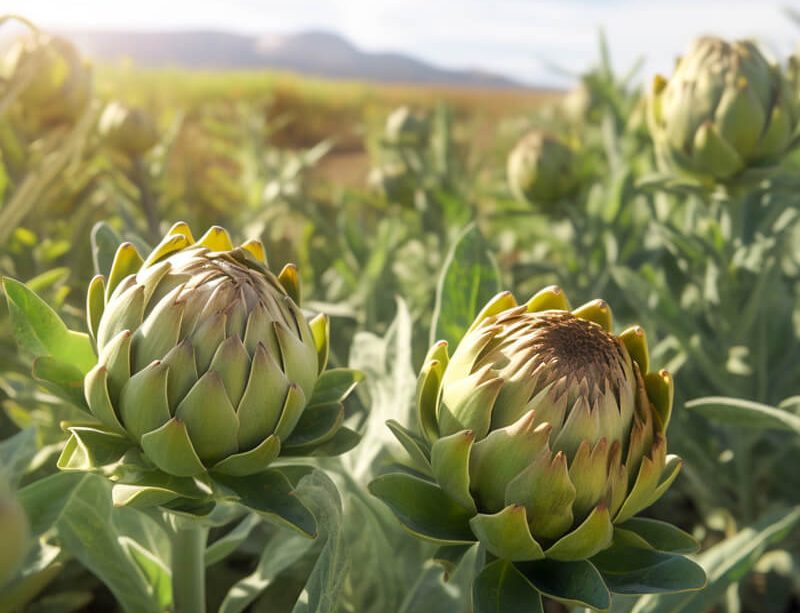
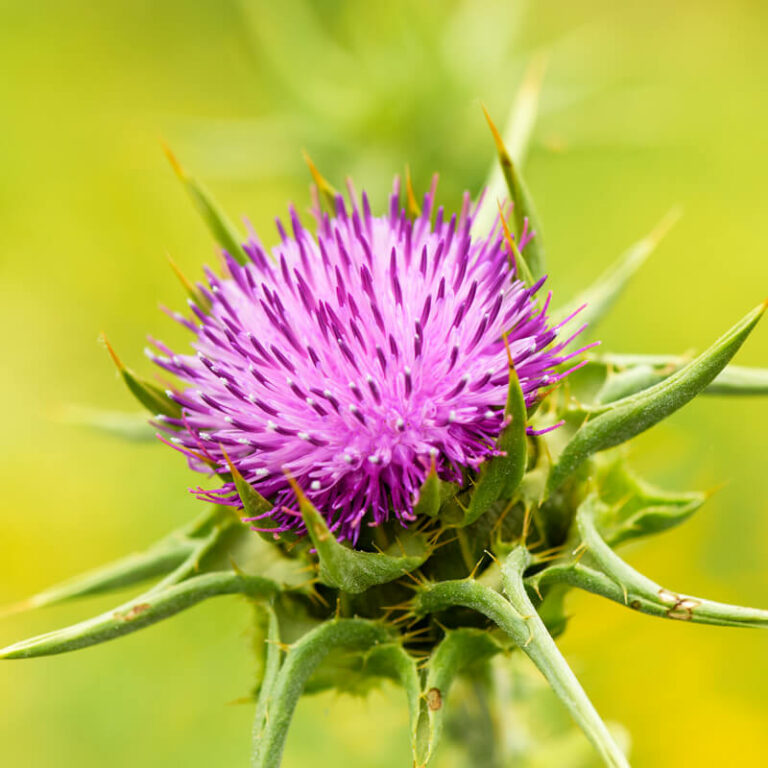
Milk thistle is a species of thistle that grows to a height of 30-200 cm. It has typically pinnately lobed leaves with spiny edges and milky white veins (probably the origin of the English name milk thistle) and large reddish-purple flowers. The fruit are shiny, brown-spotted achenes with white fuzz. Milk thistle probably originated in the Mediterranean, but it has spread over time not only throughout most of Europe, but has also been found in North America, Hawaii, Colombia, Australia and New Zealand. In phytotherapy, the fruit is most often collected just before maturity and ground into a fine powder, and the leaves and root are also used to a lesser extent. A standardised extract of milk thistle is known as sylimarin. (1-3)
History
In traditional phytotherapy, milk thistle has been used since ancient times, especially for the treatment of liver diseases. Its use is mentioned in ancient Egyptian texts, and the Roman philosopher and naturalist Pliny the Elder (23-79 AD) also wrote about it. Its use in liver disorders is also mentioned by the English herbalist Nicolas Colpepper (1616-1654) and the Swiss physician Albrecht von Jaller (1708-77).
Healing effects
The main active ingredient of milk thistle is silymarin, which is actually a complex of several substances belonging mainly to flavonolignans and flavonoids. The best studied of these is silibin, sometimes also called silibinin. (3)
In traditional phytotherapy, milk thistle is mainly used to treat liver, gallbladder, stomach and metabolism, viral hepatitis and less so in gynaecological and lung diseases. However, its effects are quite extensive, as the mechanisms by which it acts on the body are numerous. It has even been shown to have epigenetic effects – in particular, silibinin can effectively regulate the activity of a number of important genes (especially by affecting DNA methylation and histone acetylation), which has applications for example in the prevention and treatment of cancer. In addition, it has strong antioxidant and anti-inflammatory effects.(2-4)
Liver
In the field of phytotherapy, milk thistle is mainly associated with the liver, and its significant positive effect on this organ has been confirmed by a number of scientific studies. For example, it is very effective in protecting the liver from the effects of toxic chemicals – the silibinin it contains is thought to displace toxins that try to bind to the liver (including alcohol). It even acts as an antidote for some poisonings, such as greenfly poisoning. It also promotes liver regeneration, stabilises liver cell membranes and protects them from free radical damage (3, 5-8, 13).
It has also been shown to have a positive effect in cirrhosis of the liver, acute and chronic hepatitis or jaundice (including hepatitis C) and alcoholic hepatitis, and can be used prophylactically with drugs that are thought to have a possible negative effect on the liver. (3, 15)
Milk thistle is also applied in a problem called small liver insufficiency or popularly “slow liver”. This is a mildly impaired liver function, which is manifested, for example, by fatigue, malaise, pain under the ribs, constipation, unhealthy skin appearance, and possibly allergies.
Tumour diseases
Thanks to its effects on key epigenetic reactions, milk thistle (especially the silibin) can influence some processes related to the development of cancer. In particular, it affects the cell cycle, apoptosis (programmed cell death) and signalling pathways related to cell division. It has been shown to be effective in cancers such as prostate, liver, pancreatic and colon cancer and may also help to mitigate the negative effects of cancer treatment. However, there have been few studies on human volunteers in this area, with animal studies predominating. However, due to its estrogenic effect, it is not recommended for breast and ovarian cancer (4,16, 17, 33).
Diabetes
Some studies have shown that milk thistle can also be effective for type 2 diabetes. It helps to reduce insulin resistance, improve blood glucose control and prevent complications such as diabetic nephropathy. (10, 24, 25)
Breastfeeding support
In traditional phytotherapy, milk thistle is sometimes recommended to support lactation and its effectiveness in this regard has been confirmed by some research. For example, when a group of breastfeeding women took 420 mg of silymarin for 63 days, they experienced a 63% increase in milk production compared to the placebo group (18).
Alzheimer’s and Parkinson’s disease
In traditional phytotherapy, milk thistle is sometimes used to treat Alzheimer’s and Parkinson’s disease. Indeed, animal studies have shown that it could prevent cognitive decline thanks to its antioxidant and anti-inflammatory properties, and it has also been shown to reduce the formation of so-called amyloid plaques, which are clumps of proteins in the brain that are characteristic of Alzheimer’s disease. However, clinical studies to confirm this effect in humans are lacking (19-22).
Acne
Probably the combination of anti-inflammatory and antioxidant effects of milk thistle is behind its effectiveness in treating acne. In a study in which volunteers took 210 mg of silymarin daily for 8 weeks, they experienced an average 53% reduction in acne lesions (23).
Immunity
Milk thistle also has a significant immunomodulatory effect. It is not only used in immunodeficiency, but can also have a positive effect in autoimmune diseases (26, 27).
Sports performance
Taking milk thistle may be particularly useful for endurance athletes. It improves glucose and fat metabolism and the breakdown of lactate (lactic acid). Studies in which experimental rats were food-motivated to lift progressively increasing loads also noted an increase in strength performance along with weight loss (without loss of muscle mass) when adding silymarin to the diet, suggesting that milk thistle might also be useful for weight loss (28).
Heart and blood vessels
Sylimarin has a positive effect especially on cholesterol and triglyceride levels in the blood. It affects the metabolism of fats, helps to reduce the production of cholesterol in the liver and its absorption from food in the intestines, and increases the rate of conversion of cholesterol to other compounds. In addition, laboratory animal studies have shown that its administration to individuals with high blood lipid levels prevented the formation of atherosclerotic plaques in their blood vessels. Research examining a group of young healthy men also showed a reduction in serum cholesterol, an increase in HDL cholesterol, along with an increase in the antioxidant capacity of the blood after 60 days of use (30, 31).
Use and contraindications
The recommended dose is 200 mg 2-3 times a day in the case of an extract standardized to contain 70% silymarin. (3)
Although some of the components of milk thistle are mildly toxic, animal studies have not shown any significant negative effects even with long-term administration of high doses. A study of more than 2 600 volunteers showed a very low incidence of adverse effects, which were also very mild (mostly digestive problems). Pregnant women were included in this study, as it is generally believed that milk thistle is safe during pregnancy and breastfeeding, but caution is still warranted when using it during this period (and with young children) (11, 12).
Drug interactions are rather uncommon, but caution is needed for example with antidiabetic drugs, blood thinners (Warfarin), Diazepam, some immunosuppressants, antibiotics and hepatitis C drugs. It is always advisable to consult a doctor if you are taking any medication. (15)
Suitable combinations
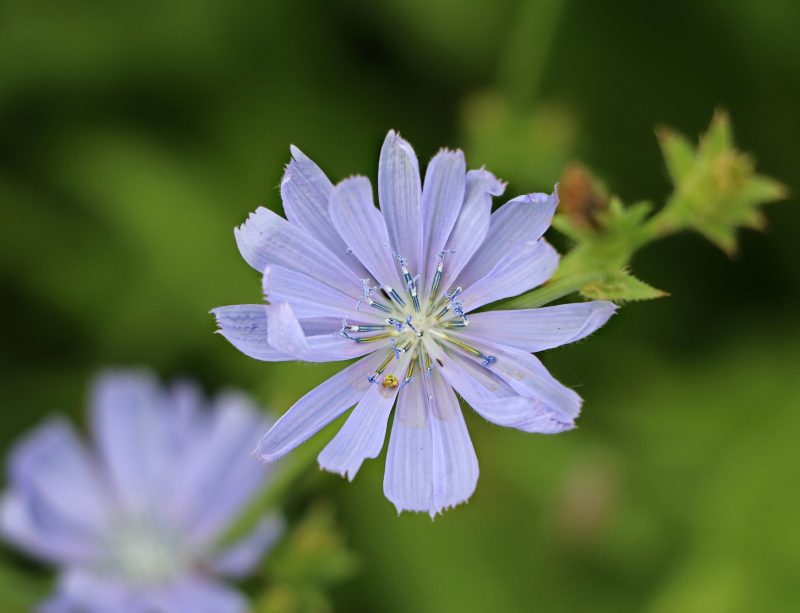
Liver: thistle + chicory (2), thistle + burdock (2), thistle + curcumin (34), thistle + vitamin E (34), quercetin (36)
Cancer: milk thistle + curcumin (33)
Stomach: milk thistle + benedict (2)
Breastfeeding: milk thistle + benedict
Sports performance: milk thistle + vitamin C (28)
Diabetes: milk thistle + barberry (32), milk thistle + boswellia (35), milk thistle + curcumin
0:00
/
0:00
Stárnutí je volba
Klíčová slova: Acne, breastfeeding, cancer, cholesterol, diabetes, endurance, hepatitis, Hepatitis, immunity, liver, Milk thistle, sylimarin, triglycerides
Komentáře
Seznam zdrojů
- https://en.wikipedia.org/wiki/Silybum_marianum
- Jiří Janča, Josef A. Zentrich. Herbář léčivých rostlin 3. díl. 1. vydání. Eminent. 95/11/16
- Muhammad Zahoor. A general introduction to medicinal plants and silybum marianum. July 2014. Life Science Journal11(9s):471-481. https://www.researchgate.net/publication/263852126_A_general_introduction_to_medicinal_plants_and_silybum_marianum
- Ioannis Anestopoulos, Aristeidis P Sfakianos, Rodrigo Franco, Katerina Chlichlia, Mihalis I Panayiotidis, David J Kroll, Aglaia Pappa. A Novel Role of Silibinin as a Putative Epigenetic Modulator in Human Prostate Carcinoma. Molecules. 2016 Dec 31;22(1):62.
- Paulova J, Dvorak M, Kolouch F, 1990. Verification of the hepatoprotective and therapeutic effect of silymarin in experimental liver injury with tetrachloromethane in dogs [in Czech]. Vet Med (Praha).;35:629-635.
- Tuchweber B, Sieck R, Trost W 1979. Prevention of silybin of phalloidin-induced acute hepatotoxicity. Toxicol Appl Pharmacol.; 51:265-275.
- Boari C, Montanari FM, Galletti GP, 1981. Toxic occupational liver diseases. Therapeutic effects of silymarin [in Italian]. Minerva Med.;72:2679-2688.
- Muzes G, Deak G, Lang I, 1990. Effects of silymarin (Legalon) therapy on the antioxidant defense mechanism and lipid peroxidation in alcoholic liver disease [in Hungarian]. Orv Hetil.;131:863-866.
- Giannola C, Buogo F, Forestiere G, 1985. A two-center study on the effects of silymarin in pregnant women and adult patients with so-called minor hepatic insufficiency [in Italian]. Clin Ther.;114:129-135.
- Huseini HF, Larijani B, Heshmat R 2006. The efficacy of Silybum arianum (L.) Gaertn. (silymarin) in the treatment of type II diabetes: a randomized, double-blind, placebo-controlled, clinical trial. Phytother Res.
- Adverse Drug Reactions Advisory Committee 1999. An adverse reaction to the herbal medication milk thistle ( Silybum marianum). Med J Aust. 170:218-19.
- Giannola C, Buogo F, Forestiere G, 1985. A two-center study on the effects of silymarin in pregnant women and adult patients with so-
- called minor hepatic insufficiency. Clin Ther 114:129-135.
- Choppin J, Desplaces A 1978. The effects of silybin on experimental phalloidine poisoning. Arzneimittelforschung; 28: 636-41.
- C Mulrow, V Lawrence, B Jacobs, C Dennehy, J Sapp, G Ramirez, C Aguilar, K Montgomery, L Morbidoni, JM Arterburn, E Chiquette, M Harris, D Mullins, A Vickers, and K Flora. Milk Thistle: Effects on Liver Disease and Cirrhosis and Clinical Adverse Effects: Summary. AHRQ Evidence Report Summaries. https://www.ncbi.nlm.nih.gov/books/NBK11896/
- https://www.webmd.com/hepatitis/milk-thistle-liver
- Navaneethakrishnan Polachi, Guirong Bai, Tingyang Li, Yang Chu, Xiangyang Wang, Shuming Li, Ning Gu, Jiang Wu, Wei Li, Yanjun Zhang, Shuiping Zhou, He Sun, Changxiao Liu.. Modulatory effects of silibinin in various cell signaling pathways against liver disorders and cancer – A comprehensive review. Eur J Med Chem. 2016 Nov 10;123:577-595.
- Surendra K Shukla, Aneesha Dasgupta, Kamiya Mehla, Venugopal Gunda, Enza Vernucci, Joshua Souchek, Gennifer Goode, Ryan King, Anusha Mishra, Ibha Rai, Sangeetha Nagarajan, Nina V Chaika, Fang Yu, Pankaj K Singh. Silibinin-mediated metabolic reprogramming attenuates pancreatic cancer-induced cachexia and tumor growth. Oncotarget. 2015 Dec 1;6(38):41146-61.
- Francesco Di Pierro, Alberto Callegari, Domenico Carotenuto, Marco Mollo Tapia. Clinical efficacy, safety and tolerability of BIO-C (micronized Silymarin) as a galactagogue. Acta Biomed. 2008 Dec;79(3):205-10.
- F Galhardi, K Mesquita, J M Monserrat, D M Barros. Effect of silymarin on biochemical parameters of oxidative stress in aged and young rat brain. Food Chem Toxicol. 2009 Oct;47(10):2655-60.
- Neha, Amit Kumar, Amteshwar S Jaggi, Rupinder K Sodhi, Nirmal Singh. Silymarin ameliorates memory deficits and neuropathological changes in mouse model of high-fat-diet-induced experimental dementia. Naunyn Schmiedebergs Arch Pharmacol. 2014 Aug;387(8):777-87.
- Jesús Pérez-HernándezVíctor Javier Zaldívar-Machorro, David Villanueva-Porras, Elisa Vega-Ávila, Anahí Chavarría. A Potential Alternative against Neurodegenerative Diseases: Phytodrugs. Oxid Med Cell Longev. 2016;2016:8378613
- Nakaba Murata, Kazuma Murakami, Yusuke Ozawa, Noriaki Kinoshita, Kazuhiro Irie, Takuji Shirasawa, Takahiko Shimizu. Silymarin attenuated the amyloid β plaque burden and improved behavioral abnormalities in an Alzheimer’s disease mouse model. Biosci Biotechnol Biochem. 2010;74(11):2299-306.
- Ahmed Salih Sahib, Haidar Hamid Al-Anbari, Mohammed Salih and Fatima Abdullah. Effects of Oral Antioxidants on Lesion Counts Associated with Oxidative Stress and Inflammation in Patients with Papulopustular Acne. J Clin Exp Dermatol Res 2012, 3:5. https://www.longdom.org/open-access/effects-of-oral-antioxidants-on-lesion-counts-associated-with-oxidative-stress-and-inflammation-in-patients-with-papulopustular-acne-2155-9554.1000163.pdf
- Luminita Voroneanu, Ionut Nistor, Raluca Dumea, Mugurel Apetrii, Adrian Covic. Silymarin in Type 2 Diabetes Mellitus: A Systematic Review and Meta-Analysis of Randomized Controlled Trials. J Diabetes Res. 2016;2016:5147468.
- Christos E Kazazis, Angelos A Evangelopoulos, Aris Kollas, Natalia G Vallianou. The therapeutic potential of milk thistle in diabetes. Rev Diabet Stud. Summer 2014;11(2):167-74.
- Chumpon Wilasrusmee, Smita Kittur, Gaurang Shah, Josephine Siddiqui, David Bruch, Skuntala Wilasrusmee, Dilip S Kittur. Immunostimulatory effect of Silybum Marianum (milk thistle) extract. Med Sci Monit. 2002 Nov;8(11):BR439-43.
- Nafiseh Esmaeil, Sima Balouchi Anaraki, Marjan Gharagozloo, Behjat Moayedi. Silymarin impacts on immune system as an immunomodulator: One key for many locks. Int Immunopharmacol. 2017 Sep;50:194-201.
- Nancy Vargas-Mendoza,Marcelo Ángeles-Valencia,Eduardo Osiris Madrigal-Santillán,Mauricio Morales-Martínez,Judith Margarita Tirado-Lule, Arturo Solano-Urrusquieta, Eduardo Madrigal-Bujaidar, Isela Álvarez-González, Tomás Fregoso-Aguilar6 Ángel Morales-González,,* and José A. Morales-González. Effect of Silymarin Supplementation on Physical Performance, Muscle and Myocardium Histological Changes, Bodyweight, and Food Consumption in Rats Subjected to Regular Exercise Training. Int J Mol Sci. 2020 Oct; 21(20): 7724.
- Kasi Pandima Devi. Nonvitamin and Nonmineral Nutritional Supplements. Academic Press. 2019
- Roshanak Khazaei, Alireza Seidavi, Mehrdad Bouyeh. A review on the mechanisms of the effect of silymarin in milk thistle (Silybum marianum) on some laboratory animals. Veterinary Medicina and Science. 02 October 2021
- Vilím Simánek, Nina Škottová, Josef Bartek, Jitka Psotová, Pavel Kosina, Libuše Balejová, Jitka Ulrichová. Extract form Silibum marianum as Nutraceutical: a Double-blind Placebo-controlle Study in Healthy Yound Men. Czech J. Food Sci. Vol 19 No 3: 106-110
- Giuseppe Derosa, Aldo Bonaventura, Lucio Bianchi, Davide Romano, Angela D’Angelo, Elena Fogari, Pamela Maffioli. Berberis aristata/Silybum marianum fixed combination on lipid profile and insulin secretion in dyslipidemic patients. Expert Opin Biol Ther. 2013 Nov;13(11):1495-506.
- Amanda Montgomery, Temitope Adeyeni, KayKay San, Rita M. Heuertz, and Uthayashanker R. Ezekiel. Curcumin Sensitizes Silymarin to Exert Synergistic Anticancer Activity in Colon Cancer Cells. J Cancer. 2016; 7(10): 1250–1257.
- Nouf AL-Rasheed. Laila Faddah, Iman Sharaf, Azza Mohamed. Assessment of the Potential Role of Silymarin Alone or in Combination with Vitamin E and/ or Curcumin on the Carbon Tetrachloride Induced Liver Injury in Rat. Brazilian Archives of Biology and Technology. Vol. 58, n. 6. pages 833-842. November-December 2015.
- Nahid Khalili, MD, Reza Fereydoonzadeh, MD, Reza Mohtashami, MD, Saeed Mehrzadi, PhD, Mojtaba Heydari, PhD, Hasan Fallah Huseini, PhD. Silymarin, Olibanum, and Nettle, A Mixed Herbal Formulation in the Treatment of Type II Diabetes: A Randomized, Double-Blind, Placebo-Controlled, Clinical Trial. Sage Journals. March 21, 2017. https://journals.sagepub.com/doi/10.1177/2156587217696929
- Jashitha Mooliyil et all. Pharmacodynamic interaction of Quercetin with Silymarin against paracetamol induced hepatotoxicity in rats. January 2013. International Journal of Pharmacy and Pharmaceutical Sciences5:104-106