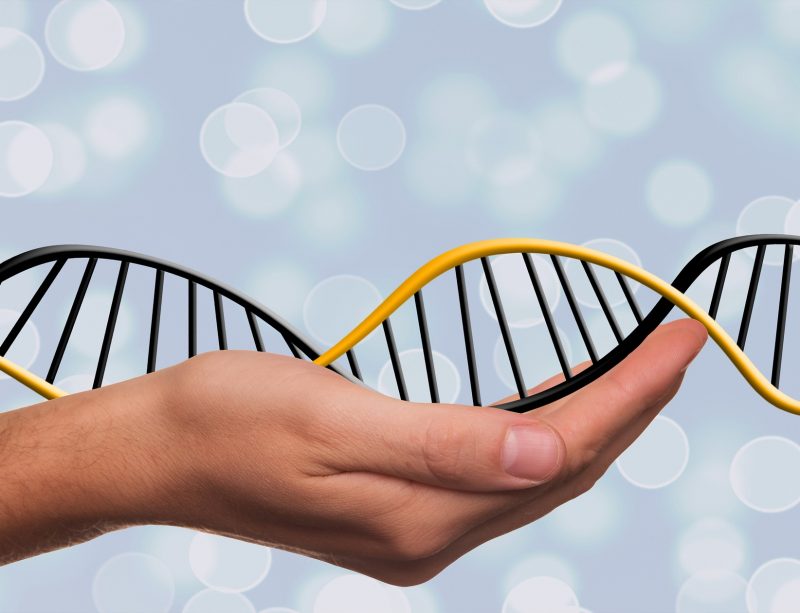
What is epigenetics
epivyziva.cz/
Zobrazeno: 17,316

Our DNA, which we inherit from our parents, carries information about what we are likely to look like as adults – how tall we will be, what talents and abilities we will have, or which diseases we will suffer from. But the word “likely” is not there by accident. It is largely up to us to decide whether or not our genes will manifest themselves. The answer to the question of how to do this lies in the young science of epigenetics.
At the very beginning of our life, the union of the sex cells of our parents – sperm and egg – took place. The egg contained half of our mother’s genetic information (23 chromosomes), the sperm half of our father’s genetic information. Their fusion then produced 46 chromosomes carrying a unique compound – deoxyribonucleic acid or DNA, which contains all the information according to which our body developed and according to which all biochemical reactions in our organism continue to run.
As the original fertilized egg continued to divide in the mother’s body, hundreds, thousands and millions of new cells were gradually created, all carrying the same DNA in their nuclei. And the same molecule is present in all the cells of our bodies today.
How to read DNA
A DNA molecule contains sections of DNA called genes. According to them, proteins are formed, which is actually the essence of the expression of the respective gene. First, a molecule of ribonucleic acid, or RNA, is created according to the gene (this process is technically called transcription), and then the corresponding protein is created from the individual amino acids (called translation).
However, not every gene will eventually manifest itself. Some genes in our DNA are switched on and can be used for protein synthesis, while others are switched off and cannot be read by our body.
There are many influences that can affect the switching on and off of genes, but they have one thing in common – they are external influences outside the genes in question. In particular, these are nutrition, lifestyle, the influence of toxins in the air and food, but probably also emotional influences. The science that deals with these is called epigenetics.
Interestingly, on the one hand, many epigenetic changes are reversible, but on the other hand, these changes can also be inherited (5, 15).
From conception to old age
The first epigenetic mechanisms start to take effect shortly after conception. As we have already said, all the cells in our body have the same DNA, but they are definitely not the same – for example, muscle, nerve or bone cells differ from each other in a fundamental way.
This is because chemical reactions, especially histone acetylation and gene methylation, act on DNA from the very first days (we will describe them in more detail below). (1,2, 13) As a result, only about 1.5% of the genes contained in the DNA of each cell are read out at the time of its formation.
However, not all processes leading to gene switching on and off are desirable during intrauterine development. On the contrary, many external influences at this time can trigger negative epigenetic processes. For example, poor maternal nutrition during pregnancy has been shown to increase a child’s marked susceptibility to obesity, diabetes, and cardiovascular disease (4, 14).
The strong influence of the external environment continues even in early childhood, when the brain and the whole body are developing rapidly. Interestingly, not only chemical and physical influences (nutrition, environment), but also emotional influences can affect the “reading” of genes through epigenetic mechanisms. Traumas and strong negative experiences in neonatal and infancy, for example, can significantly increase susceptibility to some serious diseases of civilisation (16). The development of some food and other allergies is also likely to be epigenetic in nature (17).
Another critical period when the organism is susceptible to negative epigenetic changes is puberty. Nutrition has a significant influence here too – a study investigating the effect of repeated famines in the Norrbotten region of Sweden in the 19th century, for example, found that when a person was exposed to critical food deprivation as a teenager, the risk of premature death increased even in his grandchildren (5).
However, there are ways to influence the transcription of important genes even in adulthood, although not as pronounced as in childhood. As we have already mentioned, much of the epigenetic process is reversible. While we can no longer influence the so-called structural genes (e.g. we can no longer change body height), we can influence the genes that determine our susceptibility to various diseases. For example, by means of targeted nutrition and other measures, we can switch on tumour-suppressor genes, which are responsible for suppressing tumours in the body (18).
Epigenetic mechanisms
And now we will briefly introduce the most important mechanisms that can be used to turn on and off certain genes and thus influence, for example, our susceptibility to certain diseases, physical and mental fitness or the speed of the aging process.
Gene methylation
Methylation is a chemical reaction that involves the attachment of a methyl group -CH3. Here, this group binds to cytosine, one of four so-called bases whose order in DNA encodes genetic information. Compared to other epigenetic processes, methylation is the easiest to study and therefore the best described of all. Its influence on the development of certain human cancers, for example, was described as early as 1983 (3). If a gene is methylated, it is usually turned off (6). The methyl group can be thought of as a sticker that sticks to the base and makes it impossible to read. If there are more such stickers, they will cover almost the entire gene and it will become invisible to the enzymes involved in its transcription.
Histone modifications
Unlike the previous mechanism, which directly affected individual DNA sections, histone modification does not directly affect genes. In this case, the chemical reactions affect the so-called histones, which are always eight protein molecules that together form a coil-like structure on which the DNA strand is wound like a thread. Yet reactions affecting histones can also switch genes on and off in the corresponding stretches of DNA.
Histones are affected by a number of chemical reactions, the best studied and probably the most common being acetylation, or the addition of acetic acid residues. Acetylation of histones switches the genes on, while deacetylation switches them off.(7-9) Acetylation allows the DNA “strand” to be released from the “coil” and accessed by enzymes that allow the transcription of individual genes.
microRNA
microRNAs, abbreviated miRNAs, are short ribonucleic acid chains that do not carry any genetic information, but regulate translation, i.e. the transcription of DNA into RNA. In this way, they switch off or on approximately 60% of the genes in human DNA. More than 2,000 different miRNA molecules have been discovered in the human body, each of which represses the transcription of 100-200 different RNAs (10-12).
As we mentioned above, epigenetic reactions affecting gene transcription are reversible, in most cases by the same means that caused them to occur – namely lifestyle modification. Nutrition plays a major role here, and should be adequate (both a significant energy deficit and excess are harmful), balanced and generally healthy. Natural substances with a strong epigenetic effect (EGCG from green tea, curcumin from turmeric and many others) can be of great help, as they can be consumed both as a regular part of the diet and in the form of targeted dietary supplements.
0:00
/
0:00
Stárnutí je volba
Klíčová slova: acetylation of histones, DNA, egcg, epigenetics, epigeneticsgenes, heredity, histone modification, methylation, microRNA
Komentáře
Seznam zdrojů
- Khavari D., Sen G., Rinn J.. DNA methylation and epigenetic control of cellular differentiation”.Cell Cycle 9 (19): 3880–3883. 2010
- Lee J.H., Hart S., Skalnik D. January 2004. “Histone Deacetylase Activity is Required for Embryonic Stem Cell Differentiation”.Genesis 38 (1): 32–38. January 2004
- Weinhold B. Epigenetics: The Science of Change. Environ Health Perspect. 2006 Mar; 114(3): A160–A167.
- Simmons R. Epigenetics and maternal nutrition: nature v. nurture. Proc Nutr Soc. 2011 Feb;70(1):73-81. doi: 10.1017/S0029665110003988. Epub 2010 Nov 29.
- Bygren LO, Kaati G, Edvinsson S. Longevity determined by paternal ancestors’ nutrition during their slow growth period.Acta Biotheor. 2001;49:53–59.
- Bird AP. CpG-rich islands and the function of DNA methylation. 1986;321:209–213.
- Luger K, Mäder AW, Richmond RK, Sargent DF, Richmond TJ. Crystal structure of the nucleosome core particle at 2.8 A resolution.Nature. 1997;389:251–260.
- Berger SL. An embarrassment of niches: the many covalent modifications of histones in transcriptional regulation.Oncogene. 2001;20:3007–3013.
- Jenuwein T, Allis CD. Translating the histone code.Science. 2001;293:1074–1080.
- Bernal JE, Duran C, Papiha SS (2012). “Transcriptional and epigenetic regulation of human microRNAs”.Cancer Lett 331 (1): 1–10.
- Lim LP, Lau NC, Garrett-Engele P, Grimson A, Schelter JM, Castle J, Bartel DP, Linsley PS, Johnson JM (2005). “Microarray analysis shows that some microRNAs downregulate large numbers of target mRNAs”.Nature 433 (7027): 769–773.
- Friedman RC, Farh KK, Burge CB, Bartel DP (2009).“Most mammalian mRNAs are conserved targets of microRNAs”. Genome Res 19 (1): 92–105.
- Bird A. DNA methylation patterns and epigenetic memory.Genes Dev. 2002;16:6–21.
- Sinclair KD, Allegrucci C, Singh R, Gardner DS, Sebastian S, Bispham J, Thurston A, Huntley JF, Rees WD, Maloney CA, Lea RG, Craigon J, McEvoy TG, Young LE. DNA methylation, insulin resistance, and blood pressure in offspring determined by maternal periconceptional B vitamin and methionine status.Proc Natl Acad Sci U S A. 2007;104:19351–19356.
- Kaati, G.,et al. Cardiovascular and diabetes mortality determined by nutrition during parents’ and grandparents’ slow growth period. European Journal of Human Genetics 10, 682–688 (2002)
- Kathryn M.A. Gudsnuk, Frances A. Champagne. Epigenetic Effects of Early Developmental Experiences. Clinics in Perinatology. Volume 38, Issue 4, December 2011, Pages 703–717
- Xiumei Hong, Xiaobin Wang. Epigenetics and Development of Food Allergy (FA) in Early Childhood. Current Allergy and Asthma Reports. September 2014, 14:460
- Bjornsson, M.D. Fallin, A.P. Feinberg. An integrated epigenetic and genetic approach to common human disease. Trends Genet, 20 (2004), pp. 350–358.