Ginkgo biloba
epivyziva.cz/
Zobrazeno: 626
Jinan bicuspid
Ginkgo biloba is one of the most popular dietary supplements. It stands out especially for its effect on mental performance, combining its ability to improve blood circulation to the brain, epigenetic influence and protective effect on nerve cells. But it also works well for depression and anxiety, asthma, vision problems and other problems.
Description
Ginkgo biloba or Ginkgo biloba is a very decorative tree belonging to the ancient family Ginkgo biloba, which includes a single order – Ginkgo family. Its ancestors grew on the earth in the Protohistoric period, i.e. about 300 million years ago. Each individual plant can also grow to a high age – the oldest documented jinan grows in China and is estimated to be 4,700 years old. Today, the yin tree is mainly planted artificially; native populations in the wild are extremely rare. In our country it is planted mainly for its decorative properties, its advantage is also its high resistance to adverse influences. For example, during the attack on Hiroshima in 1945, six yinans were among the few living organisms that managed to survive within 2 km of the epicentre of the nuclear blast (1-4)
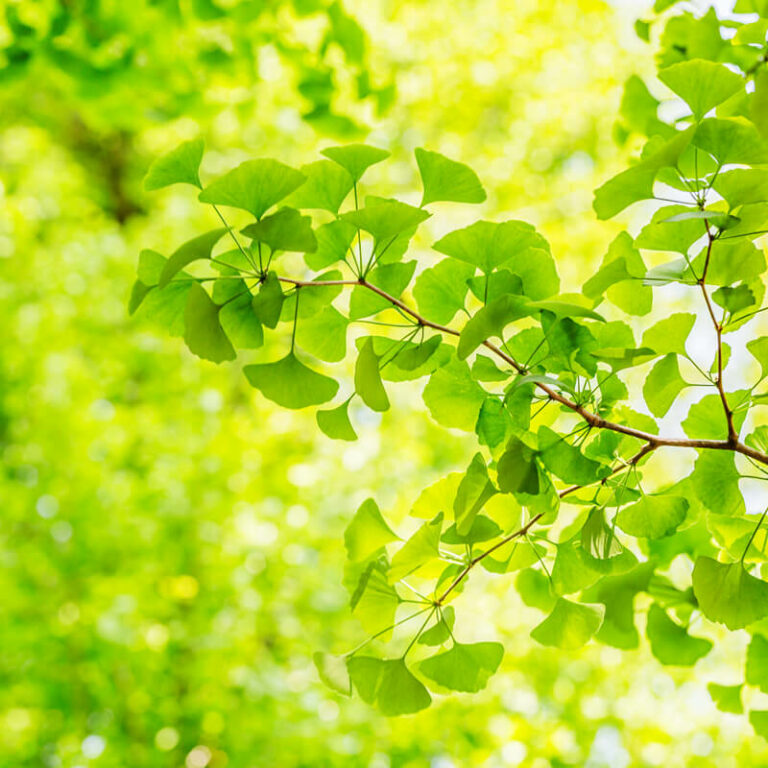
Jinan has an unusual pyramidal shape and unique fan-shaped leaves that are divided into two lobes by a central notch. It can be over 30 m tall, with a trunk diameter of up to 2.5 m. It is a dioecious plant, meaning that male and female flowers occur separately on different plants. The disadvantage is that male trees produce highly allergenic pollen. In European phytotherapy, the leaf is mainly used for treatment, while in China, the fruit is more often used when fully ripe (1-3).
History
Jinan was probably used for medicinal purposes first in China, but written evidence of this is lacking. However, by about a thousand years ago it was demonstrably cultivated there. The first European to describe the yin was Engelbert Kaempel, who worked at the East India Company’s station in Japan in 1692. He was also the first to use the term ‘ginkgo’, which was an inaccurate transcription of the Japanese name for the jinan, meaning ‘silver apricot’. The first plants were probably brought to Europe in the first half of the 18th century. (1, 3)
And one Czech curiosity: the jinan is mentioned in the works of Jaroslav Foglar – in the book Shadows are Storming, one of the groups of Vontes uses its leaf as a badge of belonging. (1)
Healing effects
Ginkgo biloba contains more than 40 active substances and many of them have direct positive effects on the functioning of the human body. In particular, substances from the terpenoid category (for example, ginkgolides and bilobalide) promote vasodilation (widening of blood vessels), thereby significantly promoting blood flow to all tissues in the body. In animal experiments, for example, the application of ginkgolides or bilobalide resulted in a dilation of blood vessels of more than 17 %, while the flavonoid quercetin, which is also present in ginkgo, had even more pronounced effects. The mechanism by which these substances work is probably by affecting the production of two substances that regulate blood flow through the blood vessels – nitric oxide, which acts as a vasodilator (i.e. dilates blood vessels), and its ‘counterpart’, a vasoconstrictor called endothelin-1. The flavonoids contained (in addition to quercetin, for example, there is also kaempferol and rutin) have a significant protective effect on many tissues in the body, especially nerve cells. Ginkgolides also have a protective and reparative effect on the nervous system, as does another substance from the terpenoid group, trilactone (9, 10, 29).
Ginkgo also has direct epigenetic effects, where it directly influences the activity of certain genes in DNA. In addition, it regulates the activity of proteins involved in repairing damaged DNA, effectively helping to prevent mutations caused by environmental toxins or free radicals, for example. These mechanisms are applied, for example, in its anti-cancer action. In addition, it has a strong anti-inflammatory effect (epigenetic processes are also involved) and is also a powerful antioxidant (5-8, 41).
Brain and nervous system
Probably the most well-known area of application of ginkgo biloba is cognitive support, which probably combines its epigenetic effects with its ability to increase blood flow to the brain.
Research has confirmed not only its ability to improve individual aspects of cognitive performance, particularly memory and learning ability, but also increased activity in certain areas of the brain during problem solving (compared to placebo). Gingo is particularly effective in mitigating age-related decline in memory abilities. (10, 12, 17)
A number of studies have also shown the positive effect of gingko in Alzheimer’s disease. In people suffering from dementia, an extract from this plant has not only improved memory, thinking and learning ability, but also alleviated depression, positively influenced social behaviour and the ability to cope with normal daily activities. In one study on people with mild to moderate depression, ginkgo even showed similar effectiveness to the commonly used drug donepezil. Because of its ability to increase blood flow in brain tissue, ginkgo is also very effective in so-called vascular dementia, in which cognitive decline is caused by reduced blood flow (16-18).
Interesting research was then conducted on rats with sciatic nerve injury, in which ginkgo significantly improved its function (treatment started 1 hour after injury and lasted two weeks) (11).
For completeness, however, it should be added that there are also studies that have not confirmed any positive effect of gingko on brain performance (13).
Multiple sclerosis
Multiple sclerosis is a chronic autoimmune disease significantly impairing the function of the nervous system, often ending in complete disability. In a pilot study, Ginkgo biloba not only improved nervous system function and alleviated some symptoms in volunteers, but also reduced the level of fatigue and the severity of depression that often accompanies the disease (15).
Anxiety and depression
Studies charting the effects of ginkgo on two of the most common psychiatric problems – depression and anxiety – have also yielded relatively promising results. In one study, for example, the use of ginkgo extract (240 g) led to a 45% reduction in anxiety symptoms compared to a placebo group (19).
For depression, yin is particularly effective in the elderly, but it can be used at any age. It is also very suitable for combination with a range of antidepressants, where it shows better effects than the antidepressant alone. The antidepressant effects of ginkgo are due not only to its epigenetic action (in particular its ability to regulate DNA methylation and improve the production of BNDF, which is essential for the formation and protection of neurons), but also to its positive effect on the gut microbiome, an imbalance of which is typical of depression (19, 41-43).
Eyes and vision
There have been very few studies on the effects of ginkgo on vision, but the results are promising. The plant’s ability to improve blood flow to the eye area is probably very important here, as this organ is very demanding of oxygen and nutrients. Two small studies, for example, have shown positive effects in macular degeneration, a degenerative disease of the retina often resulting in complete blindness. Improved blood flow may also be beneficial in glaucoma – one small study showed improved visual abilities in people with glaucoma after 8 weeks of taking 120 mg of ginkgo extract. (21, 22)
Migraine
In traditional Chinese medicine, ginkgo is used for migraine and other types of headaches, but scientific evidence of its effectiveness is still lacking. Much here probably depends on the cause and mechanism of the pain. Given its ability to improve blood flow, it could be particularly helpful in cases where the cause of pain is vasoconstriction, and its anti-inflammatory effects may also play a positive role. If, on the other hand, the cause of the pain is vasodilation, its effectiveness is likely to be limited (23).
Tumour diseases
Ginkgo can prevent tumours in several ways. First of all, it reduces the formation of new proteins in cancer cells and thus their ability to proliferate, or rapidly multiply uncontrollably. The ability to divide rapidly is crucial for cancer cells. It also promotes the process of apoptosis, or programmed cell death – the ability of a cell to “kill itself” if something is wrong with it, and this ability is fundamentally impaired in cancer. In addition, it is anti-inflammatory, reduces oxidative stress and directly influences the activity of certain genes linked to cancer through epigenetic pathways. Ginkgo’s anti-cancer effects have been demonstrated particularly in liver tumours, where it has significantly impaired the ability of tumour cells to form colonies, and in melanoma, or skin tumours. (5,6)
Asthma and COPD
For asthma sufferers, ginkgo can effectively reduce the level of inflammatory processes in the airways and improve lung capacity. Efficacy has also been demonstrated with concomitant treatment with glucocorticosteroids. (24, 25)
It can also bring relief to sufferers of chronic obstructive pulmonary disease (COPD), a serious inflammatory disease that restricts airflow in the bronchial tubes. In one study, ginkgo was able to reduce coughing attacks and bronchitis symptoms after three months of use (26).
Raynaud’s syndrome
Raynaud’s syndrome (phenomenon) is a disease of the arterial system, mainly affecting women. It is manifested by sudden vasoconstriction (i.e. narrowing of blood vessels), usually due to cold or stress. It more often affects the blood vessels of the upper limbs, with the typical whitening of the fingers. One study reported a significant reduction in the symptoms after 10 weeks of ginkgo biloba extract (27).
Premenstrual syndrome (PMS)
PMS is a set of unpleasant physical and psychological symptoms that affect women of reproductive age before the onset of menstruation. Research has confirmed that ginkgo can alleviate these unpleasant symptoms by an average of 23%. In one study, the women started taking the extract on the 16th day of their cycle (counted from the first day of menstruation) and stopped on the 5th day of the next cycle (28).
Sexuality
Ginkgo can quite effectively support both libido and erectile ability. The reason for the erection support here is primarily due to its ability to increase blood flow through blood vessels (29).
Interesting research was then conducted in a group of female volunteers suffering from reduced sexual desire. If the women took ginkgo and underwent psychotherapy at the same time, their sexual desire increased, but ginkgo alone had no effect. Unfortunately, the oft-cited ability of ginkgo to alleviate the decline in libido when taking antidepressants has not been confirmed (30, 31).
Cardiovascular disease
Although ginkgo is often recommended for high blood pressure, most of the studies that have been conducted on the subject have not confirmed this ability. On the contrary, some studies have shown that, despite its ability to vasodilate, it does not affect blood pressure, nor does it reduce the rate of death from cardiovascular disease or the incidence of heart attacks and strokes (35, 36).
However, some positive effects of ginkgo on the cardiovascular system have been confirmed – primarily a reduction in LDL cholesterol and an increase in HDL cholesterol and improved blood flow to the heart muscle in coronary artery disease due to the aforementioned effects on the balance of nitric oxide and endothelin-1 production. It can also effectively help to speed up recovery and mitigate the negative effects of stroke, particularly in terms of cognitive decline but also in coping with normal daily activities (37-39, 41).
It has also been shown to be effective in so-called intermittent claudication, which is pain caused by impaired blood supply to the lower limbs, for example in the case of ischaemia due to atherosclerosis. This pain usually occurs during walking and other exertion, and usually disappears at rest. Here, a significant reduction of the problem was noted after 4-6 weeks of use (33).
Liver health
Ginkgo has significant protective effects on liver tissue, which is mainly due to its support of the production of antioxidant enzymes and hormones such as SOD and glutathione. It helps to protect the liver from the effects of certain toxic chemicals, and also positively influences the architecture of the liver and counteracts its fatty nature. It also has a beneficial effect in liver fibrosis, a disease in which collagen is deposited in the intercellular space, and in a metabolic disorder called hepatic steatosis. (41, 45)
Weight Loss
Ginkgo biloba suppresses the production of pancreatic lipase, an enzyme that is essential for the breakdown of dietary fats. As a result, energy intake will be reduced with the current diet (41).
Skin
Ginkgo, thanks to its antioxidant, epigenetic and anti-inflammatory action, helps to effectively slow down the appearance of skin aging, which is also protected from the harmful effects of UV radiation. It also promotes the healing of injuries, including frostbite. (41)
Use and contraindications
Ginkgo biloba is generally considered a safe dietary supplement, side effects are rarely reported – usually in the form of headaches, nausea and skin allergic reactions. Only consumption of fresh seeds can be dangerous. A safe dose for an adult is given as taking 240 mg of the extract for 6 months (32).
However, Ginkgo is not recommended for use in pregnancy because of the higher risk of bleeding, bleeding disorders, epilepsy, diabetes, and in people with deficient glucose-6-phosphate dehydrogenase enzyme production, in whom it can cause severe anemia. Ginkgo is not suitable for women who are trying to conceive, and because of the risk of bleeding, its use should also be discontinued 2 weeks before elective surgery. In children, short-term use of lower doses of the extract is possible (32).
Also, do not take Ginkgo at the same time as the following medications. Xanax), ibuprofen (Ibalgin), antidiabetic drugs, atorvastatin (a cholesterol and triglyceride lowering drug) and drugs that break down in the liver. In general, when taking any medication, it is advisable to consult the use of ginkgo with the attending physician. (32)
Suitable combinations
Mental performance: ginkgo + ginseng (32, 34), ginkgo + rosemary, ginkgo + EGCG + Bacopa monnieri (49), ginkgo + rhodiola (53)
Depression: ginkgo + ginseng (33), ginkgo + rosemary, ginkgo + rhodiola
Anxiety: ginkgo + coneflower
Heart and blood vessels: ginkgo + OPC
Skin aging: ginkgo + EGCG (44)
Antioxidant effect: ginkgo + curcumin, ginkgo + milk thistle (47), ginkgo + bayberry (50)
Liver: ginkgo + milk thistle (47), ginkgo + rosemary
Eyes: ginkgo + rosemary
Inflammatory bowel disease: ginkgo + curcumin (48)
Cancer: ginkgo + resveratrol (51)
Sports performance: ginkgo + rhodiola (52)
0:00
/
0:00
Stárnutí je volba
Klíčová slova: ageing, anxiety, asthma, blood flow, COPD, depression, erections, eyes, fatty liver, fibrosis of the liver, gingko, Ginkgo biloba, glaucoma, inflammation, learning, libido, liver, macular degeneration, memory, mental performance, premenstrual syndrome, skin, steatosis of the liver, weight loss
Komentáře
Seznam zdrojů
- 1. https://cs.wikipedia.org/wiki/Jinan_dvoulalo%C4%8Dn%C3%BD
- 2. https://www.britannica.com/plant/ginkgo-tree
- 3. https://e360.yale.edu/features/peter_crane_history_of_ginkgo_earths_oldest_tree
- 4. https://kwanten.home.xs4all.nl/hiroshima.htm
- 5. Carolin Czauderna et al. Ginkgo biloba induces different gene expression signatures and oncogenic pathways in malignant and non-malignant cells of the liver. PLoS One. 2018; 13(12): e0209067.
- Yufang Wang, Junping Lv, Yao Cheng , Jipei Du , Degao Chen , Chengtao Li , Ji Zhang. Apoptosis induced by Ginkgo biloba (EGb761) in melanoma cells is Mcl-1-dependent. PLoS One. 2015 Apr 10;10(4):e0124812
- Daniela Oliveira, Björn Johansson, Rui Oliveira. Ginkgo biloba, DNA Damage and DNA Repair: Overview. Handbook of Nutrition, Diet, and Epigeneticspp 1997-2015. 2017
- https://www.mdpi.com/2223-7747/8/12/556/htm
- Seiichiro Nishida, Hiroyasu Satoh. Comparative vasodilating actions among terpenoids and flavonoids contained in Ginkgo biloba extract. February 2004. Clinica Chimica Acta; International Journal of Clinical Chemistry339(1-2):129-33
- Dalal G Al-Adwani, Waleed M Renno, Khaled Y Orabi. Neurotherapeutic effects of Ginkgo biloba extract and its terpene trilactone, ginkgolide B, on sciatic crush injury model: A new evidence. PLoS On. 2019 Dec 26;14(12):e0226626.
- 11. R. B. Silberstein, A. Pipingas, J. Song, D. A. Camfield, P. J. Nathan, and C. Stough. Examining Brain-Cognition Effects of Ginkgo Biloba Extract: Brain Activation in the Left Temporal and Left Prefrontal Cortex in an Object Working Memory Task. Evid Based Complement Alternat Med. 2011; 2011: 164139.
- 12. Cheuvront, S. N. and Carter, R., III. Ginkgo and memory. JAMA. 2-5-2003;289(5):547-548.
- http://edition.cnn.com/2009/HEALTH/12/29/ginkgo.biloba.brain/index.html
- R Ihl, M Tribanek, N Bachinskaya. Efficacy and tolerability of a once daily formulation of Ginkgo biloba extract EGb 761® in Alzheimer’s disease and vascular dementia: results from a randomised controlled trial. Pharmacopsychiatry. 2012 Mar;45(2):41-6.
- Johnson SK, Diamond BJ, Rausch S, Kaufman M, Shiflett SC, Graves L. The effect of Ginkgo biloba on functional measures in multiple sclerosis: a pilot randomized controlled trial. Explore(NY). 2006;2(1):19-24.
- Mazza M, Capuano A, Bria P, Mazza S. Ginkgo biloba and donepezil: a comparison in the treatment of Alzheimer’s dementia in a randomized placebo-controlled double-blind study. Eur J Neurol. 2006;13(9):981-5.
- https://www.mountsinai.org/health-library/herb/ginkgo-biloba
- McCarney R, Fisher P, Iliffe S, van Haselen R, Griffin M, van der Meulen J, Warner J. Ginkgo biloba for mild to moderate dementia in a community setting: a pragmatic, randomised, parallel-group, double-blind, placebo-controlled trial. Int J Geriatr Psychiatry. 2008 Dec;23(12):1222-30.
- H Woelk, K H Arnoldt, M Kieser, R Hoerr. Ginkgo biloba special extract EGb 761 in generalized anxiety disorder and adjustment disorder with anxious mood: a randomized, double-blind, placebo-controlled trial. J Psychiatr Res. 2007 Sep;41(6):472-80.
- 20. Chun-Xiao Dai, MM, Chang-Chun Hu, MM, Yu-Shan Shang, MM, and Jian Xie, MM. Role of Ginkgo biloba extract as an adjunctive treatment of elderly patients with depression and on the expression of serum S100B. Medicine (Baltimore). 2018 Sep; 97(39): e12421.
- Jessica Minjy Kang, Shan Lin. Ginkgo biloba and its potential role in glaucoma. Curr Opin Ophthalmol. 2018 Mar;29(2):116-120.
- Jennifer R Evans. Ginkgo biloba extract for age-related macular degeneration. Cochrane Database Syst Rev.2013 Jan 31;2013(1):CD001775.
- https://www.healthline.com/nutrition/ginkgo-biloba-benefits#TOC_TITLE_HDR_10
- Xiao Chu, Xinxin Ci, Jiakang He, Miaomiao Wei, Xiaofeng Yang, Qingjun Cao, Hongyu Li, Shuang Guan, Yanhong Deng, Daxin Pang, Xuming Deng. A novel anti-inflammatory role for ginkgolide B in asthma via inhibition of the ERK/MAPK signaling pathway. Molecules. 2011 Sep 6;16(9):7634-48.
- Yijun Tang, Yongjian Xu, Shengdao Xiong, Wang Ni, Shixin Chen, Baoan Gao, Tao Ye, Yong Cao, Chunling Du. The effect of Ginkgo Biloba extract on the expression of PKCalpha in the inflammatory cells and the level of IL-5 in induced sputum of asthmatic patients. J Huazhong Univ Sci Technolog Med Sci. 2007 Aug;27(4):375-80.
- 26. Yong Cai, Rong Shi,Huijiang Song, Meili Shang, Tian Shen, Mina Shariff, Kenneth Kami, Pingping Gu, Tuong Nguyen, and Jianyu Rao. Effects of Lung Support Formula on respiratory symptoms among older adults: results of a three-month follow-up study in Shanghai, China. Nutr J. 2013; 12: 57.
- 27. Choi WS, Choi CJ, Kim KS, Lee JH, Song CH, Chung JH, et al. To compare the efficacy and safety of nifedipine sustained release with Ginkgo biloba extract to treat patients with primary Raynaud’s phenomenon in South Korea; Korean Raynaud study (KOARA study). Clin Rheumatol. 2009 Jan 22.
- Giti Ozgoli, Elham Alsadat Selselei, Faraz Mojab, Hamid Alavi Majd. A randomized, placebo-controlled trial of Ginkgo biloba L. in treatment of premenstrual syndrome. J Altern Complement Med. 2009 Aug;15(8):845-51.
- Yu-Zhou Wu, Shu-Qin Li, Xiu-Guang Zu, Jun Du, Feng-Fei Wang. Ginkgo biloba extract improves coronary artery circulation in patients with coronary artery disease: contribution of plasma nitric oxide and endothelin-1. Phytother Res. 2008 Jun;22(6):734-9.
- Cindy M Meston, Alessandra H Rellini, Michael J Telch. Short- and long-term effects of Ginkgo biloba extract on sexual dysfunction in women. Arch Sex Behav. 2008 Aug;37(4):530-47.
- 31. Ashton, A. K., Ahrens, K., Gupta, S., and Masand, P. S. Antidepressant-induced sexual dysfunction and Ginkgo Biloba. Am J Psychiatry. 2000;157(5):836-837.
- 32. https://www.webmd.com/vitamins/ai/ingredientmono-333/ginkgo
- Moher D, Pham B, Ausejo M, Saenz A, Hood S, Barber GG. Pharmacological management of intermittent claudication: a meta-analysis of randomised trials. Drugs. 2000;59(5):1057-1070.
- D E Hartley, S Elsabagh, S E File. Gincosan (a combination of Ginkgo biloba and Panax ginseng): the effects on mood and cognition of 6 and 12 weeks’ treatment in post-menopausal women. Nutr Neurosci. Oct-Dec 2004;7(5-6):325-33.
- https://www.ahajournals.org/doi/full/10.1161/CIRCOUTCOMES.109.871640
- 36. Tina E. Brinkley, PhD, James F. Lovato, MS, Alice M. Arnold, PhD, Curt D. Furberg, MD, PhD, Lewis H. Kuller, MD, DrPH, Gregory L. Burke, MD, MS, Richard L. Nahin, PhD, MPH, Oscar L. Lopez, MD, Sevil Yasar, MD, PhD, and Jeff D. Williamson, MD, MHS. Effect of ginkgo biloba on blood pressure and incidence of hypertension in elderly men and women. Am J Hypertens. 2010 May; 23(5): 528–533.
- Yu-Zhou Wu, Shu-Qin Li, Xiu-Guang Zu, Jun Du, Feng-Fei Wang. Ginkgo biloba extract improves coronary artery circulation in patients with coronary artery disease: contribution of plasma nitric oxide and endothelin-1. Phytother Res. 2008 Jun;22(6):734-9.
- 38. Sun Baoliang, Xia Zuoli, Zheng Chengbi, Li Wenxia & Fang Yuzhen. Relationship between endothelin-1 and ischemic brain damage after subarachnoid hemorrhage and protective effect of Ginkgo biloba extract. Chinese Journal of Integrated Traditional and Western Medicine volume 5, pages279–282 (1999)
- 39. https://www.webmd.com/vitamins/ai/ingredientmono-333/ginkgo
- Noha Ahmed El Boghdady. Antioxidant and antiapoptotic effects of proanthocyanidin and ginkgo biloba extract against doxorubicin-induced cardiac injury in rats. Cell Biochem Funct. 2013 Jun;31(4):344-51.
- 41. Noor-E-Tabassum, Rajib Das, Mashia Subha Lami, Arka Jyoti Chakraborty, Saikat Mitra, Trina Ekawati Tallei, Rinaldi Idroes, Amany Abdel-Rahman Mohamed, Md. Jamal Hossain, Kuldeep Dhama, Gomaa Mostafa-Hedeab, and Talha Bin Emran. Ginkgo biloba: A Treasure of Functional Phytochemicals with Multimedicinal Applications. https://www.hindawi.com/journals/ecam/2022/8288818/
- C. X. Dai, C. C. Hu, Y. S. Shang, and J. Xie, “Role of Ginkgo biloba extract as an adjunctive treatment of elderly patients with depression and on the expression of serum S100B,” Medicine, vol. 97, no. 39, p. e12421, 2018.
- S. A. Ayatollahi, S. Khoshsirat, S. Khoshsirat et al., “Ginkgo biloba modulates hippocampal BDNF expression in a rat model of chronic restraint stress-induced depression,” Physiology and Pharmacology, vol. 24, no. 4, pp. 285–297, 2020.
- P. M. Campos, M. D. Gianeti, D. G. Mercurio, and L. R. Gaspar, “Synergistic effects of green tea and Ginkgo biloba extracts on the improvement of skin barrier function and elasticity,” Journal of Drugs in Dermatology: Journal of Drugs in Dermatology, vol. 13, no. 9, pp. 1092–1097, 2014.
- 45. Yuanyuan Wang, Rong Wang, Yujie Wang, Ruqin Peng, Yan Wu, and Yongfang Yuan. Ginkgo biloba extract mitigates liver fibrosis and apoptosis by regulating p38 MAPK, NF-κB/IκBα, and Bcl-2/Bax signaling. Drug Des Devel Ther. 2015; 9: 6303–6317.
- 46. Hala O El Mesallamy, Nadia S Metwally, Mahmoud S Soliman, Kawkab A Ahmed & Mai M Abdel Moaty. The chemopreventive effect of Ginkgo biloba and Silybum marianum extracts on hepatocarcinogenesis in rats. Cancer Cell International volume 11, Article number: 38 (2011)
- 47. Rasha Sarhan, Samy A. Abd El-Azim, Tarek M.K. Motawi and Mohamed A. Hamdy. Protective Effect of Turmeric, Ginkgo biloba, Silymarin Separately or in Combination, on Iron-Induced Oxidative Stress and Lipid Peroxidation in Rats. International Journal of Pharmacology, 3: 375-384.
- Tarek Motawi, Sherine Maher Rizk. Ahmed Shehata. Effects of curcumin and Ginkgo biloba on matrix metalloproteinases gene expression and other biomarkers of inflammatory bowel disease. April 2012Journal of Physiology and Biochemistry68(4)
- https://immunityageing.biomedcentral.com/articles/10.1186/s12979-017-0113-4
- Teresa Delerue, M Fátima Barroso, Mónica Dias-Teixeira, Maria Figueiredo-González, Cristina Delerue-Matos, Clara Grosso. Interactions between Ginkgo biloba L. and Scutellaria baicalensis Georgi in multicomponent mixtures towards cholinesterase inhibition and ROS scavenging. Food Res Int. 2021 Feb;140:109857.
- 51. Wei-Hui Hu, Gallant Kar-Lun Chan, Ran Duan, Huai-You Wang, Xiang-Peng Kong, Tina Ting-Xia Dong, and Karl Wah-Keung Tsim. Synergy of Ginkgetin and Resveratrol in Suppressing VEGF-Induced Angiogenesis: A Therapy in Treating Colorectal Cancer. Cancers (Basel). 2019 Dec; 11(12): 1828.
- Zhang-jin Zhang, Yao Tong, Jun Zou, Pei-jie Chen, Ding-hai Yu. Dietary supplement with a combination of Rhodiola crenulata and Ginkgo biloba enhances the endurance performance in healthy volunteers. Chin J Integr Med. 2009 Jun;15(3):177-83.
- 53. Hayder M. Al-Kuraishy. Central additive effect of Ginkgo biloba and Rhodiola rosea on psychomotor vigilance task and short-term working memory accuracy. J Intercult Ethnopharmacol. 2016 Jan-Feb; 5(1): 7–13.