Healthy teeth and gums: just brushing is not enough, support your genes too
epivyziva.cz/
Zobrazeno: 526
How is it possible that someone neglects dental hygiene and still boasts beautiful healthy teeth, while an honest practitioner of all the simple exercises with a toothbrush and dental floss struggles with cavities and other problems? And how can we support the health of our teeth and the whole oral cavity other than by honest brushing and visits to the dentist?
Genetics can give us a partial answer to the injustice mentioned in the introduction – there are genes that are believed to make a person more susceptible to tooth decay or periodontitis, which is a disease of the periodontium, or the hanging apparatus of the tooth consisting of the gums, dentition, cementum and alveolar process (periodontitis is often incorrectly referred to as periodontitis or periodontitis).
However, epigenetic influences, i.e. external factors and related biochemical reactions that affect the activity of individual genes, have been shown to play a major role in the development of dental caries, periodontitis and other oral problems. Some of these factors have already had an effect on us during intrauterine development, others during childhood and adulthood. However, they all have one thing in common: they are reversible to some extent. So we can get the epigenetic patterns affecting our dental health to change for the better. Teeth that have been drilled through with cavities, numbed, or even pulled will not, of course, reverse this, but it can promote the health of the ones we have left, and thus the health of the whole body.
Untreated inflammation and other dental problems can significantly affect many processes in the body. For example, untreated periodontitis has been shown to be linked to coronary heart disease, and animal studies show that untreated periodontitis could also be linked to the development of certain types of cancer, neurodegenerative or autoimmune diseases.
Dental health is decided already in pregnancy
Epigenetic processes play an important role in tooth development. Important players here are, for example, the enzymes histone demethylases, which regulate the differentiation of dental stem cells. The enzymes histone acetyltransferase and non-coding RNA are also involved in tooth development. Epigenetic reactions are the reason why identical twins with identical DNA often have very different teeth.
Epigenetic factors have a very intense effect on humans already during intrauterine development; many problems arise, for example, as a result of poor maternal nutrition or exposure to environmental toxins. Some of these factors can also affect dental development and health – for example, one study found a link between the methylation levels of certain genes in the cord blood and the incidence of dental caries at the age of six.
However, equally important are the influences in later life, which may, for example, alter the virulence of pathogens in periodontal tissues or contribute to the development of inflammatory conditions.
Significant epigenetic relationships have been found in periodontal diseases, including the most common one, periodontitis, which is the most common cause of tooth loss in adults. This disease usually starts with gingivitis, and not only does inflammation itself have a strong epigenetic background, but it also causes a number of negative epigenetic changes: for example, it increases gene methylation and silences inflammation-suppressing mechanisms (e.g. suppressors of cytokine signalling). Thus, it is a vicious circle where inflammation promotes processes leading to even more inflammation.
Why does tooth decay occur?
Epigenetic mechanisms play a key role in the functioning of the dental marrow. The dental pulp is the soft tissue that fills the inside of the tooth and the dental canals. It is densely interwoven with blood and lymphatic vessels and nerve fibres and also connects the tooth to the rest of the body. Important players here are enzymes called histone deacetylases, which influence the course of an epigenetic reaction called histone acetylation. For example, they are involved in repair processes in the tooth and also regulate the differentiation of stem cells in the dental pulp. Lower levels of gene methylation have also been found in inflamed dental pulp.
The main reason for damage to the dental pulp is tooth decay that has penetrated into the pulp or even directly into it, causing inflammation that causes tooth pain.
The dental pulp has very little regenerative capacity in adulthood, and damage to it has serious consequences for dental health. The knowledge of epigenetics could play an important role in the development of dental materials and procedures to enhance its regenerative capacity.
Epigenetics may also play a role in the development of tooth decay itself, for example by affecting the immune system and its ability to destroy the bacteria that cause tooth decay.
The road to healthier teeth and gums
Since oral health is strongly influenced by epigenetic reactions, it is important to focus on all factors that can affect the course of epigenetic reactions – in particular diet, environment, the level of overall inflammation in the body, and habits such as smoking, which is a significant risk factor for periodontitis.
Meals
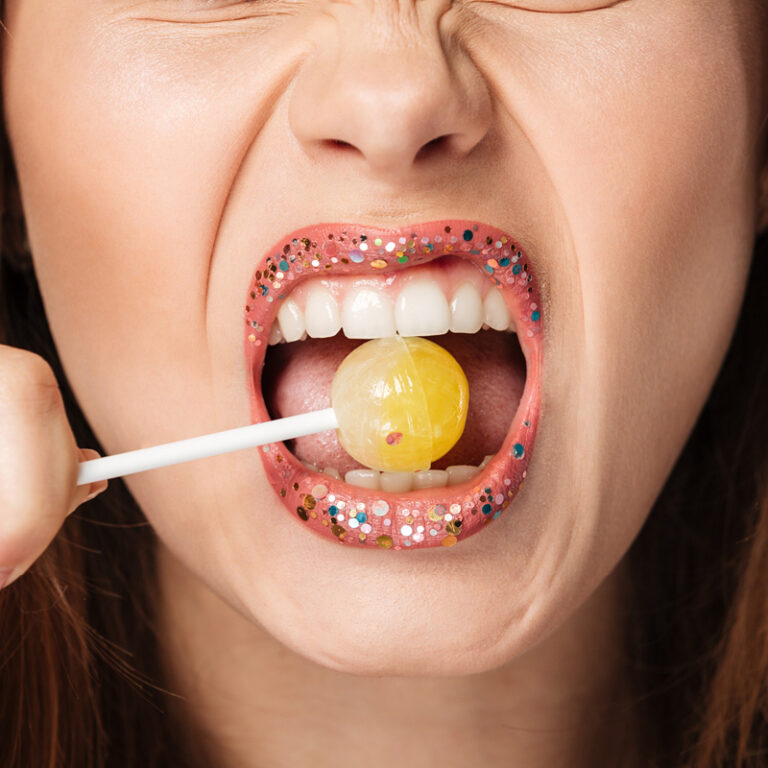
Perhaps anyone who has ever seen the animated series Once Upon a Time can recall the image of bacteria swallowing handfuls of sugar, which gives them the energy to diligently poke around in tooth enamel. And rightly so – the link to excessive sugar consumption has been repeatedly confirmed in the case of both tooth decay and periodontitis. In fact, bacteria in the mouth ferment sugar, producing acids that cause demineralisation of tooth structures. Firstly, sugar acts directly in the oral cavity, where, in addition to the amount consumed, its harmfulness also depends on the time it spends in the mouth (for example, sucking lollipops, etc., is problematic from this point of view). Secondly, its excessive consumption is also a significant negative epigenetic factor that increases the level of inflammatory processes throughout the body.
Not every sugar is equally harmful – for example, the milk sugar lactose is significantly safer for your teeth than sucrose. And xylitol, a sugar alcohol used as a sugar substitute, even has antibacterial properties and can even reduce the risk of tooth decay if found in chewing gum, for example (the same goes for maltitol).
But it’s not just about sugar. For example, there are also studies showing that the risk of tooth decay increases with insufficient protein intake or that a lack of omega-3 in the diet has a negative effect on the development of periodontal disease. Many vitamins and minerals are also important (see below).
Gut and oral microbiome
The oral microbiome, the collection of bacteria, viruses and other microorganisms that inhabit the oral cavity, plays an important role in the health of teeth and gums. It is the second largest microbial community in our body after the gut microbiome, and it is also connected to other microbiomes in the body, including the gut microbiome. Therefore, it is no coincidence that disruption of the balance of the oral microbiome is present not only in oral problems, but also in many diseases of other parts of the body.
The oral microbiome plays an important role in maintaining oral homeostasis, protecting the oral cavity and preventing disease. Plaque formation, maintenance of optimal pH in the mouth, and the risk of dental caries and gingivitis depend on its balance.
Diet is important for the health of the oral microbiome. The aforementioned excessive consumption of carbohydrates is detrimental, as they create an acidic environment in the mouth and most oral bacteria survive only within a narrow pH range. Oral hygiene is important, especially the removal of plaque, the presence of which also alters the acidity in the mouth. Chewing xylitol chewing gum, as mentioned above, is also beneficial, as is taking probiotics (especially lactobacilli and bifidobacteria). However, direct evidence on the effect of probiotic use on oral diseases is still lacking.
Overuse of antibiotics can also have a negative effect – there are studies suggesting that the use of tetracycline antibiotics in early childhood in particular can increase tooth decay
Body weight
Research has clearly shown that obese people have an increased risk of inflammatory periodontal disease. The reasons for this are probably again epigenetic – obesity primarily negatively affects methylation patterns in our DNA and increases the intensity of inflammatory processes throughout the body.
Stress and social factors
Stress tends to be a very underestimated factor in the development of oral health problems. The stress hormone cortisol can affect the viability of decay-causing bacteria. Similarly, oral health can be negatively affected by stress related to socioeconomic factors.
The worst stress is during pregnancy and early childhood. For example, according to one study, the psychosocial stress of the mother causes changes in the structure of the baby’s milk teeth. Other research has shown a link between stress in early childhood and the rate of ageing of permanent teeth.
Smoking
In particular, this habit significantly affects gene methylation and contributes to an increased risk of many serious diseases. Smoking has also been linked to oral diseases, in particular periodontitis. It also disrupts the balance of the oral microbiome. Smoking during pregnancy has the worst epigenetic consequences.
Nutrients and herbs for a healthy mouth
B-complex
Vitamin B12 levels are related to the severity of periodontitis, and the same is probably true for vitamin B9. Taking a B-complex also leads to faster healing after oral surgery.
Vitamin C
Thanks to its antioxidant effects, it helps to mitigate the harmful effects of free radicals in the oral cavity. Its significant deficiency is manifested by scurvy, an inflammatory disease of the periodontium that can result in tooth loss. In addition, taking the “C” speeds up healing for procedures and helps to better accept dental implants.
Vitamin D3
Its deficiency is manifested by increased intensity of inflammation and also impaired calcium absorption. It also promotes healing after surgical interventions.
Vitamin E
Its reduced level has been noted in people with periodontitis.
Vitamin K2
This vitamin is essential for the deposition of calcium in the bones and teeth. But it also acts as an antioxidant, both directly in the oral cavity and in the brain, which is also important for dental health. A part of the brain called the hypothalamus controls, among other things, saliva production, and if it is damaged by oxidative stress, the vulnerability of the teeth to oral bacteria increases.
Melatonin
This hormone is mainly used as a dietary supplement for sleep problems, but it also has an interesting effect on oral health. It is a powerful antioxidant which, when applied topically, reduces inflammation, has a positive effect on periodontal health and promotes the acceptance of dental implants. If you don’t want to take melatonin directly (it is a hormone after all), you can increase its levels in the body by taking tryptophan, from which melatonin is derived.
Calcium
This mineral adds hardness and resistance to the teeth and also affects periodontal health. Therefore, sufficient intake is essential for oral health.
Magnesium
Magnesium is also essential for the maintenance and formation of bones and teeth. Thus, its deficiency leads not only to osteoporosis but also to deterioration of oral health, including an increased risk of periodontitis.
Zinc
It is important for maintaining periodontal health, protecting the oral cavity from free radicals and is also important for wound healing after procedures and possibly for the acceptance of implants.
Fluorine (fluorides)
When used topically, it blocks the metabolism of sugars by microorganisms, thereby reducing acid production in the mouth. It also reduces the solubility of enamel and promotes the incorporation of calcium into tooth tissue.
Propolis
Propolis tincture is traditionally used for oral rinses, but internal use of propolis as a dietary supplement is also beneficial. It helps destroy harmful bacteria and yeast infections in the mouth and supports the activity of certain types of immune cells. In addition, it helps to maintain a balance in the bone cell ratio, thereby reducing bone loss in the jaw area, and also promotes the formation of dentin, which is the substance that forms the base of the entire tooth.
EGCG
Epigallocatoechin gallate from green tea is not only one of the very powerful epigenetic dietary supplements, but also has strong antibacterial effects and is particularly effective against the main cause of tooth decay, Streptococcus mutans. It helps to disrupt its cell membrane and also regulates the activity of genes involved in plaque formation. It also helps to reduce periodontitis and the overall level of inflammation in the body and counteracts yeast infections in the oral cavity.
Curcumin
It is one of the strongest natural anti-inflammatory agents and has a beneficial effect on a number of oral diseases, be it periodontitis, gingivitis, tooth decay and even oral tumours. The combination of its internal use with topical application is advantageous.
Pomegranate
Several studies have demonstrated the ability of pomegranate to significantly reduce the incidence of plaque-forming microorganisms. In this case, however, the active ingredients need to come into contact directly with the oral cavity. It is therefore possible, for example, to roll the juice around in the mouth for a while before swallowing; if the extract is used, it is advisable to pour it out of the capsule, mix it in water and rinse the oral cavity with it again before swallowing. In addition, pomegranate has also been shown to be effective against gingivitis.
Shrubby goatgrass
A herb popular in traditional Chinese medicine, it is one of the most powerful antioxidants and anti-inflammatory agents. It has also been shown to be effective against the causative agent of dental caries Streptococcus mutans and yeast infections of the oral cavity.
Nimba
The Azadirachta indica tree better known as nimba or neem contains a number of substances with antibacterial and anti-inflammatory effects. It helps to destroy bacteria that cause tooth decay, reduces plaque formation, supports immune processes in the oral cavity, is also used for mouth ulcers, as an oral deodorant and relieves toothache. It also counteracts periodontitis. It is also very useful for people with fixed braces, who have limited oral hygiene options and have an increased incidence of pathogens in their mouths. Nimba is used in the form of leaf or bark extract as an effective ingredient in toothpastes and mouthwashes. It is also used internally in its native country, but is not permitted as a food supplement in this country.
Ginger
It has relatively strong antimicrobial effects, effectively killing both periodontal bacteria and yeast infections in the oral cavity.
0:00
/
0:00
Stárnutí je volba
Klíčová slova: curcumin, dental pulp, egcg, Fenugreek blanched, ginger, gums, inflammation, Magnesium, melatonin, nimba, periodontitis, periodontitis, pomegranate, propolis, Teeth, tooth decay, tryptophan, vitamin B, Vitamin D3, vitamin K2, zinc
Komentáře
Seznam zdrojů
- Ji-Yun Seo, Yoon-Jung Park, Young-Ah Yi, Ji-Yun Hwang, In-Bog Lee, Byeong-Hoon Cho, Ho-Hyun Son, and Deog-Gyu Seo. Epigenetics: general characteristics and implications for oral health. Restor Dent Endod. 2015 Feb; 40(1): 14–22.
- Lod S, Johansson T, Abrahamsson KH, Larsson L. The influence of epigenetics in relation to oral health. Int J Dent Hyg. 2014;12:48–54.
- Lena Larsson, Rogerio M. Castilho, and William V. Giannobile. Epigenetics and Its Role in Periodontal Diseases: A State-of-the-Art Review. J Periodontol • April 2015. Volume 86 • Number 4.
- Mountain RV, Zhu Y, Pickett OR, Lussier AA, Goldstein JM, Roffman JL, Bidlack FB, Dunn EC. 2021. Association of maternal stress and social support during pregnancy with growth marks in children’s primary tooth enamel. JAMA Netw Open. 4(11):e2129129.
- McDermott CL, Hilton K, Park AT, Tooley UA, Boroshok AL, Mupparapu M, Scott JM, Bumann EE, Mackey AP. 2021. Early life stress is associated with earlier emergence of permanent molars. Proc Natl Acad Sci U S A. 118(24):e2105304118.
- Gomaa. Social Epigenomics: Conceptualizations and Considerations for Oral Health. J Dent Res.2022 Oct; 101(11): 1299–1306.
- https://www.linkedin.com/pulse/understanding-epigenetics-dental-research-top-5-facts-roy-goswami
- Ahmed Hussain, Hamid Tebyaniyan, Danial Khayatan. The Role of Epigenetic in Dental and Oral Regenerative Medicine by Different Types of Dental Stem Cells: A Comprehensive Overview. Stem Cells International. 09 June 2022
- Syed Ameer Hamza, Saba Asif, Zohaib Khurshid, Muhammad Sohail Zafar, and
- Syed Akhtar Hussain Bokhari. Emerging Role of Epigenetics in Explaining Relationship of Periodontitis and Cardiovascular Diseases. Diseases 2021, 9(3), 48
- Lu Gao, Tiansong Xu, Gang Huang, Song Jiang, Yan Gu, Feng Chen. Oral microbiomes: more and more importance in oral cavity and whole body. Protein Cell. 2018 May;9(5):488-500.
- The Role of Nutrition in Periodontal Health: An Update, Shariq Najeeb et al, Nutrients. 2016 Sep; 8(9): 530.
- Jan Oxholm Gordeladze, Maria A. Landin, Gaute Floer Johnsen, Håvard Jostein Haugen and Harald Osmundsen. Vitamin K2 and its Impact on Tooth Epigenetics. IntechOpen 2017.
- Shariq Najeeb, Muhammad Sohail Zafar ,Zohaib Khurshid, Sana Zohaib, and Khalid Almas. The Role of Nutrition in Periodontal Health: An Update. Nutrients. 2016 Sep; 8(9): 530.
- Priya Nimish Deo and Revati Deshmukh. Oral microbiome: Unveiling the fundamentals. J Oral Maxillofac Pathol. 2019 Jan-Apr; 23(1): 122–128.
- Luigi Santacroce, Pier Carmine Passarelli,,* Domenico Azzolino, Lucrezia Bottalico, Ioannis Alexandros Charitos, Angela Pia Cazzolla, Marica Colella, Skender Topi,4 Franklin Garcia Godoy, and Antonio D’Addona. Oral microbiota in human health and disease: A perspective. Exp Biol Med (Maywood). 2023 Aug; 248(15): 1288–1301.
- Dharini Ravindra, DCD; Gwendolyn Huang, DCD; Kerrod Hallett, MDSc; David P. Burgner, PhD; Amanda Gwee, PhD; Mihiri J. Silva, PhD. Antibiotic Exposure and Dental Health: A Systematic Review. Pediatrics (2023) 152 (1): e2023061350.
- Zohreh Ahangari, Mandana Naseri, and Farzaneh Vatandoost. Propolis: Chemical Composition and Its Applications in Endodontics. Iran Endod J. 2018 Summer; 13(3): 285–292.
- Bhadbhade SJ, Acharya AB, Rodrigues SV, Thakur SL. The antiplaque efficacy of pomegranate mouthrinse. Quintessence Int. 2011;42:29–36.
- Menezes SM, Cordeiro LN, Viana GS. Punica granatum (pomegranate) extract is active against dental plaque. J Herb Pharmacother. 2006;6:79–92.
- Mee Young Hong, Navindra P. Seeram, and David Heber. Pomegranate Polyphenols Downregulate Expression of Androgen Synthesizing Genes in Human Prostate Cancer Cells Overexpressing the Androgen Receptor. J Nutr Biochem. 2008 Dec; 19(12): 848–855.
- Chen Kong, Huili Zhang, Lingfeng Li, and Zhihui Liu. Effects of green tea extract epigallocatechin-3-gallate (EGCG) on oral disease-associated microbes: a review. J Oral Microbiol. 2022; 14(1): 2131117.
- Francesco Inchingolo, Alessio Danilo Inchingolo, Giulia Latini, Irma Trilli, Laura Ferrante, Paola Nardelli, Giuseppina Malcangi, Angelo Michele Inchingolo, Antonio Mancini, Andrea Palermo, and Gianna Dipalma. Role of Curcumin in Oral Health and Diseases: A Systematic Review. Antioxidants 2024, 13(6), 660.
- Shahbaz Asif Ali, Alok Avinash, Brij Kumar, Reena Kulshrestha, Dhani Kapur and Saurav Kumar Prabhat. EFFICACY OF ASTRAGALUS EXTRACT AGAINST S. mutans and C.albicansan in vitro Study, International Journal of Recent Scientific Research. June 2019
- Lakshmi, Vidya Krishnan,1R Rajendran,2and N. Madhusudhanan. Azadirachta indica: A herbal panacea in dentistry – An update. Pharmacogn Rev. 2015 Jan-Jun; 9(17): 41–44.
- Park M, Bae J, Lee DS. Antibacterial activity of [10]-gingerol and [12]-gingerol isolated from ginger rhizome against periodontal bacteria. Phytother Res. 2008;22:1446–1449.
- Arshad H Rahmani, Fahad M Al shabrmi, and Salah M Aly. Active ingredients of ginger as potential candidates in the prevention and treatment of diseases via modulation of biological activities. Int J Physiol Pathophysiol Pharmacol. 2014; 6(2): 125–136.