
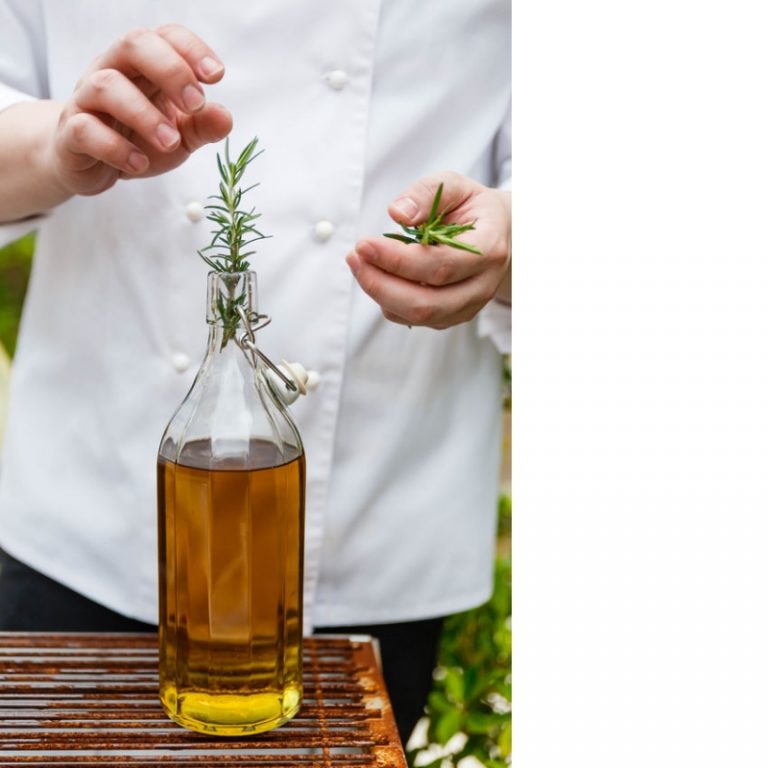
The Mediterranean diet is one of the healthiest dietary systems. It is the reason why, despite the relatively high consumption of fat, the Mediterranean population suffers less frequently from cardiovascular disease, cancer, and Alzheimer’s and Parkinson’s disease than the rest of Europe. Olive oil is one of the basic components of the Mediterranean diet.
Olive oil is a liquid treasure and owes its existence to a whole complex of active ingredients. Particularly important is the content of essential unsaturated fatty acids, especially alpha-linoleic and oleic acid. In addition, compared to other vegetable oils, it contains a high proportion of monounsaturated fatty acids (with only one double bond), which are significantly more stable than polyunsaturated ones and do not cause the formation of bile acids in the digestive tract, which increase the risk of cancer. Monounsaturated fatty acids are also very effective in lowering blood cholesterol levels.
But perhaps even more important is the complex of plant polyphenols, which excel in their antioxidant effects – one of them, hydroxytyrosol, is even one of the most powerful natural antioxidants ever. These polyphenols help to neutralise free radicals, which do a lot of damage in the body. For example, they react with fats in cell membranes, accelerating cell ageing, and also damage proteins, enzymes and mitochondria, leading to inflammatory processes and metabolic disorders. It is the action of free radicals, or oxidative stress, that is one of the important causes of cardiovascular disease, Alzheimer’s and Parkinson’s disease, diabetes cancer, arthritis and other disorders.
Among the phenolic compounds in olive oil is oleocanthal, which has significant anti-inflammatory effects and has been shown to counteract certain types of cancer, Alzheimer’s and Parkinson’s disease, and degenerative joint disease. However, inflammatory processes are also involved in the development of cardiovascular disease, diabetes, obesity and other problems.
The phenolic compounds in olive oil not only excel in their ability to destroy harmful free radicals, but can even influence our genetic information through epigenetic effects. In fact, they regulate the course of biochemical reactions that switch off or on individual genes in DNA.
It is to the epigenetic action of polyphenols that olive oil owes its extraordinary anti-inflammatory effect. These substances affect the activity of genes controlling the production of enzymes called cyclooxygenase (COX), which play a key role in the development of inflammatory processes. This is, incidentally, the same principle of action on which anti-inflammatory drugs such as aspirin and ibuprofen work. In addition, olive polyphenols also affect the genes necessary for the activation of the transcription factor NF-kB, which also promotes inflammation.
However, olive oil also acts directly on the genes that influence our resistance to cancer. For example, it reduces the methylation of the CNR1 promoter gene, which is a tumour suppressor gene – thus suppressing the growth of tumours, in this case colorectal tumours. If its promoter is methylated, the activity of the gene decreases. Regular consumption of olive oil can reduce the level of methylation by up to 50%, which also significantly reduces the risk of cancer.
However, for the epigenetic effects of olive oil to take effect, it must be consumed almost daily and in sufficient quantities. In the Mediterranean, it accounts for up to 30% of the daily energy intake, so a few drops in a salad is definitely not enough. However, you can boost its effects by taking supplements with olive polyphenols.
However, as we have already mentioned, olive oil works best as part of a complex Mediterranean diet. If you only use it to supplement a regular Mediterranean diet, it can bring some pitfalls.
The first is that the cyclooxygenase family includes two enzymes in total. We don’t really want the one called COX 2 in the body because it increases the rate of inflammatory processes, and while acute inflammatory processes are usually beneficial to the body because they promote wound healing, for example, chronic ones are clearly harmful to health (they increase the risk of cardiovascular disease, diabetes and some cancers, for example), so it is important to suppress COX 2 production. However, this enzyme also has a “good brother”, COX 1, which is essential for protecting the lining of the digestive tract and therefore we do not want to suppress its production. The problem is that olive oil will not only reduce the production of COX 2, but also COX 1.
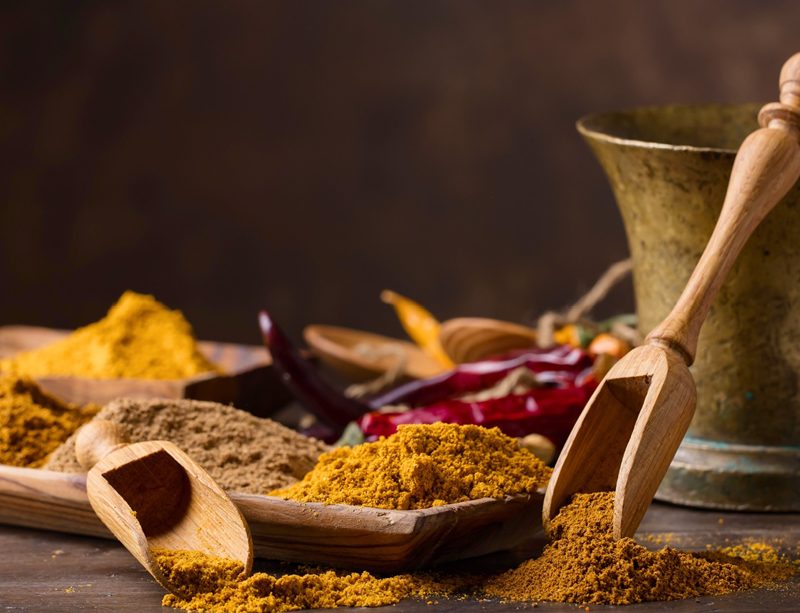
Mediterranean cuisine has the solution. It makes extensive use of herbs such as rosemary, basil and sage, which also have epigenetic effects – in addition to suppressing COX 2 production, they also have a beneficial effect on COX 1 production. It is also possible to take, for example, dietary supplements with rosemary extract.
Another pitfall lies in the unbalanced ratio of omega-3 and omega-6 unsaturated fatty acids. While both of these nutrients are essential for the body, they compete with each other on several fronts – especially for a group of enzymes necessary for the production of so-called signaling molecules. However, while omega-3-derived signaling molecules are anti-inflammatory, omega-6-derived ones promote inflammation. It is therefore important that the “sixes” do not significantly outweigh the “threes” in the diet. The optimal ratio of their intake is 1:1, but at most 1:4 in favour of the “sixes”, otherwise inflammatory processes will start to develop in the body.
But the problem is that in our diet this ratio is many times higher, and olive oil is one of the vegetable oils with an inappropriate ratio of both acids (about 13:1 in favour of omega-6). While this is not as bad as corn oil (83:1) or sunflower oil (no omega-3), it is still significantly worse than the much-maligned butter, which boasts a ratio of 1.6:1. The minimum we should be aiming for is two portions of fish a week. If we are not able to do this and want to use olive oil extensively in the kitchen, it is advisable to consider supplementing with omega-3s through food supplements again. In this respect, it is also advantageous to take olive polyphenols, such as hydroxytyrosol or mixtures with a high proportion of this substance, as a dietary supplement, as they contain no fat and therefore no omega-6 unsaturated fatty acids.
PŘIHLASTE SE K ODBĚRU NOVINEK A MĚJTE VŽDY ČERSTVÉ INFORMACE
| Cookie | Duration | Description |
|---|---|---|
| cookielawinfo-checkbox-analytics | 11 měsíců | Tento soubor cookie je nastaven pluginem GDPR Cookie Consent. Soubor cookie se používá k uložení souhlasu uživatele s používáním souborů cookie v kategorii „Analytika“. |
| cookielawinfo-checkbox-functional | 11 měsíců | Soubor cookie je nastaven na základě souhlasu s cookie GDPR k zaznamenání souhlasu uživatele pro soubory cookie v kategorii „Funkční“. |
| cookielawinfo-checkbox-necessary | 11 měsíců | Tento soubor cookie je nastaven pluginem GDPR Cookie Consent. Cookies slouží k uložení souhlasu uživatele s cookies v kategorii „Nezbytné“. |
| cookielawinfo-checkbox-others | 11 měsíců | Tento soubor cookie je nastaven pluginem GDPR Cookie Consent. Cookie se používá k uložení souhlasu uživatele s cookies v kategorii „Jiné. |
| cookielawinfo-checkbox-performance | 11 měsíců | Tento soubor cookie je nastaven pluginem GDPR Cookie Consent. Cookie se používá k uložení souhlasu uživatele s cookies v kategorii „Výkon“. |
| elementor | nikdy | Tento soubor cookie používá téma WordPress webu. Umožňuje vlastníkovi webu implementovat nebo měnit obsah webu v reálném čase. |
| viewed_cookie_policy | 11 měsíců | Soubor cookie je nastaven pluginem GDPR Cookie Consent a používá se k uložení, zda uživatel souhlasil nebo nesouhlasil s používáním souborů cookie. Neukládá žádné osobní údaje. |
| Cookie | Duration | Description |
|---|---|---|
| sb | 2 roky | Tento soubor cookie používá Facebook ke kontrole svých funkcí, shromažďování jazykových nastavení a sdílení stránek. |
| Cookie | Duration | Description |
|---|---|---|
| _ga | 2 roky | Soubor _ga cookie, nainstalovaný službou Google Analytics, vypočítává údaje o návštěvnících, relacích a kampaních a také sleduje využití webu pro analytický přehled webu. Soubor cookie ukládá informace anonymně a přiřazuje náhodně vygenerované číslo k rozpoznání unikátních návštěvníků. |
| _gat_gtag_UA_71041054_1 | 1 minuta | Nastaveno Googlem k rozlišení uživatelů. |
| _gid | 1 den | Soubor cookie _gid nainstalovaný službou Google Analytics ukládá informace o tom, jak návštěvníci používají webovou stránku, a zároveň vytváří analytickou zprávu o výkonu webu. Některá data, která jsou shromažďována, zahrnují počet návštěvníků, jejich zdroj a stránky, které anonymně navštěvují. |
| Cookie | Duration | Description |
|---|---|---|
| fr | 3 měsíce | Facebook nastavuje tento soubor cookie tak, aby uživatelům zobrazoval relevantní reklamy sledováním chování uživatelů na webu, na stránkách, které mají Facebook pixel nebo sociální plugin Facebooku. |
| _fbp | 3 měsíce | Tento soubor cookie je nastaven společností Facebook, aby po návštěvě webové stránky zobrazoval reklamy na Facebooku nebo na digitální platformě založené na reklamě na Facebooku. |
| Cookie | Duration | Description |
|---|---|---|
| pvc_visits[0] | 1 minuta | Tento soubor cookie vytváří počítadlo po zhlédnutí. Tento soubor cookie se používá k počítání počtu návštěv příspěvku. Pomáhá také zabránit opakovanému zobrazení příspěvku návštěvníkem. |

















One Comment
Greetings in the community, I love olive oil, use it often, in fact other healing virgin oils. I know something about them, so I took the liberty to write an article about the most important ones. Maybe some of you will find it useful. I am not advertising, just spreading awareness for my own pleasure. If you are interested, you can find my article here: http://www.beznudle.cz/lex-cz-blog-0006.html