Gout: when even a blanket on the legs hurts
epivyziva.cz/
Zobrazeno: 153
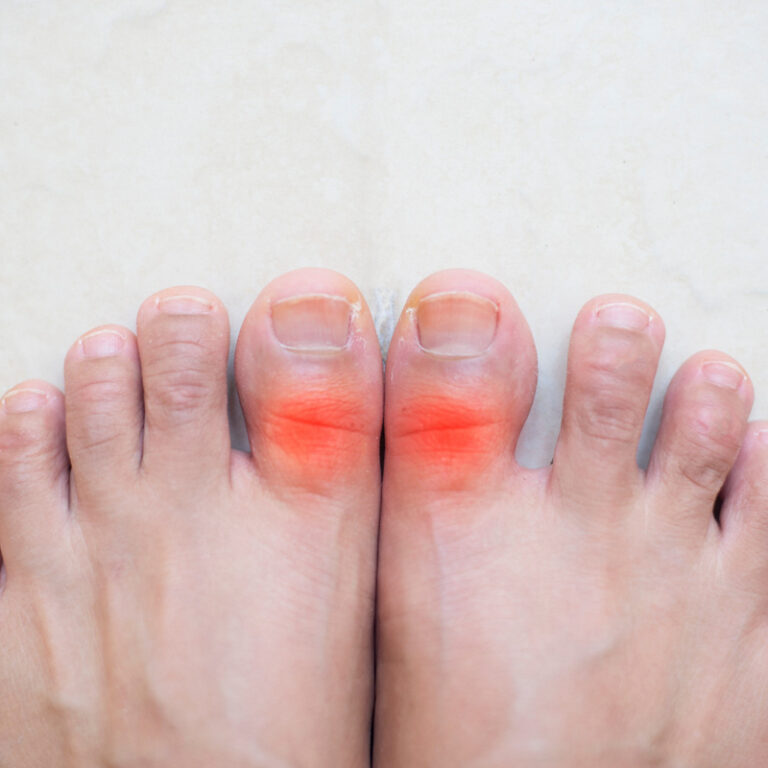
“It’s his own fault, I’m sure he was overeating meat and junk.” People suffering from gout come across this statement very often. But the matter is much more complex, gout can have a variety of causes, many of which lie within our genes. How can we help ourselves in a natural way?
Gout is probably the most famous joint disease, described by Hippocrates of Kos in the 5th century BC. It has long been called the ‘disease of kings’ because it was so prevalent in royal families – for example, 20 out of 34 French kings probably suffered from gout. Hedonic lifestyle associated with overeating meat and a generally calorie-rich diet was also long thought to be its main cause. But the matter is much more complex.
Not that diet does not play a role in the onset of the disease, but it is certainly not the only aspect. Which is logical – far from everyone who overeats actually gets gout. A whole host of other factors come into play.
The main problem: uric acid
The main cause of gout is considered to be a high level of uric acid. This is a substance that is only very sparingly soluble in water. Its excretion by the kidneys is therefore very complicated, and it can start to form crystals that are deposited, for example, in the joints, where they cause inflammation, swelling and very severe pain. Usually the small joints, typically the big toes, are the first to be affected.
The disease manifests itself in the form of seizures, in which the pain is so severe that many patients cannot even bear to wear a blanket. Their duration is individual – sometimes the trouble subsides in a few hours, sometimes they last for weeks. There are then long periods between attacks, during which the patient is completely free from difficulty. However, if the affected person is undisciplined and does not follow the treatment regimen, the disease can progress to the stage of chronic tophaceous gout, when crystals in the joints accumulate into so-called tophi, which can damage the surrounding bone tissue and contribute to the development of serious infections.
Is it the genes?
Although increased uric acid production is generally considered to be the main cause of gout, in reality it is not so clear-cut. In fact, there are quite a lot of people with elevated levels of this substance in the population, but only a small proportion of them (estimates vary between 2 and 15%) actually develop gout. Conversely, many gout sufferers have quite normal levels between attacks. Moreover, it turns out that uric acid is not a clear “villain”, but may have some benefits (e.g. protection against free radicals, neurodegenerative or infectious diseases). So what is the proximate cause?
Gout is to some extent hereditary. Studies on identical twins have shown that the heritability of elevated urinary levels is around 50%, but directly gout in children is much less – up to 30%, some estimates even state that only 10% of cases are caused genetically. However, some polymorphisms related to immune cell activity may also contribute to heritability.
Recently, however, there has been increasing evidence that epigenetic mechanisms – i.e. biochemical reactions capable of influencing the activity of certain genes in our DNA – play a major role in the development of gout. Studies comparing the genome of people with and without the disease have revealed several characteristic epigenetic changes – in particular, changes in genes encoding the production of dimethyltransferases and non-coding RNAs, as well as in genes involved in uric acid metabolism and excretion and the development of inflammatory processes
What does conventional medicine have to say about it?
Unfortunately, apart from dietary recommendations that need to be followed in the long term, conventional medicine tends to focus on short-term treatment of seizures, addressing the symptoms rather than the actual causes. Several drugs are available, such as colchicine, IL-1β cytokine blockers, non-steroidal antirheumatic drugs or drugs that facilitate the excretion of uric acid by the kidneys. Most of these have a number of side effects. More effective and body-friendly drugs are still under development.
But it is the findings from epigenetics that could bring positive changes here – epigenetic drugs could, for example, reprogram immune cells such as monocytes and macrophages in the future, leading to a reduction in the inflammation that accompanies gout attacks.
And how can we help ourselves in the case of gout in a natural way?
Start from the diet
Uric acid is formed from so-called purines, which are substances that are, for example, part of the DNA molecule. We can take them in through our diet, but they are also formed inside our bodies. Uric acid build-up can thus be the result of both excessive purine intake and reduced uric acid excretion.
So when a person with gout symptoms goes to the doctor, they are usually given a list of foods to avoid – foods that are rich in purines – in addition to medication. Dietary adherence should not be underestimated; the influence of diet is really crucial here. But strangely enough, not all food sources of purines can cause gout.
For example, red meat clearly contributes to increased uric acid production, as it contains quite a lot of it, while plant sources of purines, such as beans or lentils, do not trigger gout attacks (yet they are listed as unsuitable foods on most diet lists for people with gout). Protein-rich diets are generally not a risk either – for example, when a group of people with high blood pressure were given a protein-rich diet for 6 weeks in one study, their uric acid levels not only did not increase but actually decreased.
One more thing about legumes: How is it possible that they do no harm in gout, even though they are rich in purines? The reason may be that they are also an important source of fibre, which in turn has a positive effect in gout. In fact, its abundant consumption improves the balance of the gut microbiome, resulting in increased production of short-chain fatty acids (acetate, propionate, butyrate), which are produced by certain gut bacteria. These fatty acids then significantly reduce the intensity of inflammatory processes in the body.
Increased intake of omega-3 unsaturated acids is also beneficial in gout. The Mediterranean diet is also a suitable alternative – the population living in the Mediterranean region suffers significantly less from gout than the rest of the European population.
On the other hand, excessive consumption of saturated fats, omega-6 saturated acids and food drinks sweetened with fructose or glucose-fructose syrup are harmful. The ongoing metabolism of fructose in the liver leads to increased uric acid production. It is also advisable to avoid the aforementioned red meat, but also seafood and dairy products.
Alcohol is also inappropriate – most notably beer, which is a source of purines, but alcohol generally impairs the excretion of uric acid by the kidneys.
Conversely, specific substances with epigenetic effects can also be very beneficial, whether consumed as part of food or in the form of supplements. Particularly suitable are plant substances with an effect on the course of individual epigenetic reactions (gene methylation, histone modification, production of non-coding RNAs) and on the development of inflammatory processes (see below), typically, for example, plant polyphenols, but also, for example, pineapple enzymes or sulforaphane from cruciferous vegetables.
A sufficient intake of essential vitamins and minerals is also important. This is especially true for vitamin D3, which is an important player in the regulation of inflammatory processes, vitamin C, B vitamins (especially folic acid), zinc, selenium and magnesium.
Movement helps, obesity hurts
As with the vast majority of diseases with an epigenetic background, the risk of gout is significantly increased by obesity, which is one of the most significant negative epigenetic factors (especially in the area of gene methylation). In addition, obesity impairs the function of the kidneys, which are then unable to adequately break down purines from food. In particular, the so-called visceral or internal fat, which is stored inside the abdominal cavity, is at risk. It is estimated that for every 5 extra points of BMI, the risk of gout increases by 55%! Conversely, a reduction in weight usually leads to a reduction in both the frequency of attacks and their intensity.
Movement is also beneficial here. Although it is not suitable during gout attacks (on the contrary, anything that increases the load on the joints should be avoided), regular physical activity generally reduces the level of inflammation in the body, reduces the perception of pain and also helps to reduce the number of attacks and improve joint mobility. Aerobic physical activities that do not stress the joints (such as cycling or swimming) are particularly suitable, but yoga, Tai Chi and Pilates are also suitable.
Certain diseases such as high blood pressure, diabetes and insulin resistance can also increase the risk of gout.
Smoking reduces risk
It might seem that everything that can be included under the term ‘healthy lifestyle’ reduces the risk of gout and its severity in general, but there is one exception: smoking has a positive effect. Smokers are about 27% less likely to develop gout!
Smoking significantly alters the methylation patterns in our DNA, which has a negative effect on the vast majority of processes in the body. As a result, smokers have a significantly higher risk of cancer, cardiovascular disease and other problems, and they also age faster. Yet there are exceptions where these changes in gene methylation can in turn have a positive effect, and gout is one of them (Parkinson’s disease is another).
However, it should be added that this is only a statistical reduction in risk – it does not mean that smokers cannot get gout, and there is certainly no evidence that anyone can be cured of gout by starting to smoke.
Useful dietary supplements
In general, all natural anti-inflammatory substances, typically most plant polyphenols for example, as well as many herbs, can bring relief. However, some substances directly interfere with the epigenetic processes involved in gout.
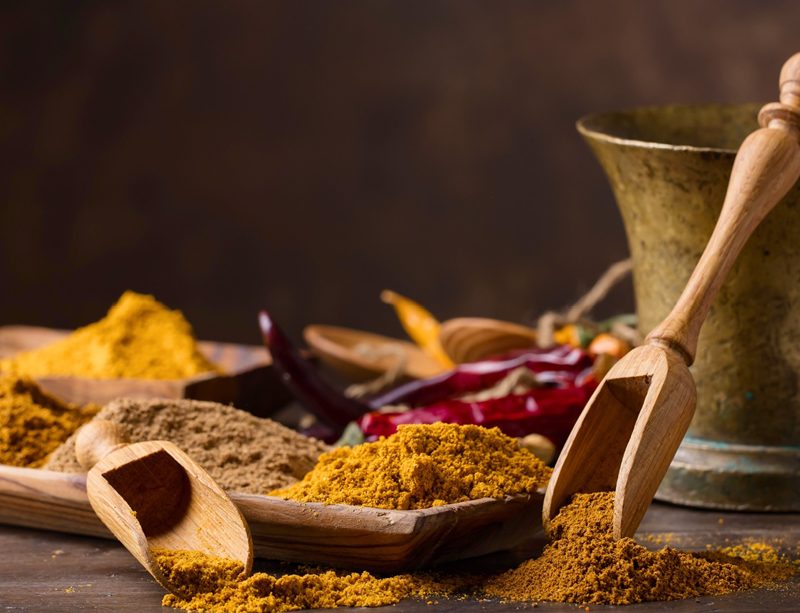
Curcumin – a dye from turmeric root is one of the most powerful natural anti-inflammatory agents, and also helps reduce uric acid production.
Bromelain – a group of enzymes extracted from pineapple is known for its ability to relieve pain, swelling and inflammation of joints, but in addition, it also positively affects directly the level of uric acid. However, regular consumption of pineapple has also been shown to be beneficial.
Sulforaphanes – substances abundantly found, for example, in broccoli extract, have a very strong anti-inflammatory effect and help reduce the frequency of gout attacks.
Quercetin , a polyphenol found in small amounts in many plant foods, has strong anti-inflammatory and antioxidant effects and has been shown to reduce uric acid levels in the blood.
Resveratrol – also a dye from the skins of red grapes, it has the ability to reduce inflammation and uric acid. It works not only preventively, but also to relieve an acute attack.
Artichoke , a vegetable that is especially popular in the Mediterranean, has been used to treat gout since ancient times, and its ability to reduce uric acid levels has been confirmed by modern research. This is mainly due to its high content of polyphenols, such as luteolin.
Hydroxytyrosol – a polyphenol extracted from olives has strong anti-inflammatory and antioxidant effects, plus it inhibits the production of the enzyme xanthine oxidase, which is linked to the development of gout.
Butyrate – this short-chain fatty acid is produced by some gut bacteria, but may be beneficial in the form of dietary supplements, especially if the gut microbiome is out of balance. It helps to regulate inflammatory processes and to reduce uric acid levels.
EGCG – a substance contained mainly in green tea is generally strongly anti-inflammatory, and is particularly effective in interfering with the mechanism of inflammation induced by uric acid crystals. It also brings relief during an acute attack.
Genistein – also a polyphenol derived from soy, it inhibits the production of the enzyme xanthine oxidase and helps reduce uric acid levels.
0:00
/
0:00
Stárnutí je volba
Klíčová slova: Artichoke, broccoli, Bromelain, Butyrate, curcumin, DNA, egcg, Genistein, hydroxytyrosol, joint pain, quercetin, resveratrol, sulforaphane, uric acid
Komentáře
Seznam zdrojů
- Philippe T. Georgel† and Philippe Georgel. Where Epigenetics Meets Food Intake: Their Interaction in the Development/Severity of Gout and Therapeutic Perspectives. Front Immunol. 2021; 12: 752359.
- Ragab G, Elshahaly M, Bardin T. Gout: An Old Disease in New Perspective – A Review. J Adv Res (2017) 8(5):495–511.
- Belanger MJ, Wee CC, Mukamal KJ, Miller ER, Sacks FM, Appel LJ, et al.. Effects of Dietary Macronutrients on Serum Urate: Results From the OmniHeart Trial. Am J Clin Nutr (2021) 113(6):1593–9.
- Vieira AT, Macia L, Galvão I, Martins FS, Canesso MC, Amaral FA, et al.. A Role for Gut Microbiota and the Metabolite-Sensing Receptor GPR43 in a Murine Model of Gout. Arthritis Rheumatol (2015) 67(6):1646–56.
- Cadzow M, Merriman TR, Dalbeth N. Performance of Gout Definitions for Genetic Epidemiological Studies: Analysis of UK Biobank. Arthritis Res Ther (2017) 19(1):181.
- Li R, Yu K, Li C. Dietary Factors and Risk of Gout and Hyperuricemia: A Meta-Analysis and Systematic Review. Asia Pac J Clin Nutr (2018) 27(6):1344–56.
- Dilli Ram Poudel, Paras Karmacharya, Anthony Donato. Risk of acute gout among active smokers: data from nationwide inpatient sample. Clin Rheumatol. 2016 Dec;35(12):3015-3018.
- https://www.saltlakecitypodiatrist.net/blog/the-link-between-obesity-and-gout
- https://www.medicalnewstoday.com/articles/gout-and-physical-exercise#benefits
- Amir Masoud Jafari-Nozad, Amirsajad Jafari, Saman Yousefi, Hasan Bakhshi, Tahereh Farkhondeh, Saeed Samarghandian. Anti-gout and urate-lowering potentials of curcumin: A review from bench to beside. Curr Med Chem. 2023 Jul 21.
- https://www.webmd.com/arthritis/what-to-know-about-supplements-for-gout
- Maya Fadlilah, Aristoteles, Trilia, Maratun Ulla, Sandeep Poddar. The Effect of Pineapple Consumption on Uric Acid Levels in Elderly at Panti Sosial Harapan Kita Palembang. Malaysian Journal of Medicine and Health Sciences (eISSN 2636-9346)
- Sarah Brien, George Lewith, Ann Walker, Stephen M. Hicks, and Dick Middleton. Bromelain as a Treatment for Osteoarthritis: a Review of Clinical Studies. Evid Based Complement Alternat Med. 2004 Dec; 1(3): 251–257.
- Gabsik Yang , Sang Hyeon Yeon, Hye Eun Lee , Han Chang Kang , Yong Yeon Cho, Hye Suk Lee , Joo Young Lee. Suppression of NLRP3 inflammasome by oral treatment with sulforaphane alleviates acute gouty inflammation. Rheumatology (Oxford). 2018 Apr 1;57(4):727-736.
- Thanutchaporn Nutmakul. A review on benefits of quercetin in hyperuricemia and gouty arthritis. Saudi Pharm J. 2022 Jul; 30(7): 918–926.
- Haiyan Chen, Shucong Zheng, Yuankai Wang , Huiqing Zhu, Qiong Liu , Yu Xue , Jianhua Qiu, Hejian Zou , Xiaoxia Zhu. The effect of resveratrol on the recurrent attacks of gouty arthritis.
- Clin Rheumatol. 2016 May;35(5):1189-95.
- Sasiporn Sarawek , Bjoern Feistel, Ivo Pischel, Veronika Butterweck. Flavonoids of Cynara scolymus possess potent xanthinoxidase inhibitory activity in vitro but are devoid of hypouricemic effects in rats after oral application. Planta Med. 2008 Feb;74(3):221-7.
- Yukun Li , Hanqing Li , Rong Wang , Yajie Yu, Xin Liu , Zibin Tian. Protective effect of sodium butyrate on intestinal barrier damage and uric acid reduction in hyperuricemia mice. Biomed Pharmacother. 2023 May:161:114568.
- Hye Eun Lee, Gabsik Yang, Youn Bum Park, Han Chang Kang, Yong-Yeon Cho, Hye Suk Lee, and Joo Young Lee. Epigallocatechin-3-Gallate Prevents Acute Gout by Suppressing NLRP3 Inflammasome Activation and Mitochondrial DNA Synthesis. Molecules. 2019 Jun; 24(11): 2138.
- https://onlinelibrary.wiley.com/doi/full/10.1002/fft2.287
- https://www.ikem.cz/cs/dna-a-vysoka-hladina-kyseliny-mocove/a-1989/