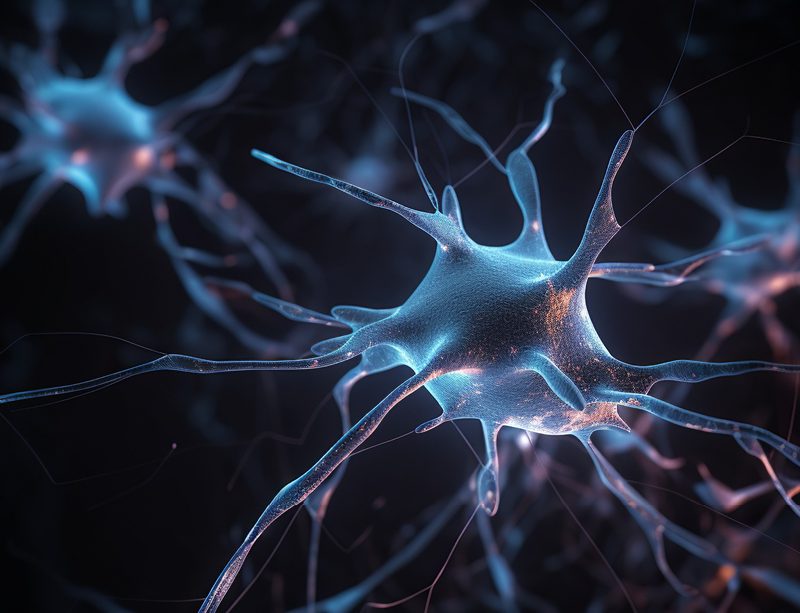
Fish and seafood are primarily a hard-to-replace source of omega-3 unsaturated fatty acids. These substances have recently been mentioned mainly in connection with heart health, but they are also completely irreplaceable for the proper development of the brain and nervous system.
Omega-3s have very strong epigenetic effects. They positively affect the level of methylation in the body, which is a chemical reaction that reduces the activity of genes in our DNA and can even turn them off completely. A sufficient intake of omega-3s is therefore necessary, among other things, to ensure that the genes responsible for the development and function of the nervous system are sufficiently activated.
One of these three substances, docosahexaenoic acid (DHA), is also a direct building block of nerve cells and is considered to be the most important fatty substance in brain function – inthe grey cortex of the frontal lobes, which are the most important for the intellect, constituting approximately 15% of all fatty acids, and, in addition to its structural function, it is also responsible for the maturation of nerve cells, the transmission of nerve impulses, cell signalling and glucose metabolism in the brain. In addition, some of the substances produced in the metabolism of DNA are powerful antioxidants. Studies conducted on mice have even shown that pups whose mothers were fed a diet low in omega-3 during pregnancy were even born with lower brain volume!
Omega-3s are essential for proper brain function at any stage of life. However, they are essential during the time when the brain and nervous system are forming and developing – in particular during intrauterine development, then from birth to two years of age, and to a lesser extent throughout childhood. There are even a number of studies that have shown a direct link in children between omega-3 or DHA and concentration, memory, cognitive ability, intelligence quotient (IQ), hyperactivity behaviour and ADHD, and some even school performance. One study even showed improvements in reading ability after taking DHA in the form of dietary supplements.
However, omega-3s are important not only for brain development and function, but also for the functioning of the immune system. They are very effective immunomodulators. They improve the transmission of signals between immune cells, thus enhancing their ability to destroy pathogens. They are also essential for the function of lysosomes, which are organelles important for cellular defence and cellular immunity. In addition, they exert anti-inflammatory effects, whereby, as increased levels of inflammation in the body generally lead to decreased immune cell activity.
Another nutrient that fish contain in abundance – vitamin D3 – is also absolutely essential for the proper functioning of the immune system. It directly influences the activity of many cells of the immune system, especially macrophages, T-cells and dendritic cells. In addition, it is also important for calcium metabolism and thus for the proper development of bones and teeth in children.
The level of vitamin D3 in our population is generally very low and this is also true for children. This is due to the fact that today’s children spend very little time outdoors, and if they do get outdoors, their parents protect their skin with sunscreen. While this prevents dangerous sunburn, it also blocks the production of vitamin D3, which is produced in the skin by UV radiation.
Finally, fish is also a great source of quality protein, a sufficient intake of which is essential for the proper growth and development of the whole child’s organism (including the brain) and also for the functioning of the immune system. The advantage is that fish meat has short fibres and is therefore very digestible. This is particularly important for children who subconsciously reject meat because it is difficult to digest. And in the case of marine fish, we must not forget the iodine content, which is essential for energy metabolism and the function of the brain and nervous system.
The usually recommended two servings of fish per day is the absolute minimum (and even this is rarely observed). Especially if we want to repair the damage already done (for example, attention disorders, poorer school performance or compromised immunity), we need to significantly increase the intake of omega-3. The minimum recommended daily intake is 250 mg of both EPA and DHA per day, with a daily DHA intake of 400 mg for at least two months needed for a more pronounced effect on cognitive and behavioural disorders.
For this reason, it is advisable to consider the intake of omega-3 in the form of dietary supplements. For children who are not able to swallow capsules, there are also fruit-flavoured preparations on the market that suppress the unpleasant aftertaste of fish oil. Particularly in autumn and winter, it is also advisable to supplement children with vitamin D3.
Breastfeeding and pregnant women should also supplement omega-3s regularly.
PŘIHLASTE SE K ODBĚRU NOVINEK A MĚJTE VŽDY ČERSTVÉ INFORMACE





| Cookie | Duration | Description |
|---|---|---|
| cookielawinfo-checkbox-analytics | 11 měsíců | Tento soubor cookie je nastaven pluginem GDPR Cookie Consent. Soubor cookie se používá k uložení souhlasu uživatele s používáním souborů cookie v kategorii „Analytika“. |
| cookielawinfo-checkbox-functional | 11 měsíců | Soubor cookie je nastaven na základě souhlasu s cookie GDPR k zaznamenání souhlasu uživatele pro soubory cookie v kategorii „Funkční“. |
| cookielawinfo-checkbox-necessary | 11 měsíců | Tento soubor cookie je nastaven pluginem GDPR Cookie Consent. Cookies slouží k uložení souhlasu uživatele s cookies v kategorii „Nezbytné“. |
| cookielawinfo-checkbox-others | 11 měsíců | Tento soubor cookie je nastaven pluginem GDPR Cookie Consent. Cookie se používá k uložení souhlasu uživatele s cookies v kategorii „Jiné. |
| cookielawinfo-checkbox-performance | 11 měsíců | Tento soubor cookie je nastaven pluginem GDPR Cookie Consent. Cookie se používá k uložení souhlasu uživatele s cookies v kategorii „Výkon“. |
| elementor | nikdy | Tento soubor cookie používá téma WordPress webu. Umožňuje vlastníkovi webu implementovat nebo měnit obsah webu v reálném čase. |
| viewed_cookie_policy | 11 měsíců | Soubor cookie je nastaven pluginem GDPR Cookie Consent a používá se k uložení, zda uživatel souhlasil nebo nesouhlasil s používáním souborů cookie. Neukládá žádné osobní údaje. |
| Cookie | Duration | Description |
|---|---|---|
| sb | 2 roky | Tento soubor cookie používá Facebook ke kontrole svých funkcí, shromažďování jazykových nastavení a sdílení stránek. |
| Cookie | Duration | Description |
|---|---|---|
| _ga | 2 roky | Soubor _ga cookie, nainstalovaný službou Google Analytics, vypočítává údaje o návštěvnících, relacích a kampaních a také sleduje využití webu pro analytický přehled webu. Soubor cookie ukládá informace anonymně a přiřazuje náhodně vygenerované číslo k rozpoznání unikátních návštěvníků. |
| _gat_gtag_UA_71041054_1 | 1 minuta | Nastaveno Googlem k rozlišení uživatelů. |
| _gid | 1 den | Soubor cookie _gid nainstalovaný službou Google Analytics ukládá informace o tom, jak návštěvníci používají webovou stránku, a zároveň vytváří analytickou zprávu o výkonu webu. Některá data, která jsou shromažďována, zahrnují počet návštěvníků, jejich zdroj a stránky, které anonymně navštěvují. |
| Cookie | Duration | Description |
|---|---|---|
| fr | 3 měsíce | Facebook nastavuje tento soubor cookie tak, aby uživatelům zobrazoval relevantní reklamy sledováním chování uživatelů na webu, na stránkách, které mají Facebook pixel nebo sociální plugin Facebooku. |
| _fbp | 3 měsíce | Tento soubor cookie je nastaven společností Facebook, aby po návštěvě webové stránky zobrazoval reklamy na Facebooku nebo na digitální platformě založené na reklamě na Facebooku. |
| Cookie | Duration | Description |
|---|---|---|
| pvc_visits[0] | 1 minuta | Tento soubor cookie vytváří počítadlo po zhlédnutí. Tento soubor cookie se používá k počítání počtu návštěv příspěvku. Pomáhá také zabránit opakovanému zobrazení příspěvku návštěvníkem. |