Smart for menopause: feed the starving estrogen receptors
epivyziva.cz/
Zobrazeno: 645

“It must be great not to have a period and not to have to worry about contraception,” many a young woman thinks at the mention of menopause. But the reality is much less rosy. Menopause is also associated with accelerated ageing, a slower metabolism, unpleasant hot flashes and psychological problems, and an increased risk of many diseases. Fortunately, there are ways to make this period of your life more pleasant.
This usually happens around the age of 50, in less fortunate women shortly after 40: the ovaries, which have been releasing one ripe egg every month and churning out hormones, suddenly begin to shut down. Of course, the absence of eggs means infertility, but the fact that the ovaries no longer produce sex hormones has even greater consequences. Literally the whole body lacks the hormone estrogen in particular.
Estrogen: the elixir of youth and strength
Estrogen is actually not the only hormone. This name is used for a group of steroid hormones produced by the ovaries, among which estradiol predominates. And actually, it is not even true that it is only produced in the ovaries – it is also produced by the adrenal glands and adipose tissue, and for this reason it is also found in men, whose low(!) levels of this hormone are needed, for example, for sperm maturation or erection. However, production by the ovaries is significantly predominant.
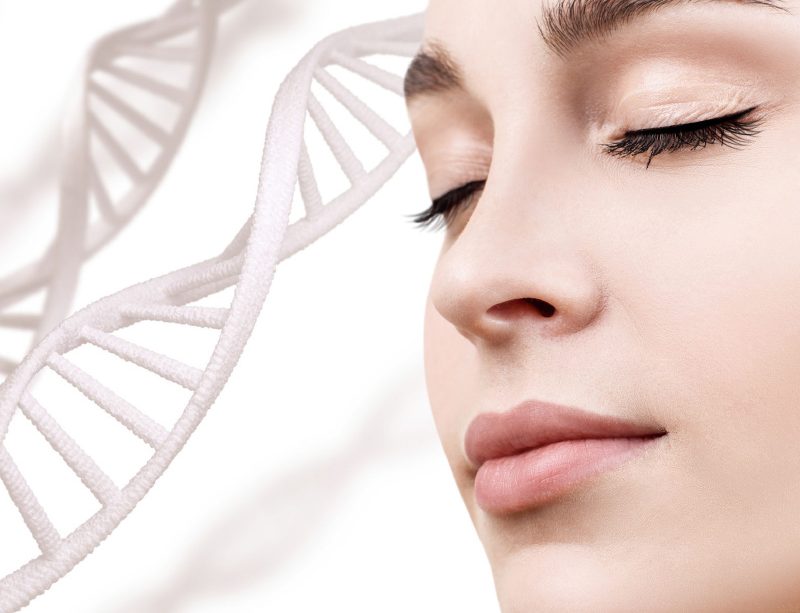
How does estrogen actually work in the body? Like other hormones, it has epigenetic effects. It first binds to specific cell receptors and then influences the transcription of various genes in our DNA. So when estrogen does not bind to these receptors, some genes in the DNA remain switched off.
Estrogen is primarily a sex hormone, so the receptors for it are found primarily in the reproductive organs and other parts of the body related to reproduction (such as the mammary glands). So when the ovaries stop producing it, it primarily affects reproductive and sexual functions: the woman becomes infertile, the menstrual cycle stops.
However, estrogen receptors are also found in a wide range of other organs and tissues: the cardiovascular system, the brain, adipose tissue, bones, liver, intestines, the immune system… And when ovarian function ceases, the function of all these organs is affected. And unfortunately, mostly for the worse.
Menopause is therefore characterised not only by the familiar unpleasant symptoms such as hot flashes, but also by a significantly increased risk of a number of diseases and disorders, such as cardiovascular disease, osteoporosis and psychological disorders (especially depression and anxiety). Many women start to gain weight, lose muscle mass and strength…
The rate of negative epigenetic changes and senescence also increases during this period. Therefore, ageing accelerates significantly at the onset of menopause, by an average of 6%.
Hormonal treatment? I’d rather not…
On first reflection, the solution is simple: if the body lacks estrogen, we supply it from the outside. But unfortunately, so-called hormone replacement therapy is not a very suitable solution – it may reduce the unpleasant symptoms of menopause, but it also increases the risk of breast and endometrial cancer, as well as the risk of thrombosis and stroke. And I don’t think anyone wants that.
So what about it? Classical medicine already offers a number of preparations that are able to “feed” the starving estrogen receptors with much lower side effects, and is working intensively on the development of others. But we will look at what nature, specifically the plant kingdom, has to offer. Many plants and their fruits offer substances known as phytoestrogens. Their molecules are similar to oestrogen and are therefore able to bind to oestrogen receptors. And these in turn influence events inside the cells in a similar way as if real estrogen were bound to them.
Problems related to menopause
Before going into an overview of menopause-related problems and their solutions, it should be said that there is not just one estrogen receptor, but rather several types. And the most important are those referred to as ERα and ERβ.
ERα and ERβ differ not only in the amino acid representation of their proteins, but also in their spatial structure and function. And while estrogen produced by the ovaries readily binds to both types of receptors, this is not the case for phytoestrogens. Most of them bind much more readily to ERβ and occupy ERα only very reluctantly, but there are some that prefer ERα.
Nervous system
Estrogen regulates the production of serotonin, and also affects the function of the receptors to which serotonin binds. The consequence is a higher incidence of psychological problems in menopause, especially depression and anxiety, but also cognitive problems and an increased risk of Alzheimer’s disease.
It is true that activation of ERα receptors has a predominantly neuroprotective effect, i.e. it protects nerve cells, especially against the accumulation of beta-amyloid, which is a typical manifestation of Alzheimer’s disease. Conversely, ERβ activation causes improvements in memory and learning ability, both in menopausal women and men. Yes, even men have estrogen receptors, both in the genitals and in the rest of the body, including the brain.
Heart and blood vessels
Estrogen receptors are abundant in the cardiovascular system and therefore women of childbearing age are also relatively effectively protected against cardiovascular disease. However, at the onset of menopause, this advantage disappears and the risk of these diseases increases significantly.
The endothelium, or inner lining of blood vessels, contains an abundance of ERα in particular, which promotes, for example, repair of endothelial damage or vascular elasticity. ERβ then significantly increases the production of nitric oxide, which causes blood vessels to dilate and thus allows better blood supply to all body tissues.
Osteoporosis
At menopause, due to estrogen deficiency, bone resorption begins to dominate over bone mass building, resulting in an increased risk of osteoporosis. Both types of receptors are present in bone, but ERα activation appears to affect bone strength more effectively.
Obesity, diabetes, liver
Estrogen deficiency also adversely affects a number of metabolic processes (estrogen receptors are also found in adipose tissue), increasing the risk of weight gain, type II diabetes and impaired liver function. In all these areas, ERβ activation is more important.
Tumour diseases
Estrogens are most often associated with the aforementioned breast and uterine cancers. Here it is true that while ERα receptors are pro-radical, i.e. they promote proliferation (rapid cell multiplication), ERβ receptors suppress proliferation.
However, estrogen receptors also play a role in other types of cancer – in most they function similarly to breast cancer (i.e. ERβ counteracts proliferation), but in some their role is more complex.
Sports performance
Estrogen is one of the anabolic hormones – although it is much less effective than male testosterone, its loss in menopause is accompanied by a loss of muscle mass and muscle strength, as well as changes in muscle composition (especially in terms of loss of fast-twitch muscle fibres). ERβ receptors probably play a more important role in combating these effects.
Urogenital tract
In menopausal women, not only do reproductive functions cease, but other changes in the sexual and excretory system also occur. The whole area atrophies, incontinence sometimes occurs, interest in sex decreases, and even the incidence of recurrent urinary infections increases significantly. ERα receptors in particular play a role here.
Nutrients and herbs suitable in menopause
As we have already mentioned, the most important aid in coping with menopause is phytoestrogens, which are able to bind to “starved” estrogen receptors. Not as readily as estrogen, but still enough to reduce the occurrence of many unpleasant symptoms and health risks.
From the name “phytoestrogens” it is clear that these substances are mainly found in plants. Menopausal women should therefore include as wide a range of plant foods as possible in their diet. Rich sources of phytoestrogens are, for example, nuts and seeds (especially flax and sunflower seeds or almonds), many fruits (pomegranate, grapes, apples, strawberries…), legumes, young shoots and sprouts, olive oil, coffee or beer.
In general, phytoestrogens in plants preferentially affect ERβ, but some of them also act on ERα.
Here’s an overview of the most effective options from the herb nutrient field.
Genistein
It is a substance from the isoflavone group, which is abundantly present especially in soybeans (it is found there together with another phytoestrogen daidzein). Genistein is one of the very strong phytoestrogens, preferentially binding to ERβ receptors (it has an affinity of 36% to ERβ). Its affinity towards ERα is 5%.
Genistein has a significant neuroprotective effect, improving memory and learning ability, reducing the deposition of beta-amyloid plaques (and thus the risk of Alzheimer’s disease). Animal studies have even shown that when administered shortly after a stroke, it significantly reduces the rate of nerve cell damage due to oxygen deprivation.
It also has an anti-cancer effect, is very effective in the prevention and treatment of type II diabetes, promotes weight loss, reduces the occurrence of hot flashes and hair loss. Female athletes will be pleased to know that in combination with intense physical exercise it not only prevents the loss of muscle mass and strength, but also has an effect on the structure of muscle mass in terms of a higher proportion of “fast” muscle fibres and accelerates the repair of microscopic muscle damage that occurs after each high load.
Read more about genistein here “
Hops
Hops contain a number of unique polyphenols and some of them are phytoestrogens. One of them, 8-prenylnaringenin (8-PN), is even considered the most potent phytoestrogen known to date.
Hops are also interesting because the substances contained in them have a very high affinity for ERα receptors, making them very effective for osteoporosis. In addition, its use after menopause reduces the incidence of cardiovascular disease, diabetes, hot flushes and anxiety.
Resveratrol
The dye contained in red wine, for example, has an affinity for estrogen receptors 7 000 times lower than estradiol, but it binds to both ERα and ERβ receptors in a balanced manner.
It is therefore effective against a wide range of menopause-related disorders and diseases: It slows down the aging process, has strong anti-inflammatory effects, and is effective in the prevention and treatment of osteoporosis, cardiovascular disease and cancer. Resveratrol also (not only) in postmenopausal women increases blood flow to the brain and significantly improves brain function – especially memory, learning and cognitive problem solving. It also counteracts osteoporosis, has a positive effect on mitochondrial function and helps to maintain sports performance in veteran athletes (not only women, but also men).
Read more about resveratrol here “
Milk thistle
This herb is especially popular for its positive effect on the liver, but it is also very beneficial for menopausal women. It contains a mixture of unique polyphenols, sometimes referred to as silymarin.
One in particular, silibinin, not only has significant anti-inflammatory, anti-tumour and antioxidant effects, but also binds quite effectively to ERβ. As a result, it has anti-cancer effects and is also beneficial in the prevention and treatment of osteoporosis and Parkinson’s disease.
Read more about milk thistle here “
Knitting passion fruit
Passionflower is particularly effective for anxiety and insomnia, but it is also very suitable for menopausal women. It contains a polyphenol called chrysin, which binds to ERβ receptors and effectively reduces many of the symptoms of menopause: in addition to anxiety and insomnia, it also reduces hot flashes, irritability, headaches and backaches, and reduced appetite for sex.
Read more about the martyr here ”
Licorice
In traditional Chinese medicine, it is widely used to relieve hot flashes and other symptoms of menopause, but its anti-cancer effect has also been proven. One reason for this is the presence of the phytoestrogen liquiritigenin, which selectively modulates ERβ receptors.
Coumestrol 47
It is a relatively little-studied substance found, for example, in alfalfa shoots or beans. It is unique in that it has a high affinity for both ERβ and ERα. It has been shown to have a neuroprotective effect, and it also helps to reduce flushing.
0:00
/
0:00
Stárnutí je volba
Klíčová slova: anxiety, appetite for sex, cancer, depression, estrogen, fertility, Genistein, heart and blood vessels, hops, hot flashes, insomnia, menopause, menopause, Milk thistle, milk thistle, Muscle, osteoporosis, phytoestrogens, resveratrol, strength, Torture, weight loss
Komentáře
Seznam zdrojů
- Ilaria Paterni, Carlotta Granchi, John A. Katzenellenbogen, and Filippo Minutolo. Estrogen Receptors Alpha (ERα) and Beta (ERβ): Subtype-Selective Ligands and Clinical Potential. Steroids. 2014 Nov 15; 0: 13–29.
- Nathalie Fuentes1 and Patricia Silveyra. Estrogen receptor signaling mechanisms. Adv Protein Chem Struct Biol. 2019; 116: 135–170.
- Carroll, J., et al. (2016). Epigenetic aging and immune senescence in women with insomnia symptoms: Findings from the Women’s Health Initiative StudyEpigenetic Age and Insomnia. Biological Psychiatry.
- Peng Chen a kol. Role of estrogen receptors in health and disease. Front. Endocrinol., 18 August 2022. Volume 13 – 2022.
- J L Bowers1, V V Tyulmenkov, S C Jernigan, C M Klinge. Resveratrol acts as a mixed agonist/antagonist for estrogen receptors alpha and beta. Endocrinology. 2000 Oct;141(10):3657-67.
- Hamish M. Evans, Peter R. C. Howe, and Rachel H. X. Wong. Effects of Resveratrol on Cognitive Performance, Mood and Cerebrovascular Function in Post-Menopausal Women; A 14-Week Randomised Placebo-Controlled Intervention Trial. Nutrients. 2017 Jan; 9(1): 27.
- Rachel Hx Wong , Jay Jay Thaung Zaw , Cory J Xian, Peter Rc Howe. Regular Supplementation With Resveratrol Improves Bone Mineral Density in Postmenopausal Women: A Randomized, Placebo-Controlled Trial. J Bone Miner Res. 2020 Nov;35(11):2121-2131.
- Michele Dei Cas, Cancer Prevention and Therapy with Polyphenols: Sphingolipid-Mediated Mechanisms. July 2018. Nutrients 10(7):940
- Fahami F, Asali Z, Aslani A, Fathizadeh N. A comparative study on the effects of Hypericum Perforatum and passion flower on the menopausal symptoms of women referring to Isfahan city health care centers. Iran J Nurs Midwifery Res. 2010;15:202–207.
- Kateřina Štulíková, Marcel Karabín, Jakub Nešpor and Pavel Dostálek. The Therapeutic perpectives of 8-Prenylnaringenin, a Potent Phytoestrogen from Hops. Molecules 2018, 23(3), 660
- Heyerick, A.; Vervarcke, S.; Depypere, H.; Bracke, M.; De Keukeleire, D. A first prospective, randomized, double-blind, placebo-controlled study on the use of a standardized hop extract to alleviate menopausal discomforts. Maturitas 2006, 54, 164–175.
- Ming, L.G.; Lv, X.; Ma, X.N.; Ge, B.F.; Zhen, P.; Song, P.; Zhou, J.; Ma, H.P.; Xian, C.J.; Chen, K.M. The prenyl group contributes to activities of phytoestrogen 8-prenynaringenin in enhancing bone formation and inhibiting bone resorption in vitro. Endocrinology 2013, 154, 1202–1214.
- Myasoedova, V.A.; Kirichenko, T.V.; Melnichenko, A.A.; Orekhova, V.A.; Ravani, A.; Poggio, P.; Sobenin, I.A.; Bobryshev, Y.V.; Orekhov, A.N. Anti-atherosclerotic effects of a phytoestrogen-rich herbal preparation in postmenopausal women. Int. J. Mol. Sci. 2016, 17, 1318.