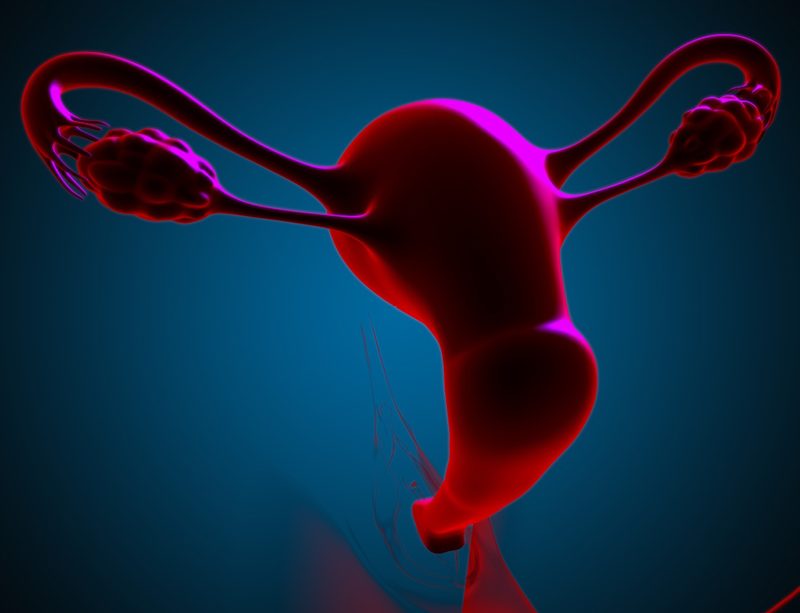
During all periods of intense growth and development, the body is more susceptible to all epigenetic stimuli – those that affect the course of reactions that turn our genes on or off. This applies to intrauterine development, early childhood and also puberty. This is when epigenetic changes take place very rapidly and spontaneously, and any external stimulus can affect them in a very fundamental way.
Puberty is characterized by the activation of the so-called pituitary-hypothalamus-sexual organ axis, and as a result, the ovaries and testicles begin to produce sex hormones. The effect of these hormones is largely epigenetic, as they activate previously dormant genes, which in turn trigger muscle growth or the menstrual cycle.
But everything is far from always smooth sailing. Due to the increased sensitivity of the organism, a number of problems can arise at this time, which often have an epigenetic background. Let’s take a closer look at two of them.
It is often assumed that sex hormones are responsible for acne, which is a distorted idea – few people suffer from acne after the age of 20, although sex hormone production is at its peak. In fact, the main culprit is a substance known as IGF-1, the insulin-dependent growth factor.
IGF-1 is the main growth factor of puberty. It increases the production of sex hormones and is involved in all processes associated with growth. The sex hormones themselves are also involved in the development of acne, but only secondarily, as participants in cell signalling. IGF-1 primarily promotes the proliferation of cells in the sebaceous glands, and when this is compounded by an increased level of inflammatory processes, there is a problem. In addition, everything has a genetic background – people who have shorter CAG stretches in their DNA are more prone to acne (and unfortunately also to baldness later in life).
Although acne looks like a skin problem, the best “lubrication” has only a limited effect on it. The remedy has to start from within, ideally by adjusting the diet, or even including regular physical activity.
Adequate consumption of omega-3s is important for all children, and this is doubly true in adolescence. They have an anti-inflammatory effect and help regulate the epigenetic processes associated with the development of acne. Given the lack of fish in our diet, it is advisable to provide them in the form of supplements.
Very useful can be resveratrol. Although it is generally less suitable for young girls (and boys) because it acts as a phytoestrogen, it can be very beneficial in case of severe acne in a lower dosage and for a limited period of time (max. 2 months).
Thanks to its anti-inflammatory effects, EGCG can also help.
Read more about acne at www.epivyziva.cz/akne-sex-nepomuze-uprava-stravy-ano/
In the last part of our series, we mentioned that the vast majority of psychological problems have at least a partial epigenetic background. And also that a common cause that triggers these epigenetic changes is exposure to severe or chronic stress. And adolescence is when these problems are very often born. The brain is undergoing a tumultuous development (which is why school performance often fluctuates greatly), the maturation of certain areas of the cortex is activated, making the brain very sensitive to the effects of stress, which can become a trigger for epigenetic changes leading to a range of psychological problems and diseases. This is true, for example, for depression, anxiety, but also to a large extent for eating disorders.
The two most common of these, anorexia and bulimia, have a strong genetic background. Individuals who suffer from them very often have typical signals on chromosomes 1, 2 and 13, which are related to obsessive (i.e. compulsive) behaviour and an excessive desire for thinness. They are then more susceptible to the stressful stimuli that trigger the disease. Epigenetic influences play a role, affecting genes for the production of the neurotransmitters serotonin and dopamine and the hormones leptin and ghrelin, which are related to appetite.
The main rule for the prevention of psychological problems during puberty should be the elimination of stress and negative emotional stimuli. Typical triggers for eating disorders are insensitive remarks about body shape and weight, but in general any kind of stress has a negative effect. Although this is sometimes difficult, it is therefore necessary not to put undue pressure on the teenager, whether in terms of grades, extracurricular activities or behaviour (rather, limiting oneself to enforcing basic rules).
Positive emotional stimuli, on the other hand, have a positive epigenetic effect. So we should not forget about praise and recognition, even though we often feel that there is really nothing to praise. And also expressions of love, even if they are rarely reciprocated.
Regular physical activity is beneficial for all psychological problems, but it should be adequate and not exhausting. However, it is difficult to find the right level for girls with eating disorders, because obsessive behaviour and an excessive desire for thinness tend to lead to exhausting physical exercise.
Sufficient intake of omega-3s, which are essential for the proper functioning of the brain and nervous system, is also essential for prevention and treatment. They have a proven beneficial effect not only on the maturation of brain structures and cognitive processes, but also on depression, anxiety and eating disorders.
Among other epigenetic dietary supplements, curcumin, Baikal coneflower and pomegranate may be particularly helpful.
Spirulina can be useful – not only for its overall beneficial effects on the body, but also as a rich source of all essential amino acids. In fact, their insufficient intake has many other negative epigenetic consequences.
PŘIHLASTE SE K ODBĚRU NOVINEK A MĚJTE VŽDY ČERSTVÉ INFORMACE
| Cookie | Duration | Description |
|---|---|---|
| cookielawinfo-checkbox-analytics | 11 měsíců | Tento soubor cookie je nastaven pluginem GDPR Cookie Consent. Soubor cookie se používá k uložení souhlasu uživatele s používáním souborů cookie v kategorii „Analytika“. |
| cookielawinfo-checkbox-functional | 11 měsíců | Soubor cookie je nastaven na základě souhlasu s cookie GDPR k zaznamenání souhlasu uživatele pro soubory cookie v kategorii „Funkční“. |
| cookielawinfo-checkbox-necessary | 11 měsíců | Tento soubor cookie je nastaven pluginem GDPR Cookie Consent. Cookies slouží k uložení souhlasu uživatele s cookies v kategorii „Nezbytné“. |
| cookielawinfo-checkbox-others | 11 měsíců | Tento soubor cookie je nastaven pluginem GDPR Cookie Consent. Cookie se používá k uložení souhlasu uživatele s cookies v kategorii „Jiné. |
| cookielawinfo-checkbox-performance | 11 měsíců | Tento soubor cookie je nastaven pluginem GDPR Cookie Consent. Cookie se používá k uložení souhlasu uživatele s cookies v kategorii „Výkon“. |
| elementor | nikdy | Tento soubor cookie používá téma WordPress webu. Umožňuje vlastníkovi webu implementovat nebo měnit obsah webu v reálném čase. |
| viewed_cookie_policy | 11 měsíců | Soubor cookie je nastaven pluginem GDPR Cookie Consent a používá se k uložení, zda uživatel souhlasil nebo nesouhlasil s používáním souborů cookie. Neukládá žádné osobní údaje. |
| Cookie | Duration | Description |
|---|---|---|
| sb | 2 roky | Tento soubor cookie používá Facebook ke kontrole svých funkcí, shromažďování jazykových nastavení a sdílení stránek. |
| Cookie | Duration | Description |
|---|---|---|
| _ga | 2 roky | Soubor _ga cookie, nainstalovaný službou Google Analytics, vypočítává údaje o návštěvnících, relacích a kampaních a také sleduje využití webu pro analytický přehled webu. Soubor cookie ukládá informace anonymně a přiřazuje náhodně vygenerované číslo k rozpoznání unikátních návštěvníků. |
| _gat_gtag_UA_71041054_1 | 1 minuta | Nastaveno Googlem k rozlišení uživatelů. |
| _gid | 1 den | Soubor cookie _gid nainstalovaný službou Google Analytics ukládá informace o tom, jak návštěvníci používají webovou stránku, a zároveň vytváří analytickou zprávu o výkonu webu. Některá data, která jsou shromažďována, zahrnují počet návštěvníků, jejich zdroj a stránky, které anonymně navštěvují. |
| Cookie | Duration | Description |
|---|---|---|
| fr | 3 měsíce | Facebook nastavuje tento soubor cookie tak, aby uživatelům zobrazoval relevantní reklamy sledováním chování uživatelů na webu, na stránkách, které mají Facebook pixel nebo sociální plugin Facebooku. |
| _fbp | 3 měsíce | Tento soubor cookie je nastaven společností Facebook, aby po návštěvě webové stránky zobrazoval reklamy na Facebooku nebo na digitální platformě založené na reklamě na Facebooku. |
| Cookie | Duration | Description |
|---|---|---|
| pvc_visits[0] | 1 minuta | Tento soubor cookie vytváří počítadlo po zhlédnutí. Tento soubor cookie se používá k počítání počtu návštěv příspěvku. Pomáhá také zabránit opakovanému zobrazení příspěvku návštěvníkem. |