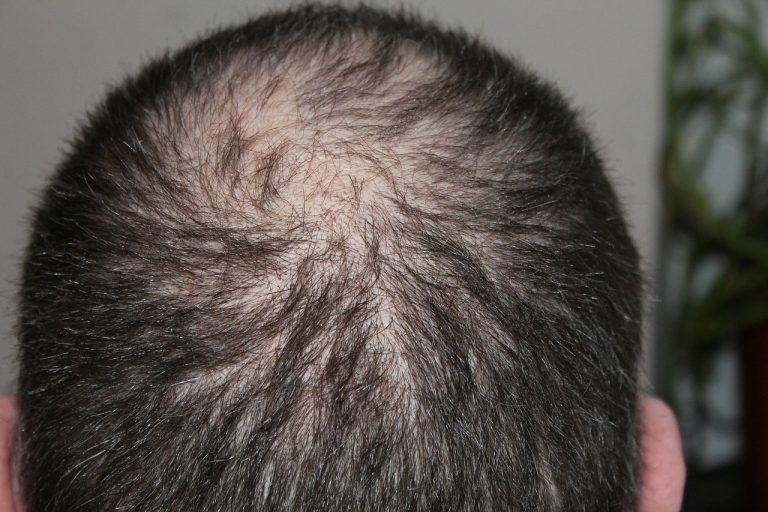
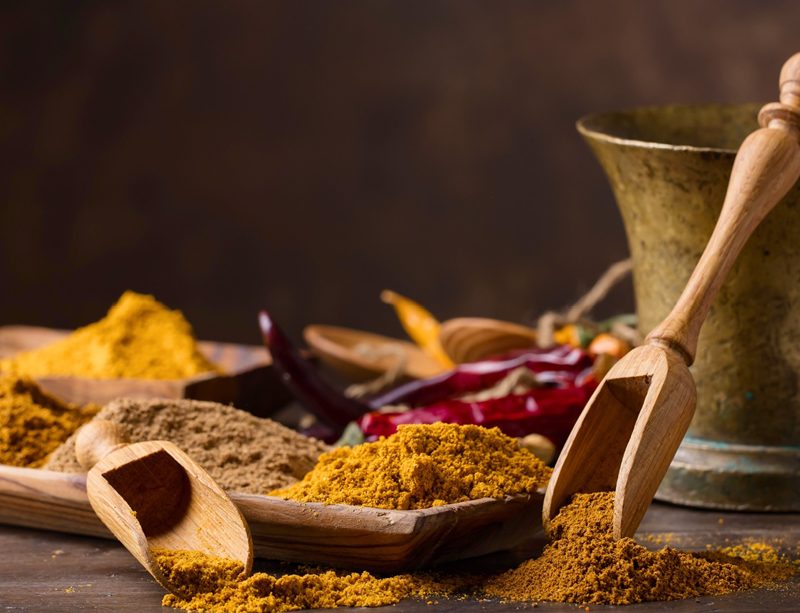
People who suffer from excessive hair loss now have new hope. A large percentage of cases of this problem are caused epigenetically, by chemical reactions that alter the activity of certain genes. Fortunately, these processes are reversible and can be very effectively influenced by curcumin, a dye found in the spice turmeric.
One of the main causes of hair loss in men (so-called androgenic alopecia) is considered to be the hormone dihydrotestosterone (DHT), which is produced in the body from the male sex hormone testosterone. For this conversion to occur, the action of an enzyme called 5α-reductase is required. This fact is exploited by classical medicines (e.g. Finasteride), which aim to inhibit 5α-reductase, but their disadvantage is the possible occurrence of unpleasant side effects, in particular a reduction in erectile capacity, loss of libido or depression (1).
However, scientific research has shown that curcumin has the same ability. Its effectiveness is, admittedly, slightly lower than that of the drug, 1 g of turmeric extract has the same potential to inhibit 5α-reductase as 13 mg of Finasteride. However, not only does it have no negative side effects, but it even has a number of positive effects, such as anti-cancer or anti-inflammatory effects(read more about them here) (2-3).
Another study confirmed that curcumin significantly enhances the effects of Minoxidil, a hair growth stimulant that improves blood circulation to the scalp (4).
However,curcumin also works against hair loss in other ways. For example, it mitigates the negative effects of stress, which is another significant risk factor for alopecia in both men and women (5). It also helps to activate the so-called DVR receptors, which are receptors on the cell nucleus for vitamin D. Although vitamin D alone does not prevent hair loss, activated VDR receptor genes trigger the production of proteins that act as control signals in the hair growth process, again in both sexes (6).
Curcumin should always be taken together with piperine, a substance found in black pepper. Although it has no effect on hair loss, it increases the absorption and usability of curcumin many times over.