Genetics, the genetic information we inherit from our parents, plays a key role in the functioning of the hormonal system. But equally important are the influences of the environment, diet, stress… basically almost all the factors that affect us throughout our lives. All of these influences have epigenetic effects – they can influence the function of genes in our DNA through several biochemical reactions and many of them can be switched off or on.
Epigenetic influences affect our hormonal system in four ways: firstly, they can influence the production and release of hormones themselves, secondly, they affect their circulation and blood levels, and thirdly, they affect the sensitivity of target organs to the hormone in question. However, we must not forget the fourth pathway, which is represented by so-called hormone disruptors. These are mostly environmental pollutants that disrupt hormonal processes in the body, and a large proportion of them do so via the epigenetic route.
The main function of the thyroid gland is the production of the hormones triiodothyronine (T3), thyroxine (T4) and calcitonin. The first two mainly influence tissue metabolism and development of the organism, but also, for example, oxygen consumption in tissues, heat production, differentiation of the nervous system, heart rate, blood formation, and even have a vasodilating effect (i.e. dilate small blood vessels and thus regulate blood flow to tissues) and lower blood cholesterol levels. Calcitonin then regulates calcium metabolism in the body.
The most common thyroid problem is reduced function (hypofunction) or hypothyroidism. It affects women more often and its incidence also increases with age – in the Czech Republic, it is estimated that up to 20% of women over 50 suffer from it, but it does not avoid younger women and men. Because thyroid hormones affect metabolism, the most common symptoms are increased fatigue and weight gain, while others include constipation, dry skin, hair loss, slowing of the heart rate, menstrual cycle disorders, increased blood pressure, swollen eyelids and even depression.
However, the opposite condition, i.e. thyroid hyperfunction (hyperthyroidism), also causes problems. This is manifested by excessive weight loss, increased heart rate, excessive sweating, irritation of the eyes and their protrusion from the sockets, anxiety or irritability.
The most important factor for thyroid function is considered to be sufficient iodine in the diet – iodine is a component of the hormones T3 and T4. However, the consumption of this trace element is sufficient in our population (especially thanks to the use of iodized salt), and it is also true that iodine intake alone is essential, but it is not enough, because it is only the first step. The second is the so-called iodine uptake by the thyroid gland, also called the iodide pump.
In order for the production of T3 and T4 hormones to occur, there must be a sufficient concentration of iodine salts (iodides) in the thyroid tissue – 20-30 times higher than in the blood. Therefore, these salts are actively taken up from the blood flowing through the thyroid gland, a rather demanding process requiring not only sufficient iodine, but also other elements (mainly sodium and potassium), energy and then a special protein known as NIS (Natrium Iodine Symporter), which catalyses the transport of iodides across the cell membrane.
And the synthesis of the NIS protein is strongly influenced by the epigenetic pathway, specifically through a biochemical reaction called DNA methylation. If a methyl group binds to the so-called promoter of a gene (the part of DNA that does not encode anything, but triggers the reading of the gene that follows it), the activity of the gene in question is significantly reduced, and at higher levels of methylation, it is even switched off completely. The NIS gene is regulated quite tightly by the level of methylation, and if NIS production is reduced, the thyroid gland may not have sufficient iodine for hormone production, even though we get enough iodine in our diet.
Epigenetic factors also influence the number of receptors that thyroid hormones bind to in cells. These receptors are found inside cells because both T3 and T4 are not water soluble and can therefore cross cell membranes. The receptors for these hormones are regulated both by DNA methylation and, to a lesser extent, by microRNAs
The function of the thyroid gland can also be adversely affected due to autoimmune diseases of this organ, most commonly Hashimoto’s disease, in which the body’s immune system attacks the proteins that make up thyroid tissue. Although the causes of autoimmune diseases have not yet been fully elucidated, it is clear that epigenetic factors play an important role, affecting all the basic epigenetic reactions – DNA methylation, histone modification and regulation by microRNAs.
Nutrition plays a key role in thyroid problems. Sufficient iodine intake is essential, but other micronutrients also play a role in hormone production and circulation in the body. In particular, sodium and potassium, which are involved in the uptake of iodide by the thyroid gland, iron, a deficiency of which reduces blood concentrations of T3 and T4, zinc, calcium copper and probably vitamins A and D3.
However, due to the high contribution of epigenetic influences to thyroid disorders, specific epigenetic nutrients and herbs can also provide great relief. Many of these are a common part of the diet, but should be taken in higher concentrations in the form of dietary supplements for greater effect. You can try the following:
Curcumin
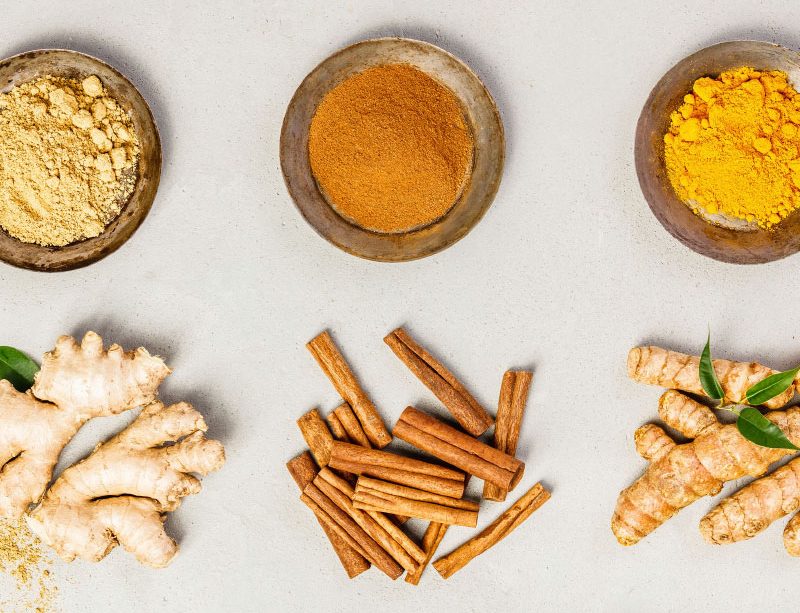
The dye from turmeric root has a significant positive effect in both hypofunction and hyperfunction of the thyroid gland. It also has a great effect in autoimmune disorders – it has an immunomodulatory effect, and it is a powerful anti-inflammatory substance that regulates the production of the inflammatory enzyme COX-2 and other substances involved in the course of inflammatory processes (NF-kB, TNF-alpha, etc. It also acts as an antioxidant that protects the cells of the thyroid gland and has a preventive effect against cancer of this organ. For optimal absorption, curcumin should be consumed together with piperine (the active ingredient in black pepper).
Baikal pine cone
This herb has a positive effect on the regulation of the entire hormonal system. In addition, it has anti-inflammatory effects, suppresses the production of histamine and leukotrienes, which is especially important for problems of autoimmune origin, and also has antioxidant effects.
Omega-3
These unsaturated fatty acids are particularly beneficial in thyroid hypofunction. They make iodide uptake by this organ more efficient by increasing the production of the necessary enzymes and also increase the number of receptors to which thyroid hormones bind in individual cells. At the same time, they prevent cognitive decline as a result of this problem. The anti-inflammatory effect is then also applied in thyroid hyperfunction and autoimmune disorders.
Check
Together, it improves liver and thyroid function, especially in obese individuals.
Vitamin D3
While it is not completely proven that taking this vitamin improves thyroid health, research has confirmed that people suffering from thyroid hypofunction have significantly reduced levels of “D”.
In contrast, EGCG (epigallocatechin gallate) can be problematic in thyroid hypofunction. In fact, some studies suggest that green tea catechins could have a depressant effect on the thyroid gland. Although these were studies carried out on rats receiving very high doses of catechins and the results were not entirely conclusive, it is still better to prefer other dietary supplements to be on the safe side (a reasonable consumption of green tea, i.e. about a cup a day, should not matter. The use of quercetin is also controversial.
Stress, which is also epigenetic in nature, has a significantly negative effect on the thyroid gland. So it certainly helps to reduce the stressful factors in our lives and at the same time engage in activities that reduce the level of stress hormones (relaxation, meditation, yoga, but also watching comedies).
Movement also plays an important role, as it also has a significant epigenetic influence in a positive sense. However, too much of anything is bad for you. While half an hour to an hour of endurance exercise three to four times a week has a beneficial effect on the thyroid gland, peak sports training has the opposite effect – especially among female endurance athletes, the incidence of thyroid disorders (more in the sense of hypofunction) is significantly higher than in the general population.
People with thyroid disorders should also avoid other negative epigenetic influences, such as smoking or excessive alcohol consumption.
PŘIHLASTE SE K ODBĚRU NOVINEK A MĚJTE VŽDY ČERSTVÉ INFORMACE







| Cookie | Duration | Description |
|---|---|---|
| cookielawinfo-checkbox-analytics | 11 měsíců | Tento soubor cookie je nastaven pluginem GDPR Cookie Consent. Soubor cookie se používá k uložení souhlasu uživatele s používáním souborů cookie v kategorii „Analytika“. |
| cookielawinfo-checkbox-functional | 11 měsíců | Soubor cookie je nastaven na základě souhlasu s cookie GDPR k zaznamenání souhlasu uživatele pro soubory cookie v kategorii „Funkční“. |
| cookielawinfo-checkbox-necessary | 11 měsíců | Tento soubor cookie je nastaven pluginem GDPR Cookie Consent. Cookies slouží k uložení souhlasu uživatele s cookies v kategorii „Nezbytné“. |
| cookielawinfo-checkbox-others | 11 měsíců | Tento soubor cookie je nastaven pluginem GDPR Cookie Consent. Cookie se používá k uložení souhlasu uživatele s cookies v kategorii „Jiné. |
| cookielawinfo-checkbox-performance | 11 měsíců | Tento soubor cookie je nastaven pluginem GDPR Cookie Consent. Cookie se používá k uložení souhlasu uživatele s cookies v kategorii „Výkon“. |
| elementor | nikdy | Tento soubor cookie používá téma WordPress webu. Umožňuje vlastníkovi webu implementovat nebo měnit obsah webu v reálném čase. |
| viewed_cookie_policy | 11 měsíců | Soubor cookie je nastaven pluginem GDPR Cookie Consent a používá se k uložení, zda uživatel souhlasil nebo nesouhlasil s používáním souborů cookie. Neukládá žádné osobní údaje. |
| Cookie | Duration | Description |
|---|---|---|
| sb | 2 roky | Tento soubor cookie používá Facebook ke kontrole svých funkcí, shromažďování jazykových nastavení a sdílení stránek. |
| Cookie | Duration | Description |
|---|---|---|
| _ga | 2 roky | Soubor _ga cookie, nainstalovaný službou Google Analytics, vypočítává údaje o návštěvnících, relacích a kampaních a také sleduje využití webu pro analytický přehled webu. Soubor cookie ukládá informace anonymně a přiřazuje náhodně vygenerované číslo k rozpoznání unikátních návštěvníků. |
| _gat_gtag_UA_71041054_1 | 1 minuta | Nastaveno Googlem k rozlišení uživatelů. |
| _gid | 1 den | Soubor cookie _gid nainstalovaný službou Google Analytics ukládá informace o tom, jak návštěvníci používají webovou stránku, a zároveň vytváří analytickou zprávu o výkonu webu. Některá data, která jsou shromažďována, zahrnují počet návštěvníků, jejich zdroj a stránky, které anonymně navštěvují. |
| Cookie | Duration | Description |
|---|---|---|
| fr | 3 měsíce | Facebook nastavuje tento soubor cookie tak, aby uživatelům zobrazoval relevantní reklamy sledováním chování uživatelů na webu, na stránkách, které mají Facebook pixel nebo sociální plugin Facebooku. |
| _fbp | 3 měsíce | Tento soubor cookie je nastaven společností Facebook, aby po návštěvě webové stránky zobrazoval reklamy na Facebooku nebo na digitální platformě založené na reklamě na Facebooku. |
| Cookie | Duration | Description |
|---|---|---|
| pvc_visits[0] | 1 minuta | Tento soubor cookie vytváří počítadlo po zhlédnutí. Tento soubor cookie se používá k počítání počtu návštěv příspěvku. Pomáhá také zabránit opakovanému zobrazení příspěvku návštěvníkem. |