
Anatomy of fear – is it necessary for survival or is it harmful?
epivyziva.cz/
Zobrazeno: 733
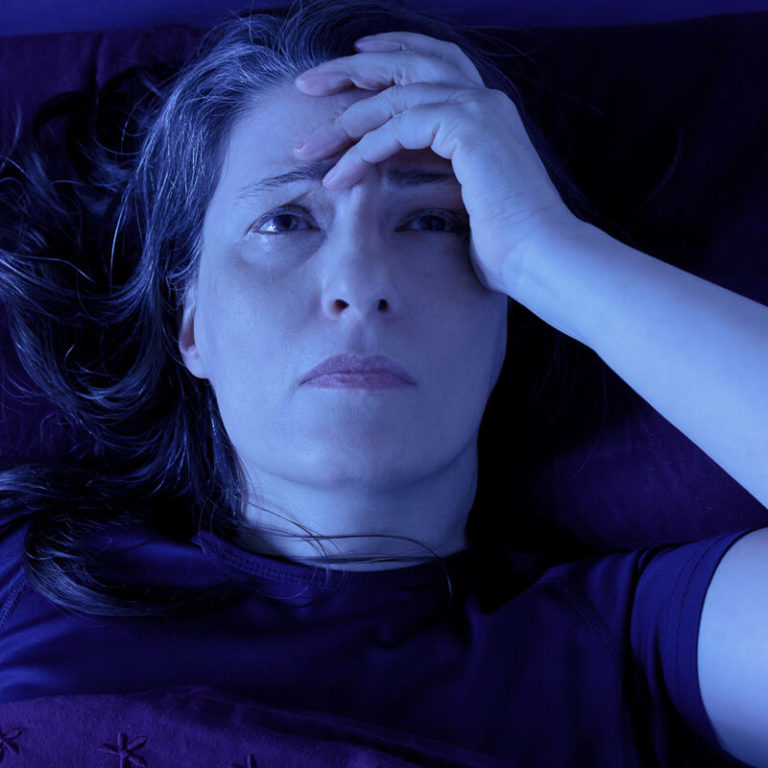
The feeling of terror when someone points a gun at you and your life is on the line. The sick feeling when you’re on a tram and someone coughs near you and you wonder whether or not they have the coronavirus. Or the tightness in your chest, the panic and inability to breathe that suddenly comes over you in the middle of the street. What do these situations have in common? Could the fear we feel during them be a threat to our health? And can the fear for our lives that our grandparents experienced also affect our health?
“It’s just a feeling.” I’m sure you’ve heard this phrase before in connection with fear or other strong emotions. If it were true, it would be easy to say that nothing is wrong, and the world would be a happier place. But it doesn’t work, because fear is so much more than a feeling. It’s an emotion that triggers a cascade of biochemical and physiological events inside the body. And when that emotion is strong, or occurs repeatedly over a long period of time, it becomes written into the very core of our cells – into our DNA.
Bad and good experiences
Imagine you are a little mouse waiting for its mother in the nest. Suddenly, the mother comes running in, shaking with fear. She clings to you and your siblings for protection, and you can hear her breathing quicken and her heart pounding. You don’t know what’s happening, but then suddenly you see the outline of a cat lurking outside the nest entrance. From then on, whenever you see the cat or smell it, you are consumed by the same fear your mother felt then.
Such a situation is quite logical. Fear of cats is a necessity for mice – if they didn’t feel it, they wouldn’t survive long as a species on the planet. It is equally logical that when a person is bitten by a dog in childhood, he is afraid whenever he hears barking – even though the barking may have been caused by a miniature rattlesnake behind the fence. A negative experience with dogs is to blame. Experience is also behind the situation where you may be frightened by an unfamiliar sound once, but if you hear it repeatedly and nothing happens, eventually you almost stop noticing it.
But not all fears can be explained by experience. Why is a mouse that grew up in a lab and has never seen a cat afraid of a cat? And why do we get panic attacks in the middle of a shopping mall where we are in no danger?
How we respond to the threat
Basically, there are two types of reaction to fear. Our ancestors experienced them, animals experience them, and we experience them. The first is called the active response, and the emotion of fear causes changes in the body that allow us to respond actively to the situation – for example, to run away or fight. These include, for example, the release of adrenaline or an increase in heart rate and blood pressure. In the passive one, on the other hand, it becomes stiff and almost unable to move. Glucocorticoids in particular are released into the blood and the heart rate drops. The choice of the type of reaction depends on many circumstances. For example, when a rabbit sees a predator gliding in the sky, it prefers to react passively – if it freezes and stops moving, it significantly reduces the likelihood that the predator will see it. However, if the predator is already rushing towards him, it is necessary to initiate the escape. And we humans also react differently, although in our case the choice also depends a lot on our personality and rational assessment of the situation.
Our brains, like the brains of other animals, are “programmed” to be afraid of things we don’t know, objects that are large or make loud noises, but also situations in which we lose confidence – for example, a child losing sight of its mother. But we are also afraid in situations that our brains assess as dangerous – like when a natural disaster is raging around us, or when we see piles of coffins of people who have died of coronavirus on the news. And we also feel existential fear – like losing our jobs or making a bad decision.
Fear or anxiety?
Fear is a reaction to a specific danger. It does not matter whether it is really real or whether we misjudge it on the basis of distorted information or insufficient experience, it is always a reaction to a specific enemy or threatening situation. But in addition to this, there is another strong emotion, and that is anxiety. We have feelings similar to fear, but they appear as if for no reason. It is often associated with an exaggerated reaction to stressful stimuli, where the stress response is triggered by a stimulus of lower intensity than normal.
But there’s always a reason. It could be, for example, epigenetic changes in the body, which have arisen, for example, legally, on the basis of fears we have experienced in the past – very often in early childhood. Or it could be based on the fear that our grandmother experienced during the war. How is this possible?
Epigenetic changes, i.e. biochemical reactions that affect the activity of genes in our DNA, are largely heritable. They affect the DNA of all the cells in our body, including eggs and sperm, and we pass some of them on to our offspring, along with half of our genes. So, if a person (or even an animal) develops epigenetic changes that cause anxiety as a result of experiencing fear, their offspring may inherit the problem.
Fear inherited from ancestors
For example, an interesting study on male mice provides evidence. Scientists repeatedly exposed them to an aromatic substance called acetophenone while giving them electric shocks. Anyone who has ever heard of I. P. Pavlov’s slobbering dogs can easily guess what happened next: The mice became afraid of the smell of acetophenone because they associated it with pain. What is much more interesting, however, is that the same irrational fear of the smell of acetophenone was also felt by their children and grandchildren, who not only never received an electric shock, but never even saw their fathers or grandfathers, and therefore could not have learned this behaviour from them. In the abused males and their offspring, the researchers found significantly reduced methylation of the genes responsible for odour perception – these genes were much more active than usual in mice.
In addition, other negative emotions can also affect the tendency to anxiety. A relatively well-known experiment in which researchers caused trauma to baby mice by separating them from their mothers at an early age. These pups, as well as their offspring and grandchildren who were not separated from their mothers, subsequently showed increased levels of anxiety in adulthood. Here, too, the authors found different epigenetic patterns in all three generations, especially in the area of genes controlling the response to stress stimuli. In short, the mice studied were significantly more sensitive to any stressful stimulus.
But not just animals – scientists have also observed higher levels of anxiety and overreaction to stress in the offspring of Holocaust survivors, and here too the reasons were epigenetic. In the descendants of survivors, for example, scientists measured lower levels of cortisol, which is a stress hormone, but its effects are not only negative, because it also helps the body to get back to normal after stress. These people also had higher levels of the enzyme that breaks down cortisol.
Higher levels of this enzyme have also been noted in children of mothers who experienced severe stress during pregnancy. In fact, if a pregnant woman’s stress caused an increase in cortisol levels, the fetus began to produce more of the enzyme that breaks down cortisol to protect itself from its effects. However, this caused the fetus to have reduced cortisol levels after birth, and therefore be more susceptible to the effects of stress.
In addition, epigenetics is also behind the development of post-traumatic stress disorder, which is common, for example, in war veterans or survivors of a disaster. Even in these people, physiological and biochemical changes resulting from the experience of fear cause changes at the gene level that later result in psychological and health problems.
Fear, stress and health
Intense or prolonged fear and stress primarily cause epigenetic changes in the brain regions directly related to these emotions – the frontal cortex, hippocampus and amygdala. As a result, the incidence of psychiatric-related problems increases – in particular anxiety and panic disorders, depression and the aforementioned post-traumatic stress disorder. However, the hormones that are released as a result of fear and stress have further epigenetic effects – they are substances involved in so-called cell signalling. As a result, these emotions can negatively affect the health of the entire body. And this also applies to immunity, among other things. This is why, in fact, there is now more and more information that we should not give in to unnecessary fear in the context of the COVID-19 pandemic, because this will impair the performance of our immune system.
This has been well researched in the case of severe traumatic experiences in early childhood, which result in an increase in the level of inflammatory cytokines (substances that promote inflammation) in the body, which, together with changes leading to a more sensitive response to stress, leads to immune disorders. Similarly, immunity tends to be impaired in children whose mothers have experienced severe stress during pregnancy.
Similarly, soldiers and other people with post-traumatic stress disorder suffer not only psychological but also physical problems – for example, they typically suffer from immune disorders and cardiovascular problems. From an epigenetic point of view, they have been observed to have an alteration in the activity of the gene for interleukin Il-18, for example – increased levels of which are associated with poorer immunity and a higher risk of cardiovascular disease. War veterans with this disorder were also found to have a different level of methylation of the glucocorticoid receptor region compared to their healthy “brothers in arms”, which increases their susceptibility to the effects of stress.
Help from nature
It is normal to be afraid in situations that threaten our life and health. It is normal to fear for our loved ones and for the security we have in our lives. Fear helps us avoid danger. In addition, being afraid actually tells us that we are happy people because being afraid means we have something to lose.
We can combat fear to some extent by trying to explore the unknown and gather as much information as possible, but it is very difficult to reach a state where we do not feel fear. We just need to make sure that we don’t have too much fear and that we have as many positive and joyful stimuli in our lives as possible to counterbalance any negative effects of fear. In fact, positive emotions usually have positive epigenetic effects – just think of how good we feel physically when we are in love.
But what we should not put up with is anxiety. The cause of this problem is epigenetic in nature, and epigenetic processes are largely reversible. Here too, we should try to bring as many positive stimuli into our lives as possible, but it is also worthwhile to focus on a healthy diet, regular exercise, sufficient sleep… These are all circumstances that positively influence the course of epigenetic reactions in the body.
For example, psychiatry also uses so-called exposure therapy, where we are repeatedly exposed to stimuli that arouse excessive anxiety or fear. For example, in the introduction we mentioned the example of a person who was bitten by a dog as a child and now feels intense anxiety whenever he walks past a fence with a barking dog behind it. Such a person would then walk past this fence over and over again to repeatedly experience that there is no danger in this situation.
And natural substances with epigenetic effects can also help – many of them can help with psychological problems very effectively, and unlike drugs, they have no negative side effects.
Baikal coneflower – very effectively reduces anxiety. It even binds to the same receptors in the brain as drugs from the benzodiazepine group, which are prescribed specifically for anxiety, and also has a harmonising effect on the hormonal system.
Omega-3 – these unsaturated fatty acids are essential for proper brain function and have a positive effect on most mental health problems.
Vitamin D3 – vitamin D3 deficiency is common in a number of mental health problems, including anxiety and depression.
Rosemary – this herb is a fairly effective way to combat anxiety and depression. It also helps to improve the quality of sleep, which is often disturbed in psychological problems. It can be taken in the form of a tea or extract in capsules, but its positive effect on anxiety has also been confirmed with rosemary oil massages.
Saffron – it is a great herb against depression and anxiety, but the epigenetic nature of its effects has not yet been reliably confirmed.
0:00
/
0:00
Stárnutí je volba
Komentáře
Seznam zdrojů
- Blouin AM, Sillivan SE, Joseph NF, and Miller CA. The potential of epigenetics in stress-enhanced fear learning models of PTSD, Learning & Memory, vol. 23(10):576-86 (2016).
- Dias BG, Ressler KJ. Parental olfactory experience influences behavior and neural structure in subsequent generations, Nature Neuroscience vol, 17: 89–96 (2014).
- Callaway E. Fearful memories haunt mouse descendants, Nature, 1 Dec 2013.
- Rodriguez T. Descendants of Holocaust Survivors Have Altered Stress Hormones, Scientific American, 1 March 2015.
- What Part of the Brain Controls Emotions?. Healthline , 2018.
- Franklin TB, Russig H, Weiss IC, Gräff J, Linder N, Michalon A, Vizi S, Mansuy IM. Epigenetic transmission of the impact of early stress across generations, Biological Psychiatry, vol.68(5):408-15 (2010).
- Yeshurun S, Hannan AJ.Transgenerational epigenetic influences of paternal environmental exposures on brain function and predisposition to psychiatric disorders, Molecular Psychiatry, March 2018.
- Zannas AS, Provençal N, Binder EB (September 2015). “Epigenetics of Posttraumatic Stress Disorder: Current Evidence, Challenges, and Future Directions”. review. Biological Psychiatry. 78 (5): 327–35.
- Smith AK, Conneely KN, Kilaru V, Mercer KB, Weiss TE, Bradley B, Tang Y, Gillespie CF, Cubells JF, Ressler KJ (September 2011). “Differential immune system DNA methylation and cytokine regulation in post-traumatic stress disorder”. primary. American Journal of Medical Genetics. Part B, Neuropsychiatric Genetics. 156B (6): 700–8.
- Uddin M, Aiello AE, Wildman DE, Koenen KC, Pawelec G, de Los Santos R, Goldmann E, Galea S (May 2010). “Epigenetic and immune function profiles associated with posttraumatic stress disorder”. primary. Proceedings of the National Academy of Sciences of the United States of America. 107 (20): 9470–5.
- ChrisMurgatroyd. Inflammation and Immunity in Depression. Basic Science and Clinical Applications. 2018, Pages 325-338.
- Lopresti AL et al., “Affron, a standardized extract from saffron (Crocus sativus L.) for treatment of youth anxiety and depressive symptoms: a randomized, double-blind, placebo-controlled study,” Journal of Affective Disorders. Published online February 26, 2018.
- Nematolahi P, Mehrabani M, Karami-Mohajeri S, Dabaghzadeh F. Effects of Rosmarinus officinalis L. on memory performance, anxiety, depression, and sleep quality in university students: A randomized clinical trial. Complement Ther Clin Pract. 2018 Feb;30:24-28.




















2 Comments
Hello, how do you recommend to use the Baikal and Rosemary ? I am successfully treating myself for anxiety with antidepressants. Gradually, under the supervision of a doctor, I would like to get rid of them and help myself with your natural remedies. Otherwise, your article on this subject was very thought-provoking and interesting. Thank you
Hello,
both herbs can be used alone or in combination. Ideally, 2 times a day on an empty stomach, half an hour afterwards do not eat.