Banish fat from the liver
epivyziva.cz/
Zobrazeno: 446
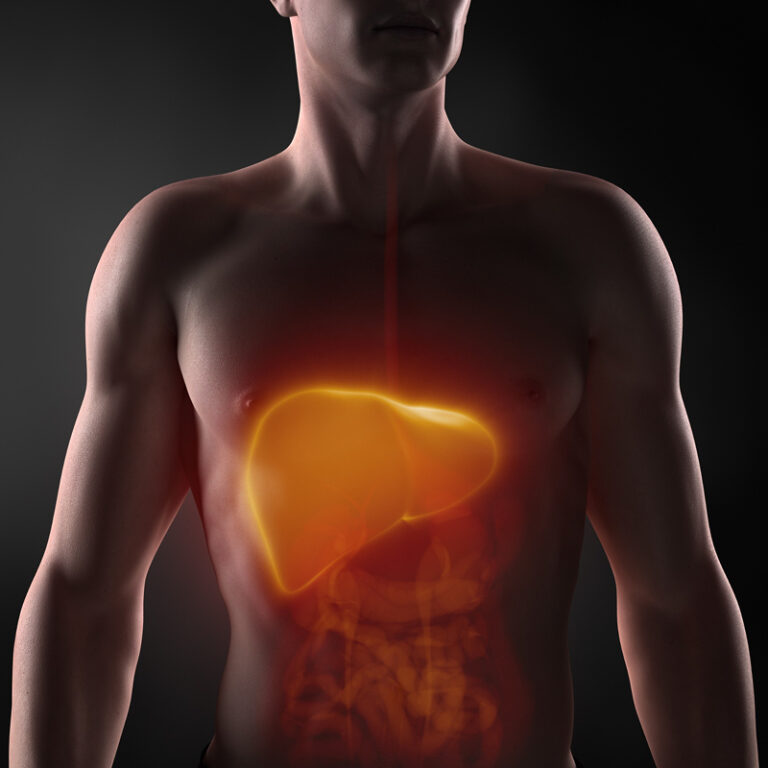
We don’t want to have excess fat in any part of our body, but usually the main reason for trying to reduce it is the desire to look perfect. However, the fat in the liver is different: although it is well hidden from outside view, it is much more damaging to our body than the visible fat pads because it slowly damages and kills liver cells. So how to fight fatty liver effectively?
20-30% – such a large proportion of our population suffers from fatty liver, a disease characterised by the deposition of fat in liver tissue and subsequent damage to liver cells. Previously, this disease was technically called non-alcoholic fatty liver disease (NAFLD) – the word ‘non-alcoholic’ was in the name to pinpoint the cause. In fact, excessive drinking causes very similar liver damage. But today, the name “metabolically induced fatty liver disease” (MAFLD) is increasingly used because it describes exactly what causes it: a metabolic disorder.
Fat is a liver cell killer
Why does it actually matter if we have fat in our liver? The reason is simple: the fat droplets that are deposited there damage the liver cells. As a result, the liver first develops steatosis, a condition in which more than 5% of the liver cells are damaged by fat droplets. This does not in itself necessarily mean a problem – although the liver is already impaired at this point, it is usually not noticeable. But if this is not addressed, the problems get worse.
First, the so-called fibrosis of the liver occurs, which is a multiplication of connective tissue in the liver tissue. This already impairs their function more significantly, but it still does not have to be fatal. In fact, although it was long thought that fibrosis could not be cured, it turns out that it can be reversed. However, if the person concerned does not try and decides not to change his or her lifestyle, liver fibrosis will develop into liver cirrhosis in some 15-20 years. Yes, you heard right – even people who do not drink alcohol at all or only to a limited extent can get cirrhosis.
Another complication that can lead to fatty liver over time is the development of a liver tumour.
Risk factors for fatty liver
The following five factors are the main contributors to this problem:
1. Obesity
The one really significant risk factor is obesity. If we wrote that fatty liver affects 20-30% of the population, in the case of obese people it is even 75%! The so-called visceral or internal fat is particularly problematic. Unfortunately, fatty liver does not avoid thin people either.
2. Heredity
Some cases of fatty liver can be caused genetically. In fact, there are genetic variants that increase the risk of this disease. Particularly problematic here is the so-called PNPLA GG polymorphism, which is thought to make its carrier more susceptible to negative lifestyle and environmental factors.
3. Epigenetic influences (lifestyle)
However, lifestyle and environment play a key role here. It turns out that epigenetic factors – those that influence the activity of individual genes in our DNA – play the biggest role in the development of fatty liver. And these are mostly related to lifestyle and environment. Many of these factors arise in childhood or even during intrauterine development. On the other hand, the large role of epigenetic changes is good news, because these changes are largely reversible.
Most known epigenetic reactions are involved in epigenetic changes associated with fatty liver: gene methylation, histone modification (mainly acetylation and methylation) and regulation by microRNAs. Interestingly, genes related to metabolism, inflammation and type 2 diabetes are affected, as well as genes affecting the function of two cellular organelles: mitochondria, which convert nutrients into energy, and peroxisomes, which are involved in metabolic processes and the breakdown of toxins (e.g. hydrogen peroxide). It is therefore no coincidence that fatty liver is often suffered by people who are not only obese but also suffer from insulin resistance, type 2 diabetes or cardiovascular disease.
4. Gut microbiome
The balance of the gut microbiome also plays a big role. Disruption of this leads to an increase in the permeability of the intestinal wall, which results in the entry of inflammation-promoting substances (such as lipopolysaccharides) and myeloid cells, which also increase the risk of fatty liver. In contrast, some products of gut bacteria reduce the risk of this disease – in particular, short-chain fatty acids such as butyrate, propionate and acetate. A disrupted gut microbiome also impairs bile acid metabolism, which also contributes to the onset and development of fatty liver.
The state of the gut microbiome is also closely related to the development of obesity and insulin resistance, which are important risk factors for fatty liver.
5. Inflammation
It also appears that in the early stages of fatty liver, there is usually increased inflammation, which subsequently worsens the disease. Increased production of free radicals (not only) in the liver is also typical. Some research also points to an important role for certain immune cells, in particular a type of T cell known as CD8+. These are attracted to the liver in the context of processes that accompany liver cell damage and then contribute to their further destruction.
How is fatty liver treated?
Classical medicine currently has no effective treatment for non-alcoholic fatty liver disease and relies primarily on lifestyle modification. Some studies have shown the possible effectiveness of drugs used in diabetes (e.g. liraglutide, remogliflozin or elafibronol). Drugs that work on the principle of epigenetics – for example, miravirsen, which acts as a microRNA-122 antagonist, or drugs that affect the production of histone deacetylase enzymes – also hold great promise for the future.
But we’re going to look at how we can help our livers from harmful fat ourselves, with lifestyle changes and epigenetic nutrients and herbs.
6 principles of nutrition for fatty liver
Dietary changes are essential for those who are struggling with fatty liver. Here are the main points to focus on:
1. Limit sugars and fats
It is the combination of high carbohydrate and fat intake that causes significant negative changes in both gene methylation and gut microbiome balance.
2. Omit fructose
In addition to sucrose, you also need to pay close attention to your fructose intake. This monosaccharide is often recommended for diabetics because it is metabolized in the body in a different way than glucose, but it is actually very harmful (not only for them). It causes changes in the DNA of the mitochondria and thus significantly impairs the function of these organelles. In addition to pure fructose, it is advisable to limit the consumption of foods and drinks sweetened with glucose-fructose syrup.
3. Bet on the Mediterranean diet
On the other hand, the so-called Mediterranean diet, ideally with a reduced proportion of fat, has proven to be beneficial. The Mediterranean diet is characterised by a high intake of fish and seafood, olive oil, pulses, nuts, fermented dairy products and herbs, and a low consumption of simple sugars and processed foods.
4. More plant foods
Increasing the proportion of plant components in the diet, especially enriching it with vegetables, legumes and whole grains, and reducing the proportion of animal foods, also has a positive effect. The increase in fibre intake that results from this also leads to an improvement in the balance of the gut microbiome.
5. No alcohol
Of course, alcohol consumption should be significantly reduced. As it breaks down, oxidative stress increases in the liver, which contributes to its deterioration.
6. More choline
It is also important to make sure that our diet contains enough choline – low-choline diets lead to the development and worsening of fatty liver. Egg yolks, tripe, legumes, cereal sprouts, yeast and leafy vegetables contain the most choline.
Theoretically, taking probiotics could be beneficial, but so far there are no studies in human volunteers to prove this. However, improvements in fatty liver have been observed in animals after taking lactobacilli.
Nutrition of pregnant women
Pregnant women should pay great attention to nutrition. If a mother-to-be overeats during pregnancy, consumes a diet high in sugars and fats, and especially if she suffers from insulin resistance or other metabolic problems, she significantly increases her child’s risk of developing fatty liver later in life.
Again, the gut microbiome, which the baby receives from its mother during birth, plays a big role: for example, when scientists in one study took the microbiome from the stool of babies born to obese mothers and implanted it into mice, the animals developed liver inflammation and were at increased risk of developing fatty liver. In babies themselves, then, a lot of epigenetic damage can be repaired by breastfeeding, which is the most natural way to restore the balance of the gut microbiome.
Other positive lifestyle changes
Weight reduction
Since obesity is a major risk factor for fatty liver, it is advisable to focus on weight management in addition to overall dietary improvement. This does not have to be a drastic intervention; even a reduction in weight of a few kilograms can have a significant positive effect. For example, a 10% reduction in fatty liver was observed in people who reduced their weight by just 5% (i.e. by 5 kg at 100 kg). A weight reduction of 7-10% also led to a reduction in inflammation and in the proportion of damaged liver cells.
More movement
Regular exercise is not only important for weight loss, but also helps to reduce insulin resistance, has anti-inflammatory effects and has a direct positive effect on the rate of fatty liver. In particular, a combination of aerobic exercise, i.e. exercise at 55-70 % of maximum heart rate (e.g. walking, swimming, cycling, even running in trained persons) with weight training is appropriate. It is important to do aerobic exercise for at least 150 minutes a week, and weight training for 30-60 minutes a week, ideally with submaximal loads (i.e. those with which you can do 8-10 repetitions of the exercise).
Movement in conjunction with dietary restrictions can help reverse even quite severe liver damage. One study, for example, looked at a group of volunteers whose biopsies showed more than 30% fatty liver. After they completed a 10-week aerobic program in conjunction with caloric restriction, more than 85% of them experienced significant improvement.
Useful dietary supplements
Vitamins and minerals
People with fatty liver have been found to have elevated levels of homocysteine in research, so it is advisable to take care to consume substances that help reduce homocysteine levels – especially folic acid and vitamin B12. One study has even directly linked gene hypomethylation in obese people with insulin resistance and the risk of fatty liver with low folic acid levels.
Supplementation with vitamins C and E or selenium is also recommended.
Milk thistle
The most famous “liver” herb acts on the liver in several ways. In addition to helping to alleviate fatty liver, it also promotes the regeneration of this organ, which also applies to the regeneration of liver cells damaged due to fatty liver. Importantly, milk thistle also helps to alleviate insulin resistance, which is a significant risk factor for fatty liver. In addition, it has a strong antioxidant effect – not only does it contain substances with antioxidant properties, but it also helps to maintain high levels of the powerful antioxidant glutathione in the liver. It is also effective in liver fibrosis.
Resveratrol
Enzymes called sirtuins, particularly SIRT-1, play an important role in the development of fatty liver. With increasing age and also with obesity, the level of this enzyme decreases in the liver, making it more susceptible to negative epigenetic changes associated with fatty liver. Resveratrol is one of the most effective natural sirtuin activators. It also limits apoptosis (cell death) of liver cells, protects the liver from necrosis, counteracts fatty liver, and also counteracts fibrosis, or the thickening of connective tissue in the liver that usually precedes the development of cirrhosis. It also reduces the risk of cancer of this organ.
For better bioavailability, resveratrol should be combined with, for example, curcumin or quercetin.
Curcumin
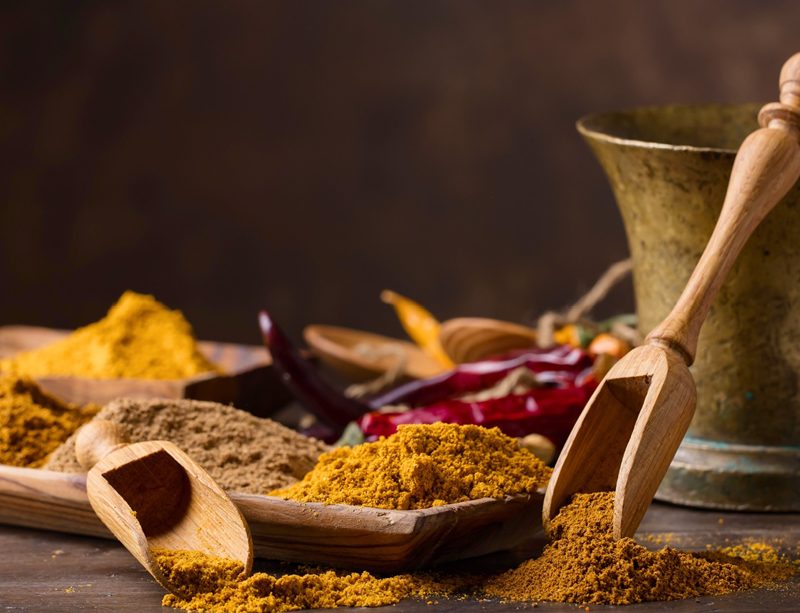
The dye from turmeric root is one of the natural substances with the strongest epigenetic action, effectively influencing all basic epigenetic reactions. It has a positive effect on the liver, where it not only helps to alleviate its fatty nature, but is also beneficial in fibrosis or cirrhosis of this organ. In addition, it promotes the regeneration of liver cells and helps to alleviate insulin resistance.
Rosemary
Also a popular Mediterranean herb, it is characterized by its all-round positive effect on the liver. It positively affects the metabolism of fats in the liver and helps relieve its fatty, fibrosis, and even cirrhosis. It also has a significant protective effect on liver cells.
Artichoke
The traditional Mediterranean vegetable is characterised by its all-round positive effect on the liver, including fattening it. In one clinical study, for example, two months of artichoke leaf extract in people suffering from fatty liver led to improvements in a number of liver test parameters and ultrasound scans. In addition, artichoke improves the liver’s production of internal antioxidant enzymes, thereby protecting it against free radicals.
Olives
Olives contain three substances with positive effects on fatty liver. The most effective of these is hydroxytyrosol, a powerful antioxidant with anti-inflammatory effects. It reduces the level of inflammation in the liver tissue, improves the condition in non-alcoholic fatty liver disease, while at the same time preventing the deposition of fats in the liver tissue. It also improves mitochondrial function (not only) in liver tissue, alleviates insulin resistance and improves the integrity of the intestinal barrier.
Other interesting substances from olives are maslinic and oleanoic acids, which also improve the condition in non-alcoholic fatty liver disease. In addition, the former can also alleviate acute liver damage.
Butyrate
Short-chain fatty acids, which include butyrate, reduce the risk of fatty liver. Adequate production by gut bacteria is key, but especially in the case of a disrupted gut microbiome, butyrate supplements may also be beneficial.
Clinical studies on this topic are still lacking, but research on mice has shown that butyrate reduces liver inflammation and slows the progression of fatty liver. Administration during pregnancy has been shown in studies to reduce the risk of fatty liver in the offspring of these mice.
0:00
/
0:00
Stárnutí je volba
Klíčová slova: Artichoke, Butyrate, butyric acid, cirrhosis, curcumin, epigenetics, gene methylation, gut microbiome, hydroxytyrosol, inflammation, insulin resistance, liver, liver fibrosis, Mediterranean diet, Milk thistle, Motion, non-alcoholic fatty liver, nutrition, obesity, oleanoic acid, Olives, resveratrol, rosemary, steatosis
Komentáře
Seznam zdrojů
- https://www.wikiskripta.eu/w/Jatern%C3%AD_fibr%C3%B3za
- prof. MUDr. Petr Hůlek, CSc., MUDr. Irma Dresslerová. Nealkoholové ztučnění jater v klinické praxi (NAFL). Interní Med. 2015; 17(5): 224–226
- Basile Njei, Yazan A. Al-Ajlouni, Derek Ugwendum, Manasik Abdu, Anim Forjindam, Mouhand F. Mohamed. Genetic and epigenetic determinants of non-alcoholic fatty liver disease (NAFLD) in lean individuals: a systematic review. Translational Gastroenterology and Hepatology. Vol 9 (January 30, 2024). https://tgh.amegroups.org/article/view/8382/html
- Ramos-Lopez O, Samblas M, Milagro FI, Zulet MA, Mansego ML, Riezu-Boj JI, et al. Association of low dietary folate intake with lower CAMKK2 gene methylation, adiposity, and insulin resistance in obese subjects. Nutr Res. (2018) 50:53–62. 10.1016
- J. Samael Rodríguez-Sanabria, Rebeca Escutia-Gutiérrez, Rebeca Rosas-Campos, Juan S. Armendáriz-Borunda, and Ana Sandoval-Rodríguez. An Update in Epigenetics in Metabolic-Associated Fatty Liver Disease. Front Med (Lausanne). 2021; 8: 770504.
- Timothy Hardy, Derek A Mann. Epigenetics in liver disease: from biology to therapeutics. BMJ Journals. https://gut.bmj.com/content/65/11/1895
- Hong-Tai Tzeng and Wei-Chia Lee. Impact of Transgenerational Nutrition on Nonalcoholic Fatty Liver Disease Development: Interplay between Gut Microbiota, Epigenetics and Immunity. Nutrients 2024, 16(9), 1388.
- https://bezpecnostpotravin.cz/termin/cholin/
- Ghaemi A, Taleban FA, Hekmatdoost A, Rafiei A, Hosseini V, Amiri Z, et al. How Much Weight Loss is Effective on Nonalcoholic Fatty Liver Disease? Hepat Mon. 2013;13:e15227.
- Lyna Campo, Sara Eiseler, Tehilla Apfel, and Nikolaos Pyrsopoulos. Fatty Liver Disease and Gut Microbiota: A Comprehensive Update. J Clin Transl Hepatol. 2019 Mar 28; 7(1): 56–60.
- https://www.webmd.com/hepatitis/fatty-liver-disease-diet
- https://www.iverwellnessprogram.com/exercise-advice-for-patients-with-fatty-liver-disease-mafld.html
- Jin YJ, Kim KM, Hwang S, Lee SG, Ha TY, Song GW, Jung DH, Kim KH, Yu E, Shim JH, and others. Exercise and diet modification in non-obese non-alcoholic fatty liver disease: Analysis of biopsies of living liver donors. J Gastroenterol Hepatol. 2012;27(8):1341–7.
- Shudi Li, Fei Duan, Suling Li, Baoping Lu. Administration of silymarin in NAFLD/NASH: A systematic review and meta-analysis. Annals of Hepatology. https://www.elsevier.es/en-revista-annals-hepatology-16-avance-resumen-administration-silymarin-in-nafld-nash-a-S1665268123002776
- Mohammad Hosein Farzaei, Mahdi Zobeiri, Fatemeh Parvizi, Fardous F. El-Senduny, Ilias Marmouzi, Ericsson Coy-Barrera, Rozita Naseri, Seyed Mohammad Nabavi, Roja Rahimi, and Mohammad Abdollahi. Curcumin in Liver Diseases: A Systematic Review of the Cellular Mechanisms of Oxidative Stress and Clinical Perspective. Nutrients. 2018 Jul; 10(7): 855. https://www.ncbi.nlm.nih.gov/pmc/articles/PMC6073929/
- Rašković A, Milanović I, Pavlović N, Ćebović T, Vukmirović S, Mikov M. Antioxidant activity of rosemary (Rosmarinus officinalis L.) essential oil and its hepatoprotective potential. BMC Complement Altern Med. 2014 Jul 7;14:225.
- Si-Jian Wang, Qian Chen, Meng-Yang Liu, Hai-Yang Yu, Jing-Qi Xu, Jia-Qi Wu, Yi Zhang and Tao Wang. Regulation effects of rosemary (Rosmarinus officinalis Linn.) on hepatic lipid metabolism in OA induced NAFLD rats. Food and Funktion, Issue 11, 2019.
- Forouzan Faghihzadeh, Azita Hekmatdoost, and Payman Adibi. Resveratrol and liver: A systematic review. J Res Med Sci. 2015 Aug; 20(8): 797–810. https://www.ncbi.nlm.nih.gov/pmc/articles/PMC4652315/
- Panahi Y, Kianpour P, Mohtashami R, et al. Efficacy of artichoke leaf extract in non-alcoholic fatty liver disease: A pilot double-blind randomized controlled trial. Phytother Res. 2018;32(7):1382-1387.29520889
- Colak E, Ustuner MC, Tekin N, et al. The hepatocurative effects of Cynara scolymus L. leaf extract on carbon tetrachloride-induced oxidative stress and hepatic injury in rats. Springerplus. 2016;5:216.27026910
- Daniela Gabbia, Sara Carpi, Samantha Sarcognato, Ilaria Zanotto, Katia Sayaf, Martina Colognesi, Beatrice Polini, Maria Digiacomo, Marco Macchia, Paola Nieri, Maria Carrara, Nora Cazzagon, Francesco Paolo Russo, Maria Guido, Sara De Martin. The phenolic compounds tyrosol and hydroxytyrosol counteract liver fibrogenesis via the transcriptional modulation of NADPH oxidases and oxidative stress-related miRNAs. Biomedicine & Pharmacotherapy. Volume 157, January 2023, 114014
- Claudio Pirozzi, Adriano Lama, Raffaele Simeoli , Orlando Paciello , Teresa Bruna Pagano, Maria Pina Mollica , Francesca Di Guida, Roberto Russo, Salvatore Magliocca, Roberto Berni Canani, Giuseppina Mattace Raso, Antonio Calignano, Rosaria Meli . Hydroxytyrosol prevents metabolic impairment reducing hepatic inflammation and restoring duodenal integrity in a rat model of NAFLD. J Nutr Biochem. 2016 Apr:30:108-15.
- Yanzou Dong a kol. Hydroxytyrosol Promotes the Mitochondrial Function through Activating Mitophagy. Antioxidants 2022, 11(5)
- Yan He, Yi Wang, Kun Yang, Jia Jiao, Hong Zhan, Youjun Yang, De Lv, Weihong Li, and Weijun Ding. Maslinic Acid: A New Compound for the Treatment of Multiple Organ Diseases. Molecules. 2022 Dec; 27(24): 8732.
- José M. Castallano a kol. Oleanolic Acid: Extraction, Characterization and Biological Activity. Nutrients 2022, 14(3), 623
- Filip Vlavcheski, Mariah Young, and Evangelia Tsiani. Antidiabetic Effects of Hydroxytyrosol: In Vitro and In Vivo Evidence. Antioxidants (Basel). 2019 Jun; 8(6): 188.