Hair fall – a great guide to natural treatment options
epivyziva.cz/
Zobrazeno: 551
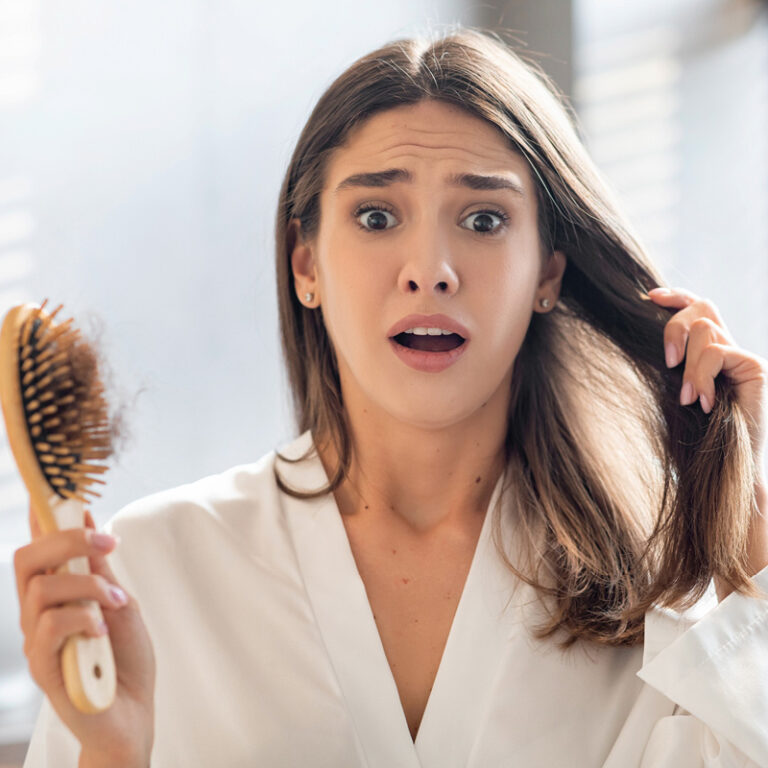
The fact that a hair falls out now and then is no reason to panic. The hair on our head is continuously renewed and therefore continuously falls out. But what can we do if the loss outweighs the renewal and the hair growth starts to thin out?
According to the American Academy of Dermatology Association, it is considered normal to lose 50-100 hairs a day. Which may look scary, but considering that there are usually between 80,000 and 120,000 hairs on a person’s head, it’s not a big deal. But if the loss is higher, it’s a good idea to start doing something about it, and as soon as possible.
The life of a single hair
Human hair is a unique part of the body in its own way. It grows from hair follicles, which are one of the few mammalian tissues that contain stem cells. When these cells are active, the hair grows continuously – a little bit every day. After a certain period of time, their activity ceases and in a short time the hair naturally falls out. But this is far from the end – if everything goes as it should, the activity of the stem cells in the follicle soon resumes and a new cycle of hair life begins.
The life cycle of each hair has three phases, which are constantly repeated. If hair is falling out excessively, it is usually because there was a problem during either the first or the third of them.
- Anagenic phase – this is the period when the hair is growing. It lasts 2-8 years. If all is well, then this is the stage where about 85-90% of the hair on our head is found. The anagen phase is disrupted by, for example, chemotherapy or radiotherapy as part of cancer treatment.
- Catagen phase – this is a transitional phase during which the hair follicles begin to shrink. It lasts 2-3 weeks.
- Telogen phase – this phase is called the resting phase because at this point nothing happens to the hair or its follicle. It lasts 2-4 months and at the end of it the hair falls out. In some cases, an excessive amount of hair may suddenly reach the telogen phase and then start to fall out in large numbers. This often happens in women after childbirth or after the onset of menopause, but it can also be caused by excessive stress, thyroid dysfunction or anaemia. However, the massive transition of hair into the telogen phase can also be the result of taking certain medications (e.g. for high blood pressure) or an overdose of vitamin A. Last but not least, stress also interferes with this phase.
Why does hair fall out?
A large percentage of cases of excessive hair loss are genetically determined, but there can be many causes. As we mentioned above, these include side effects of medications (in addition to the aforementioned chemotherapy or some blood pressure medications, this can also include hormonal contraceptives), thyroid disease, poor nutritional status or high weight loss. Especially in women, however, inappropriate hairdressing or poorly chosen hair cosmetics are often the cause. But that is not all.
Men: starring DHT
The causes are relatively unambiguous for men. Men are generally more likely to suffer from hair loss than women – 25% of them experience their first significant hair loss shortly after the age of 21, and 85% of the male population suffers from thinning hair after the age of 50. In 95% of cases, the so-called androgenic alopecia, or hair loss due to hormonal causes, is to blame.
The reason why balding affects some men earlier (and more) than others is due to genetics. For genetic reasons, the follicles of the less fortunate portion of men are highly sensitive to a substance called dihydrotestosterone (DHT), which is produced in the body by conversion from testosterone. This reaction requires the presence of the enzyme 5-α-reductase, which is found in the sebaceous sacs of the follicles. The resulting DHT causes, among other things, the hair follicles to shrink, which over time results in complete hair loss in certain areas – the most sensitive to DHT are the follicles in the forehead, temples and top of the head, where hair loss occurs first.
A possible way to stop this process, or at least slow it down, is to suppress the production of 5-α-reductase, without which the conversion of testosterone to DHT cannot take place. One of the most commonly used drugs, finasteride, for example, acts through this mechanism, as do some dietary supplements (e.g. curcumin or pomegranate). The success of treatment here, however, depends on its early initiation, ideally at the first signs of excessive hair loss.
Alarmingly, a recent finding shows that men who started balding before the age of 30 are at much higher risk of insulin resistance and type 2 diabetes compared to their peers later in life. For this reason, too, it is not a good idea to take balding lightly.
Interestingly, DHT, and therefore the enzyme 5-α-reductase, is also involved in the processes leading to prostate enlargement. Incidentally, the drug finasteride was originally intended to treat prostate enlargement, and it was only when its testing showed the ‘side-effects’ of reducing baldness that its manufacturer registered it for this purpose. Similarly, natural substances that work against androgenic hair loss also have a positive effect on the prostate. (This is especially true for curcumin and pomegranate.)
Hormonal causes in women
However, hair loss in women can also have hormonal causes. It is typical, for example, during the menopause, when the production of the female sex hormones estrogen and progesterone is stopped, so that the effects of androgens (male sex hormones), which are also produced to a lesser extent in the female body, begin to be more pronounced. In addition, estrogen itself prolongs the anagen phase of the hair cycle, and the cessation of its production therefore causes a reduction in the growth (and therefore life) of the hair. At the same time, hair becomes finer at menopause because hair follicles shrink, grow more slowly and fall out more easily.
Hair loss is also one of the typical symptoms of a gynaecological disease called polycystic ovary syndrome (PCOS), in which the ovaries produce an excess of androgens (male sex hormones).
The negative impact of stress
For both sexes, stress also has a significant negative effect on hair growth. This is because the stress hormone cortisol causes a decrease in the activation of stem cells in the hair follicles. This is because it acts on a cluster of cells under the follicles called the dermal papilla, and these cells subsequently produce fewer of the signaling molecules that activate the stem cells in the follicles (a signaling molecule called Gas6). This results in a prolonged telogen phase where, after hair loss, the stem cell activation that is required to start the process of new growth does not occur. The signaling molecule Gas6, which causes the activation of stem cells, could be a good candidate for a future drug to promote hair growth, but for now we have no choice but to try to reduce the amount of stressful stimuli and increase our body’s resistance to them.
In order to make our list of causes of hair loss complete, we should also mention a disease called alopecia areata. This is a disease in which circumscribed bald patches form on the scalp, and is one of the autoimmune diseases.
Procedures of classical medicine
Classical medicine uses to treat hair loss most often drugs containing the active substances finasteride, spironolactone and minoxidil. The first two work on the principle of suppression of androgen activity, while minoxidil is applied directly to the scalp, where it causes the dilation of blood capillaries, and therefore a better supply of oxygen and nutrients to the hair follicles. Laser therapy has also had relatively solid results in studies.
In the case of alopecia areata, drugs aimed at inhibiting Janus kinase enzymes are sometimes used, as in the treatment of other autoimmune diseases.
Help from nature
When it comes to natural treatments, in addition to eliminating stressful stimuli, the main focus should be on nutrition, and dietary supplements with epigenetic effects can also help.
First and foremost, our diet must contain all the key vitamins, minerals and other nutrients. As soon as our body is lacking something, it prefers to supply this nutrient to organs crucial for survival, which the scalp is not. Specific foods that have a positive effect on hair growth include fish, eggs, pumpkin seeds, green tea, onions and coconut oil, while excess simple sugars, saturated fats and alcohol should be avoided.
Of the dietary supplements, the following may be particularly helpful:
Curcumin
It is a top choice in the case of male androgenic baldness – curcumin can very effectively inhibit the conversion of testosterone to DHT – 1 g of turmeric extract has the same potential to inhibit 5α-reductase as 13 mg of finasteride, and yet unlike this drug has virtually no negative side effects. Curcumin should be taken in combination with black pepper piperine, which will improve its absorption many times over.
Curcumin is also useful in autoimmune diseases, so it is also suitable for alopecia areata, and also supports thyroid function.
Omega-3
Their efficacy was demonstrated in women: after administration of omega-3 unsaturated fatty acids together with antioxidants for 6 months, the women studied experienced an increase in hair density and a significant decrease in the amount of hair in the telogen phase.
EGCG
Epigallocatechin gallate is useful in male pattern baldness because it suppresses the conversion of testosterone to DHT. In addition, it stimulates overall hair growth, is anti-inflammatory and has other broad spectrum of positive effects, and therefore may be beneficial for other causes of excessive hair loss.
Pomegranate
It is another effective means of limiting the production of 5α-reductase, which also has a beneficial effect on prostate health.
Ginkgo biloba
It is one of the best natural remedies for promoting blood circulation to all tissues of the body (including the scalp) and has been proven to promote hair growth.
Genistein
Genistein is a very potent phytoestrogen (i.e. a plant substance that binds to the same receptors in the body as female sex hormones) and is therefore suitable for virtually all menopause-related problems. And it also applies to excessive hair loss at this time of life.
Probiotics
The balance of the gut microbiome affects the health of virtually the entire body and influences the quality and density of our hair. The administration of probiotics can therefore be very beneficial here as well.
For example, the use of Lactobacillus paracasei HY7015 leads to increased production of important growth factors (IGF-1 and vascular endothelial growth factor) in hair follicles, resulting in proliferation (i.e. multiplication) of cells in key parts of the follicles. This may subsequently result in increased hair growth.
Vitamins and minerals
Adequate levels of vitamin D3 are essential for hair growth. It binds to the so-called VDR receptors inside cells, which activates genes in the cell nucleus for the production of proteins necessary for the hair growth process. Its deficiency is also typical of autoimmune diseases, including alopecia areata.
Zinc is also essential for hair growth – its administration can have a positive effect not only on male pattern baldness but also on alopecia areata.
Adequate intake of B vitamins and iron is also important. Biotin is often recommended, but its effect on hair growth has not been reliably proven.
0:00
/
0:00
Stárnutí je volba
Klíčová slova: alopecia areata, balding, curcumin, egcg, Genistein, Ginkgo biloba, hair loss, Male, PCOS, polycystic ovary syndrome, pomegranate, prostate, thyroid, vitamin D3
Komentáře
Seznam zdrojů
- American Academy of Dermatology Association. DO YOU HAVE HAIR LOSS OR HAIR SHEDDING? https://www.aad.org/public/diseases/hair-loss/insider/shedding.
- Cheng AS, Bayliss SJ, “The genetics of hair shaft disorders.” J Am Acad Dermatol 2008;59(1):1-22.
- Jessica Lau. How chronic stress leads to hair loss. Harward Department of Stem Cell and Regenerative Biology. March 31, 2021.
- https://www.medicalnewstoday.com/articles/hair-loss-the-latest-science-on-causes-treatment-and-prevention?utm_source=Sailthru%20Email&utm_medium=Email&utm_campaign=MNT%20Daily%20News&utm_content=2022-12-06&apid=40814461&rvid=b7c78a4875d9876af7279500579a7c7513f20be9ca94ccf2b4ea4eac6c3ec937#Existing-drug-treatments
- Joaquin J Jimenez , Tongyu C Wikramanayake, Wilma Bergfeld, Maria Hordinsky, Janet G Hickman, Michael R Hamblin, Lawrence A Schachner. Efficacy and safety of a low-level laser device in the treatment of male and female pattern hair loss: a multicenter, randomized, sham device-controlled, double-blind study. Am J Clin Dermatol. 2014 Apr;15(2):115-27.
- Le floc’h C, Cheniti A, Connétable S, Piccardi N, Vincenzi C, Tosti A. Effect of a nutritional supplement on hair loss in women. J Cosmet Dermatol. 2015;14(1):76-82. Accessed 2/3/2021.
- Cleveland Clinic. Hair Loss in Woman. https://my.clevelandclinic.org/health/diseases/16921-hair-loss-in-women
- Paul J. McAndrews, MD. Mens Hair Loss. https://www.americanhairloss.org/men_hair_loss/causes_of_hair_loss.html
- Yaqi Mao, Ziqian Xu, Jun Song, Yihui Xie, Xingyu Mei, Weimin Shi. Premature androgenic alopecia and insulin resistance. Male equivalent of polycystic ovary syndrome? Endocr Regul. 2005 Dec;39(4):127-31.
- MUDr. Jana Vrbíková. Syndrom polycystických ovarií. Interní medicína pro praxi, 11/2003
- Haussler, Mark R., et al., et al. Vitamin D receptor: molecular signaling and actions of nutritional ligands in disease prevention. Robert M. Russell. Suppl. 2, Boston: Wiley: International Life Sciences Institute, October 1, 2008, Nutrition Reviews, Vol. 66, pp. S98-S112.
- Hoon Park, M.D., Chul Woo Kim, M.D., Sang Seok Kim, M.D. and Chun Wook Park, M.D. The Therapeutic Effect and the Changed Serum Zinc Level after Zinc Supplementation in Alopecia Areata Patients Who Had a Low Serum Zinc Level. Ann Dermatol. 2009 May; 21(2): 142–146.
- Xiran Lin, Xianmin Meng, and Zhiqi Song. Vitamin D and alopecia areata: possible roles in pathogenesis and potential implications for therapy. Am J Transl Res. 2019; 11(9): 5285–5300.
- Kumar, Thapana, et al., et al. [ed.] Akah Peter Achunike. Screening of steroid 5α-reductase inhibitory activity and total phenolic content of Thai plants. 7, Nsukka: Academic Journals, April 4, 2011, Journal of Medicinal Plants Research, Vol. 5, pp. 1265-1271. ISSN: 1996-0875.
- Shanghun Shin,* Karam Kim,* Myung Joo Lee, Jeongju Lee, Sungjin Choi, Kyung-Suk Kim, Jung-Min Ko, Hyunjoo Han, Su Young Kim, Hae Jeong Youn,1 Kyu Joong Ahn,1 In-Sook An,2 Sungkwan An, and Hwa Jun Cha. Epigallocatechin Gallate-Mediated Alteration of the MicroRNA Expression Profile in 5α-Dihydrotestosterone-Treated Human Dermal Papilla Cells. Ann Dermatol. 2016 Jun; 28(3): 327–334.
- Taylor C Wallace. Health Effects of Coconut Oil-A Narrative Review of Current Evidence. J Am Coll Nutr. 2019 Feb;38(2):97-107.
- Young Hye Cho, Sang Yeoup Lee, Dong Wook Jeong, Eun Jung Choi, Yun Jin Kim, Jeong Gyu Lee, Yu Hyeon Yi, and Hyeong Soo Cha. Effect of Pumpkin Seed Oil on Hair Growth in Men with Androgenetic Alopecia: A Randomized, Double-Blind, Placebo-Controlled Trial. Evid Based Complement Alternat Med. 2014; 2014: 549721.
- N Kobayashi, R Suzuki, C Koide, T Suzuki, H Matsuda, M Kubo. [Effect of leaves of Ginkgo biloba on hair regrowth in C3H strain mice]. Yakugaku Zasshi. 1993 Oct;113(10):718-24
- Natasha Irrera, Gabriele Pizzino,Rosario D’Anna, Mario Vaccaro, Vincenzo Arcoraci, Francesco Squadrito, Domenica Altavilla, and Alessandra BittoDietary Management of Skin Health: The Role of Genistein. Nutrients. 2017 Jun; 9(6): 622.
- Mee Young Hong, Navindra P. Seeram, and David Heber. Pomegranate Polyphenols Downregulate Expression of Androgen Synthesizing Genes in Human Prostate Cancer Cells Overexpressing the Androgen Receptor. J Nutr Biochem. 2008 Dec; 19(12): 848–855.