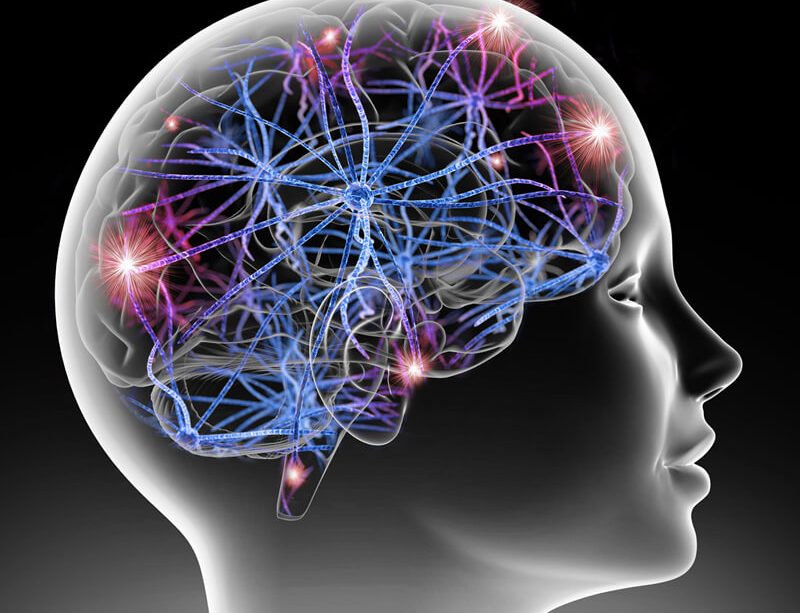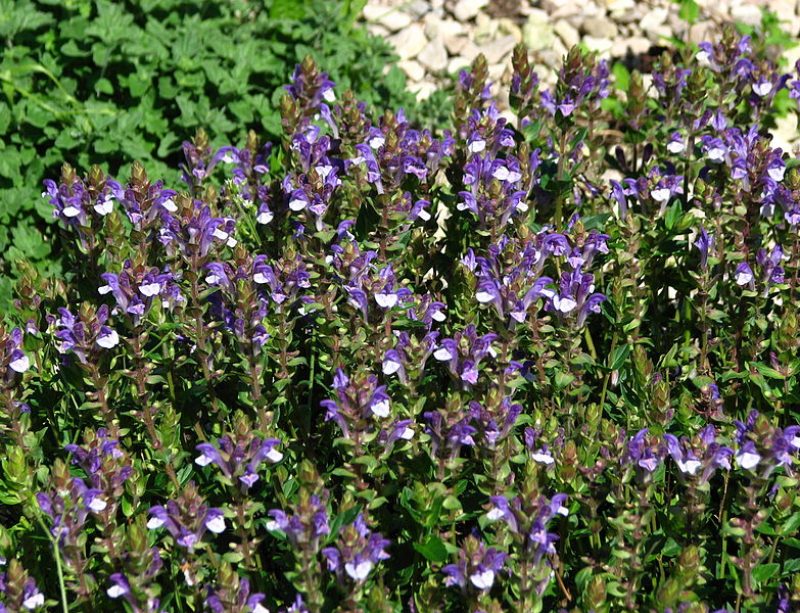
Baicalein contains active substances such as baicalein, baicalin and wogonin, which have one important property: they are able to cross the barrier between the bloodstream and the brain and can therefore act directly on certain brain structures (1). Their effect on brain fitness, protection against various adverse influences and on various psychological disorders is therefore more pronounced than that of other natural substances.
The wogonin and baicalein in the pine cone can bind to GABA receptors in the brain. These are where gamma-aminobutyric acid, a neurotransmitter (a substance that mediates the transmission of nerve impulses) with depressant effects, normally binds. Wogonin binds directly to the benzodiazepine binding site, which is where benzodiazepine drugs used for anxiety otherwise go (2, 3). In addition, both baicalein and wogonin are very effective against convulsions (2, 6).
Pine cones, especially the baicalein they contain, have one major advantage over anxiolytics: unlike anxiolytics, they bind only to certain subunits of GABA receptors, so they can effectively reduce anxiety, but they do not have sedative effects, do not cause excessive drowsiness or loss of attention, and can therefore be used, for example, in driving or other attention-demanding activities (4, 5, 7).
On the contrary, the pineal gland increases the ability to maintain attention quite effectively, which is appreciated by people with attention disorders, especially those associated with hyperactivity. According to researchers, this is likely related to its ability to block dopamine transporters (8, 9).
The positive effects on memory are best studied in the context of the severe memory impairment that accompanies Alzheimer’s disease. In particular, studies investigating the effect of pine cones against the memory-impairing ibotenic acid, which causes similar changes in the brain to Alzheimer’s disease, look very promising (10). In addition, oroxylin A, a substance found in pine cones, can also directly alleviate the memory impairment caused by beta-amyloid plaques that occur in the brains of sufferers (11).
However, pineal gland has also been shown to counteract the memory decline associated with ageing (12), and in experiments on mice, a beneficial effect not only on memory but also on learning and other cognitive abilities in general has been confirmed in young individuals (13).
One of the reasons for the positive effects on memory is probably the fact that oroxylin A promotes the formation of new nerve cells, especially in the hippocampus, the area of the brain responsible for memory (20). Moreover, in Alzheimer’s disease, the hippocampus is one of the first areas of the brain to suffer severe damage.
The substances contained in the pine cone can also effectively protect cells against various destructive influences. For example, baicalein is very effective in protecting cells from ischemic damage, which occurs due to lack of oxygen, for example in stroke (14, 15).
An interesting effect that may contribute to the prevention and treatment of Alzheimer’s and Parkinson’s disease is the reduction of the activation of microglia, the supporting nerve cells involved in the immune system. When they are overactivated, inflammatory cytokines are produced, which contribute to cognitive decline in these diseases (16, 17). Wogonin and oroxylin A in pine cones can effectively suppress microglial activation (18, 19).
In addition, the baicalein contained in the pine cone has two other important effects on the psyche: firstly, it improves stress resistance and secondly, it has an antidepressant effect, without the side effects typical of antidepressants (21, 22).
PŘIHLASTE SE K ODBĚRU NOVINEK A MĚJTE VŽDY ČERSTVÉ INFORMACE
| Cookie | Duration | Description |
|---|---|---|
| cookielawinfo-checkbox-analytics | 11 měsíců | Tento soubor cookie je nastaven pluginem GDPR Cookie Consent. Soubor cookie se používá k uložení souhlasu uživatele s používáním souborů cookie v kategorii „Analytika“. |
| cookielawinfo-checkbox-functional | 11 měsíců | Soubor cookie je nastaven na základě souhlasu s cookie GDPR k zaznamenání souhlasu uživatele pro soubory cookie v kategorii „Funkční“. |
| cookielawinfo-checkbox-necessary | 11 měsíců | Tento soubor cookie je nastaven pluginem GDPR Cookie Consent. Cookies slouží k uložení souhlasu uživatele s cookies v kategorii „Nezbytné“. |
| cookielawinfo-checkbox-others | 11 měsíců | Tento soubor cookie je nastaven pluginem GDPR Cookie Consent. Cookie se používá k uložení souhlasu uživatele s cookies v kategorii „Jiné. |
| cookielawinfo-checkbox-performance | 11 měsíců | Tento soubor cookie je nastaven pluginem GDPR Cookie Consent. Cookie se používá k uložení souhlasu uživatele s cookies v kategorii „Výkon“. |
| elementor | nikdy | Tento soubor cookie používá téma WordPress webu. Umožňuje vlastníkovi webu implementovat nebo měnit obsah webu v reálném čase. |
| viewed_cookie_policy | 11 měsíců | Soubor cookie je nastaven pluginem GDPR Cookie Consent a používá se k uložení, zda uživatel souhlasil nebo nesouhlasil s používáním souborů cookie. Neukládá žádné osobní údaje. |
| Cookie | Duration | Description |
|---|---|---|
| sb | 2 roky | Tento soubor cookie používá Facebook ke kontrole svých funkcí, shromažďování jazykových nastavení a sdílení stránek. |
| Cookie | Duration | Description |
|---|---|---|
| _ga | 2 roky | Soubor _ga cookie, nainstalovaný službou Google Analytics, vypočítává údaje o návštěvnících, relacích a kampaních a také sleduje využití webu pro analytický přehled webu. Soubor cookie ukládá informace anonymně a přiřazuje náhodně vygenerované číslo k rozpoznání unikátních návštěvníků. |
| _gat_gtag_UA_71041054_1 | 1 minuta | Nastaveno Googlem k rozlišení uživatelů. |
| _gid | 1 den | Soubor cookie _gid nainstalovaný službou Google Analytics ukládá informace o tom, jak návštěvníci používají webovou stránku, a zároveň vytváří analytickou zprávu o výkonu webu. Některá data, která jsou shromažďována, zahrnují počet návštěvníků, jejich zdroj a stránky, které anonymně navštěvují. |
| Cookie | Duration | Description |
|---|---|---|
| fr | 3 měsíce | Facebook nastavuje tento soubor cookie tak, aby uživatelům zobrazoval relevantní reklamy sledováním chování uživatelů na webu, na stránkách, které mají Facebook pixel nebo sociální plugin Facebooku. |
| _fbp | 3 měsíce | Tento soubor cookie je nastaven společností Facebook, aby po návštěvě webové stránky zobrazoval reklamy na Facebooku nebo na digitální platformě založené na reklamě na Facebooku. |
| Cookie | Duration | Description |
|---|---|---|
| pvc_visits[0] | 1 minuta | Tento soubor cookie vytváří počítadlo po zhlédnutí. Tento soubor cookie se používá k počítání počtu návštěv příspěvku. Pomáhá také zabránit opakovanému zobrazení příspěvku návštěvníkem. |