Mysteries of the gut microbiome 2: The road to leanness
epivyziva.cz/
Zobrazeno: 502
Are you unable to lose weight even though you are restricting your diet and trying to move? The reason may be hidden inside your gut. The micro-organisms that inhabit them can have a major impact on our efforts to achieve an optimal weight. What can we do about it?
5 ways in which the microbiome influences weight
In the first part of our miniseries(https://www.epivyziva.cz/zahady-strevniho-mikrobiomu-ovlivnuji-bakterie-inteligenci/), we explained how the inhabitants of the gut can directly influence events in an organ as distant as the brain. But similar connections exist to other organs, such as the liver. And it is through these pathways that gut bacteria can influence their host’s metabolism, its consumption and expenditure of energy or feeling of satiety.
1. Function of mitochondria
In the last episode we also mentioned the influence of the gut microbiome on mitochondrial function. These are organelles that are often called “cellular powerhouses” because they convert nutrients into energy. Mitochondria are found in all cells of the body, and if they are not functioning as they should, not enough energy is being generated. This manifests itself in reduced physical and mental performance as well as a reduction in overall energy expenditure. Thus, a greater proportion of the nutrients taken in are converted into fat stores.
2. Fat metabolism
The gut microbiome also plays a crucial role in fat metabolism – for example, by altering the signalling of bile acids that break down dietary fat.
3. Butyrate production
We must not forget the products of certain intestinal bacteria – short-chain fatty acids. In particular, these are butyrate, acetate and propionate. These have a positive effect on insulin resistance, strengthen the intestinal barrier, thereby reducing the level of inflammatory processes, have a positive effect on fat metabolism, and stimulate the production of the peptide PYY, which plays an important role in inducing a feeling of satiety. Insufficient production of this substance thus increases the tendency to overeat. Butyrate also improves the function of the mitochondria, which are then able to produce more energy.
4. Increase in inflammation
Intestinal dysbiosis, or a disturbed balance in the gut microbiome, also increases the production of substances that promote inflammatory processes in the body – in particular cytokines, TNF and C-reactive protein. Last but not least, it causes changes in the production of hormones that affect appetite – in particular ghrelin, cholecystokinin and somatostatin.
5. Influencing epigenetic processes
A number of studies have confirmed that obese people have different epigenetic patterns in their bodies than lean people. This is the result of biochemical reactions that affect the activity of individual genes in the DNA, some of which can be switched off or on – in particular, gene methylation plays a role. These changes are then implicated in the development of obesity-related diseases and, in addition, promote further weight gain.
Who inhabits your intestines?
Research shows that the composition of the gut microbiome of obese and lean people differs quite substantially. The obese have, firstly, significantly lower species diversity within the gut, i.e. the number of microorganisms is lower, and secondly, they have different ratios of some key species – for example, a significantly lower number of bacteria in the genus Bacterioides and also a lower ratio to the genus Firmicutes. In addition, if these people manage to lose weight, the number of Bacterioides increases significantly.
Akkermancia bacteria, especially A. muciniphila, also have a positive effect on body weight. These have a positive effect on glucose metabolism, intestinal mucosal permeability and immunity.
For the sake of completeness, however, it should be said that in this respect, a lot depends on what we receive at birth and subsequently in the first years of life. For example, the condition of the mother’s gut microbiome plays a crucial role. Children born to mothers with a preponderance of Firmicutes bacteria, for example, have different gene methylation patterns, which not only puts them at increased risk of obesity later in life, but also of cardiovascular disease and inflammatory diseases.
Diet change is essential
Dietary change is key in weight loss, but it is not just about achieving an energy deficit. It’s also about what the calories we take in come from and how these foods affect the viability of the individual inhabitants of our gut.
The gut microbiome in general is harmed by what we call the “Western diet”, i.e. especially by a high intake of fats and carbohydrates with a high glycemic index, which is beneficial to bacteria of the genus Firmincutes, which, as we have already mentioned, are not good for the slim line.
On the other hand, it is very beneficial if we include more fibre and whole grain products in our diet. This will support the viability of the Bacterioides bacteria and make weight loss much easier. Consumption of fibre also results in an increase in butyrate production. Meanwhile, adding fruits, vegetables, legumes and whole grains to the diet has always been shown in studies to reduce weight gain, regardless of the energy intake of the person concerned.
An important role is played by the so-called oligosaccharides, which belong to the so-called soluble fibre. These include inulin, fructo-oligosaccharides (FOS) and galacto-oligosaccharides (GOS). Consuming these leads to the proliferation of butyrate-producing bacteria in the gut and also alters the production of appetite-influencing substances – for example, inulin increases the density of cells producing the appetite-reducing peptide PYY by up to 87%.
Protein is another important component of the diet. The amino acids that make them up serve not only as the basic building blocks of tissues, enzymes, etc., but also as a source of nitrogen. And nitrogen is essential for the growth of intestinal bacteria.
Movement yes, antibiotics no
Movement is an important component of a weight loss regime not only for its ability to increase overall energy expenditure, but also for its positive effect on the gut microbiome. Particularly in younger people, it is sufficient to include a relatively small amount of aerobic activity to increase the species diversity of gut microorganisms and improve the Bacteroides/Firmicutes ratio. In obese adults, however, in order to achieve a sufficient degree of change, moderate to high intensity activities should be included in addition to a moderate intensity load. With this mix, there was then not only an improvement in the Bacteroides/Firmicutes ratio but also a significant increase in the proportion of butyrate-producing bacteria.
Conversely, antibiotic use, especially in childhood, can have a negative effect on body weight. For example, one study showed that children who take antibiotics before the age of 2 are at greater risk of obesity as adults.
Useful dietary supplements
Probiotics – taking them prevents weight gain and helps reduce body fat. And this also applies to so-called visceral or internal fat, the accumulation of which increases the risk of some serious diseases. In studies, volunteers who took probiotics in addition to dietary modifications achieved greater weight loss than control groups with the same diet. Both probiotics containing Lactobacillus bacteria and those with bifidobacteria work in this regard. Both types of these bacteria also have a positive effect on other gut inhabitants – for example, butyrate-producing bacteria increase after consumption. In addition, the administration of probiotics to pregnant women caused changes in the methylation levels of certain genes, both in these women and in their children.
Butyrate , a short-chain fatty acid produced by certain gut bacteria, can also be taken as a dietary supplement. It has been shown to reduce insulin resistance, reduce appetite and improve mitochondrial function (and thus increase energy expenditure). Butyrate supplementation even reduces weight gain in people consuming a high-calorie diet.
Ginger – ginger root also influences the condition of the gut microbiome, which is particularly evident by improving glucose tolerance. Consuming ginger thus reduces the risk of weight gain, even on a high-fat diet.
Astaxanthin – a dye from the carotenoid family, which is found for example in salmon or shrimp meat (but in the production of supplements it is usually obtained from seaweed) is another substance that benefits Bacteroides and Akkermansia bacteria, and in turn helps to reduce the proportion of Firmicutes. As a result, it improves fat and glucose metabolism and reduces weight gain, even on a high-fat diet.
Quercetin and resveratrol – these two plant polyphenols positively affect the gut microbiome and insulin resistance, reduce weight gain and promote weight loss. In this respect, they work both alone and in combination (the latter is also beneficial because quercetin significantly improves the absorption of resveratrol).
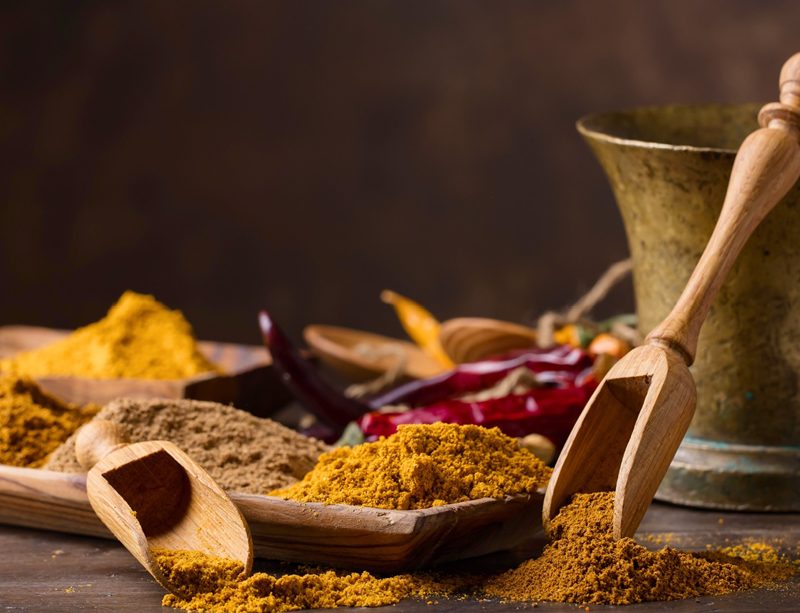
Curcumin – a dye from turmeric root positively influences the balance of the intestinal microbiome, the barrier function of the intestine and the level of inflammatory processes, and also has a positive effect on the liver and pancreas. This makes it another suitable remedy for promoting weight loss. Curcumin should be combined with piperine (a substance from black pepper) to promote absorption, but its effectiveness is also enhanced by combining it with resveratrol or quercetin.
Medicinal mushrooms – these organisms are generally rich in oligosaccharides, which act as a prebiotic. They are anti-inflammatory, reduce insulin resistance and help to lose weight. Positive effects on the microbiome in relation to weight loss have been demonstrated for example in the fungi Hirsutella chinensis (Cordyceps) and Antrodia cinnamomea (Camphor outcrop), but can also be expected in other species.
Lycopene, a substance found mainly in tomatoes, causes changes in the gut microbiome that have a positive effect on liver and skeletal muscle function in obese people.
EGCG – epigallocatechin gallate abundantly contained in green tea, for example, is one of the popular “fat burners”. One of the reasons for its positive effect on weight loss is that it supports the function of the gut microbiome.
0:00
/
0:00
Stárnutí je volba
Klíčová slova: astaxanthin, Butyrate, carbohydrates, curcumin, egcg, fat metabolism, gut microbiome, obesity, quercetin, resveratrol, weight loss
Komentáře
Seznam zdrojů
- Antoine Aoun, Fatima Darwish, and Natacha Hamod. The Influence of the Gut Microbiome on Obesity in Adults and the Role of Probiotics, Prebiotics, and Synbiotics for Weight Loss. Prev Nutr Food Sci. 2020 Jun 30; 25(2): 113–123.
- Manvi Sharma, Yuanyuan Li, Matthew L. Stoll, Trygve O. Tollefsbol. The Epigenetic Connection Between the Gut Microbiome in Obesity and Diabetes. Front. Genet., 15 January 2020.
- Avila, J. G., Echeverri, I., de Plata, C. A., Castillo, A. (2015). Impact of oxidative stress during pregnancy on fetal epigenetic patterns and early origin of vascular diseases. Nutr. Rev. 73 (1), 12–21.
- Azad, M. A. K., Sarker, M., Li, T., Yin, J. (2018). Probiotic Species in the Modulation of Gut Microbiota: An Overview. BioMed. Res. Int. 2018, 9478630–9478630.
- Brahe, L. K., Astrup, A., Larsen, L. H. (2013). Is butyrate the link between diet, intestinal microbiota and obesity-related metabolic diseases? Obes. Rev. 14 (12), 950–959.
- David, L. A., Maurice, C. F., Carmody, R. N., Gootenberg, D. B., Button, J. E., Wolfe, B. E., et al. (2014). Diet rapidly and reproducibly alters the human gut microbiome. Nature 505 (7484), 559–563.
- Gao, Z., Yin, J., Zhang, J., Ward, R. E., Martin, R. J., Lefevre, M., et al. (2009). Butyrate improves insulin sensitivity and increases energy expenditure in mice. Diabetes 58 (7), 1509–1517.
- Lin, H. V., Frassetto, A., Kowalik, E. J., Jr., Nawrocki, A. R., Lu, M. M., Kosinski, J. R., et al. (2012). Butyrate and propionate protect against diet-induced obesity and regulate gut hormones via free fatty acid receptor 3-independent mechanisms. PloS One 7 (4), e35240.
- Brusaferro A, Cozzali R, Orabona C, Biscarini A, Farinelli E, Cavalli E, et al. Is it time to use probiotics to prevent or treat obesity? Nutrients. 2018;10:1613.
- Çelik MN, Ünlü Söğüt M. Probiotics improve chemerin levels and metabolic syndrome parameters in obese rats. Balkan Med J. 2019;36:270–275.
- Chang CJ, Lu CC, Lin CS, Martel J, Ko YF, Ojcius DM, et al. Antrodia cinnamomea reduces obesity and modulates the gut microbiota in high-fat diet-fed mice. Int J Obes. 2018;42:231–243.
- Dao MC, Everard A, Aron-Wisnewsky J, Sokolovska N, Prifti E, Verger EO, et al. Akkermansia muciniphila and improved metabolic health during a dietary intervention in obesity: relationship with gut microbiome richness and ecology. Gut. 2016;65:426–436. Wiese M, Bashmakov Y, Chalyk N, Nielsen DS, Krych Ł, Kot W, et al. Prebiotic effect of lycopene and dark chocolate on gut microbiome with systemic changes in liver metabolism, skeletal muscles and skin in moderately obese persons. Biomed Res Int. 2019;2019:4625279.
- Wiese M, Bashmakov Y, Chalyk N, Nielsen DS, Krych Ł, Kot W, et al. Prebiotic effect of lycopene and dark chocolate on gut microbiome with systemic changes in liver metabolism, skeletal muscles and skin in moderately obese persons. Biomed Res Int. 2019;2019:4625279.
- Tandon D, Haque MM, Gote M, Jain M, Bhaduri A, Dubey AK, et al. A prospective randomized, double-blind, placebo-controlled, dose-response relationship study to investigate efficacy of fructo-oligosaccharides (FOS) on human gut microflora. Sci Rep. 2019;9:5473.
- Stark CM, Susi A, Emerick J, Nylund CM. Antibiotic and acid-suppression medications during early childhood are associated with obesity. Gut. 2019;68:62–69.
- Noble EE, Hsu TM, Kanoski SE. Gut to brain dysbiosis: mechanisms linking Western diet consumption, the microbiome, and cognitive impairment. Front Behav Neurosci. 2017;11:9.
- Le Zhao1, Qi Zhang, Weini Ma, Feng Tian, Hongyi Shen, Mingmei Zhou A combination of quercetin and resveratrol reduces obesity in high-fat diet-fed rats by modulation of gut microbiota. Food Funct. 2017 Dec 13;8(12):4644-4656.
- Umair Shabbir , Momna Rubab, Eric Banan-Mwine Daliri, Ramachandran Chelliah, Ahsan Javed and
- Deog-Hwan Oh. Curcumin, Quercetin, Catechins and Metabolic Diseases: The Role of Gut Microbiota. Nutrients 2021, 13, 206