Get rid of food addiction
epivyziva.cz/
Zobrazeno: 604

“You’re always overeating, try to tame yourself!” “Then just don’t have the chocolate!” Similar phrases are often heard by people who are trying in vain to lose weight. But what is easy to say is harder to do. Many people overeat not because they want to, but because they have developed a food addiction that leads to binge eating. What can be done about it?
We all depend on food because without it we would not survive. And it’s also a source of pleasure. But sometimes the craving for food can get out of control and turn into an obsession, which is very similar to an addiction to alcohol or drugs. And it can be even harder to manage – because while with alcohol I can say to myself, “This is my last drink,” with food I logically cannot.
The result is a state familiar to anyone who suffers from binge eating: it starts with the resolution “not to overeat again”, followed by an internal struggle, which the person usually loses, and finally stuffs everything within reach because “it doesn’t matter now anyway”. Guilt sets in, self-esteem drops, stress increases and with it the likelihood of a repeat binge.
Food as a drug
Comparing binge eating to heroin addiction may seem inappropriate, but in fact food addiction has very similar characteristics to all other addictions: it combines strong cravings with compulsive or compulsive behaviour, involves similar neural systems including those related to self-control, and shows similar impaired responses to stress or disruption of the ‘reward system’. Sweet food addiction is the most common. Sweet taste stimulates the sweet taste receptors on the tongue, which in turn triggers a massive release of dopamine in a part of the brain called the reward centre.
The tendency towards addictions, including food addiction, is partly genetic. Genes related to the stress response are involved, but also genes related to a lower frequency of DRD2 receptors in brain tissue, resulting in a ‘reward deficit’. The person then tends to seek out anything that gives them the desired feeling of reward, which is very often things that cause addiction – like food.
The tendency to develop food addiction is also related to epigenetic processes, i.e. altered activity of key genes. These changes often occur during intrauterine development, for example in the context of maternal stress or inappropriate eating behaviour, or in early childhood, for example in the context of trauma.
For example, people suffering from binge eating have different concentrations of microRNAs, which are short chains of ribonucleic acids that carry no genetic information but are able to “switch off” certain genes in the DNA. Different concentrations of microRNAs are found both in the blood and in a part of the brain called the medial prefrontal complex, which is responsible for the loss of self-control associated with eating disorders. microRNAs also play a role in the metabolic changes that lead to obesity.
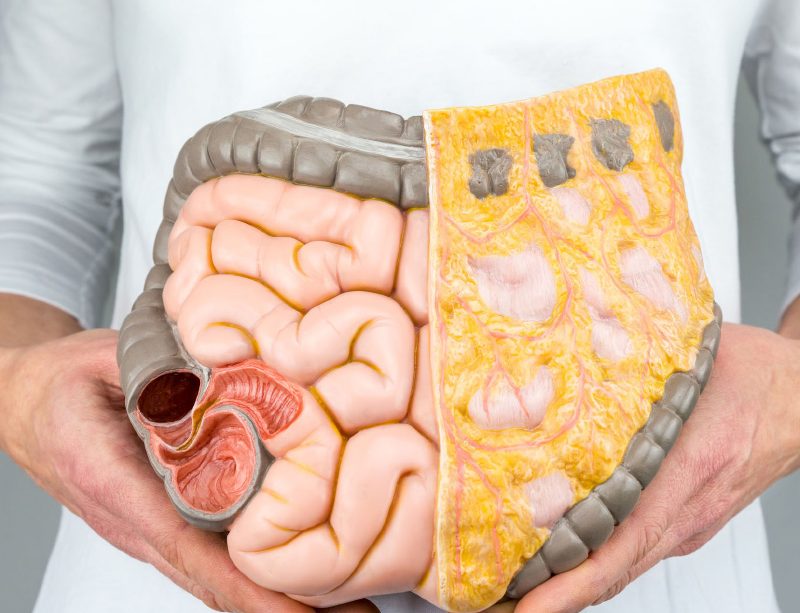
The tendency to binge eating may also be related to an imbalance in the gut microbiome. For example, people with this problem have been found to have a deficiency of Akkermansia and Intestimonas, and an excess of Bifidobacterium and Anaerostipes. An interesting finding was that these eaters very often had elevated levels of bisphenol A in their bodies. This is a substance with extensive negative epigenetic effects and is used in the manufacture of plastics.
Of course, food addiction shouldn’t be used as an excuse that there’s no point in trying to lose weight. Rather, the above findings should lead us to understand that the tendency to overeat is certainly not a matter of choice or lack of willpower, but rather the result of genetic predisposition and epigenetic changes. And, of course, they may also point the way to a remedy. Of course, we cannot change our genetic predisposition, but we can influence the epigenetic processes that contribute to excessive cravings.
How does classical medicine see it?
Medicine classifies binge eating as an eating disorder. It is mainly treated with psychotherapy – most often cognitive behavioural therapy, less often interpersonal therapy.
In some cases, medications are also prescribed. Usually antidepressants are used, but Topimarat is also quite popular. It is an antiepileptic and is primarily used to control epileptic seizures, but has also been shown to help reduce the number of episodes of binge eating. However, it has the disadvantage of numerous negative side effects. Another option is the drug Vyvanse, which is used for ADHD.
5 steps to help yourself
If you decide to fight food addiction on your own, you need to focus first on the epigenetic mechanisms in your body, which can be achieved, for example, by lifestyle modification combined with epigenetic supplements. It is worth focusing on these five basic areas.
Not to create opportunities
The first important step is not to create opportunities. Knowing that I most often overeat when I stay home on the weekend, I preemptively plan a trip or other activity for my days off. At the same time, we need to plan our menus carefully and only then go shopping so that we only have what we need at home to prepare meals. And if we buy something to stock up on, we focus mainly on foods that cannot be eaten without prolonged cooking, or foods of high nutritional value, and on the contrary, we completely exclude unhealthy, high-calorie snacks full of sugar, salt and saturated fat. Having a supply of chocolates, crisps and ice cream at home is a test of wills even for a person without a food addiction.
Focus on food quality
We also pay attention to the composition of our diet – we avoid unhealthy foods rich in “fast” sugars, saturated fats and so-called empty calories (i.e. foods with high energy value and low nutrient content). These foods not only have a negative effect on the epigenetic processes in the body, but also directly promote binge eating. For example, when we eat a meal high in simple sugars, a large amount of insulin is released. This causes a rapid drop in blood glucose levels, which in turn triggers a hard-to-control sweet craving.
At the same time, we should aim to support the balance of the gut microbiome, i.e. consume sufficient amounts of soluble and insoluble fibre and foods containing probiotic bacteria.
Add regular exercise
Movement not only has a positive epigenetic effect, but also helps to combat obesity, which is common in people suffering from binge eating. And if we give preference to aerobic activities of mild to moderate intensity, we also achieve a significant reduction in stress levels.
Eliminate stress
It is stress that plays an important negative role in food addiction. The stress hormone cortisol causes, among other things, an increase in blood sugar levels, which, if not “burned off”, for example during exercise, again triggers a massive release of insulin followed by a craving for sweets.
In addition to incorporating aerobic exercise, we should therefore look at other ways to eliminate it, such as regular breathing exercises and relaxation techniques. Yoga has been shown to have a beneficial effect in this regard. For example, when a group of women suffering from binge eating followed a 12-week yoga programme consisting of one 60-minute class per week and a daily 30-minute home exercise session, they experienced a significant reduction in the frequency of binge eating episodes, as well as improvements in self-perception and statistically significant decreases in BMI and waist circumference.
The importance of yoga lies not only in its ability to reduce stress, but also in the fact that it can improve the perception of one’s own body. People who suffer from binge eating are often “disconnected” from their body – they have a negative relationship with it, are unable to perceive its signals (including satiety signals), and often are unable to even enjoy their food properly.
Include dietary supplements
Dietary supplements are not only a way to positively influence the epigenetic processes in the body, but they can also help relieve stress and help alleviate the anxiety that also accompanies food addiction. So which ones can help?
Adaptogens – these are substances that increase resistance to stress, and many of them also have a positive effect on energy levels and mental well-being. For example, rhodiola has a scientifically proven ability to alleviate stress-induced binge eating, and it even has an effect when taken once. In addition, it prevents fat storage by limiting the differentiation of fat cells.
Saffron – this spice is one of the most effective natural anti-depressants, which also counteracts anxiety, but thanks to its positive effect on the psyche and its ability to reduce appetite, it is also useful for binge eating. In addition, it also improves the balance of the gut microbiome and helps with weight loss thanks to its ability to reduce the absorption of dietary fat and regulate blood glucose levels. For example, when researchers in one study administered saffron extract to a group of obese women, they experienced a reduction in appetite and weight loss without any dietary measures.
Passionflower – this herb can be very effective in relieving anxiety, including the anxiety that accompanies trying to get rid of addiction. It has even been shown to be beneficial for alcohol or opiate addictions, and can also help with food addiction.
Chicory – especially in alleviating sweet cravings, herbs containing bitter substances can be very effective. That is, those that stimulate the bitter taste receptors on our tongue. These effectively slow down the absorption of sugar from food, preventing the excretion of excessive amounts of insulin. According to studies, this leads to a person feeling satiated as soon as they consume 20-30% less food than usual. Chicory is a very good choice, for example in the form of coffee drinks. In addition to its bitterness, it is also rich in the soluble fibre inulin, which has a beneficial effect on the gut microbiome.
0:00
/
0:00
Stárnutí je volba
Klíčová slova: adaptogen, addiction, anxiety, appetite, Chicory, obesity, Overeating, Rhodiola, saffron, weight loss
Komentáře
Seznam zdrojů
- Enrico Patrono. Epigenetic Mechanisms on Food Addiction. J Neuropsychopharmacol Mental Health 2016, Vol 1(1): e102
- Campbell IC, Mill J, Uher R, Schmidt U (2011) Eating disorders, gene-environment interactions and epigenetics. NeurosciBiobehav Rev 35: 784-793.
- Latagliata EC, Patrono E, Puglisi-Allegra S, Ventura R (2010) Food seeking in spite of harmful consequences is under prefrontal cortical noradrenergic control. BMC Neurosci 8: 11-15
- Grucza RA, Krueger RF, Racette SB, Norberg KE, Hipp PR, et al. (2010) The emerging link between alcoholism risk and obesity in the United States. Arch Gen Psychiatry 67: 1301-1308.
- García-Blanco, et al. miRNA signatures associated with vulnerability to food addiction in mice and humans. Journal of Clinical Investigation, 2022; 132 (10).
- Quentin Leyrolle, Renata Cserjesi, Maria D.G.H. Mulders, Giorgia Zamariola, Sophie Hiel, Marco A. Gianfrancesco, Julie Rodriguez, Daphnée Portheault, CamilleAmadieu, SophieLeclercq, Laure B.Bindels, Audrey M. Neyrinck. Specific gut microbial, biological, and psychiatric profiling related to binge eating disorders: A cross-sectional study in obese patients. Clinical Nutrition. Volume 40, Issue 4, April 2021, Pages 2035-2044.
- https://www.nhs.uk/mental-health/conditions/binge-eating/treatment/
- https://www.mayoclinic.org/diseases-conditions/binge-eating-disorder/diagnosis-treatment/drc-20353633
- https://www.psychologytoday.com/intl/blog/the-science-willpower/201007/how-yoga-can-help-end-binge-eating
- Kamal Patel. Rhodiola Rosea. Examine.com. May 10, 2021 https://examine.com/supplements/rhodiola-rosea/research/
- Lee OH, et al. Rhodiola-induced inhibition of adipogenesis involves antioxidant enzyme response associated with pentose phosphate pathway. Phytother Res. (2011)
- Gout et al., Satiereal, a Crocus SativusL. Extract, Reduces Snacking and Increases Satiety . Nutr Res,5/10
- Maryam Mashmoul, Azrina Azlan, Huzwah Khaza’ai, Barakatun Nisak Mohd Yusof, and Sabariah Mohd Noor. Saffron: A Natural Potent Antioxidant as a Promising Anti-Obesity Drug. Antioxidants (Basel). 2013 Dec; 2(4): 293–308.
- Gout B., Bourges C., Paineau-Dubreuil S. Satiereal, a Crocus sativus L. extract, reduces snacking and increases satiety in a randomized placebo-controlled study of mildly overweight, healthy women. Nutr. Res. 2010;30:305–313.
- Patel SS, Mohamed Saleem TS, Ravi V, et al. Passiflora incarnata Linn: a phytopharmacological review.
- Akhondzadeh S, Kashani L, Mobaseri M, et al. Passionflower in the treatment of opiates withdrawal: a double-blind randomized controlled trial. J Clin Pharm Ther 2001;26:369-73.
- Frank, Guido K , et al “The evaluation of brain activity in response to taste stimuli—a pilot study and method for central taste activation as assessed bey event-related fMRI” Journal of
- neuroscience methods 131 1 (2003): 99-105.
- Ahmed, Serge H, et al “Food addiction ” Neuroscience in the 21st Century Springer New York, 2013 2833-2857.
- Janssen, Sara, et al “Bitter taste receptors and α-gustducin regulate the secretion of ghrelin with functional effects on food intake and gastric emptying” Proceedings of the National Academy of Sciences 108 5 (2011): 2094-2099.
- Andreozzi, Paolo, et al “The bitter taste receptor agonist quinine reduces calorie intake and
- increases the postprandial release of cholecystokinin in healthy subjects ” Journal of
- neurogastroenterology and motility 21 4 (2015): 511-519.
- Holscher, Hannah D, et al “Fiber supplementation infuences phylogenetic structure and
- functional capacity of the human intestinal microbiome: follow-up of a randomized controlled
- trial” The American journal of clinical nutrition101 1 (2015): 55-64.