Trouble sleeping? Breathing, showering and supplements can help.
epivyziva.cz/
Zobrazeno: 414

We’re constantly worrying about how to improve our health and performance, alleviate fatigue and feel better overall, while neglecting one of the most basic things that is necessary for all of this: adequate sleep. Why is it so important, and what to do when sleep is elusive?
When we don’t sleep, or sleep less than our bodies need for a long time, a number of vital body processes are disrupted: metabolism is negatively affected, we gain weight, our blood pressure increases and our risk of cardiovascular disease increases.
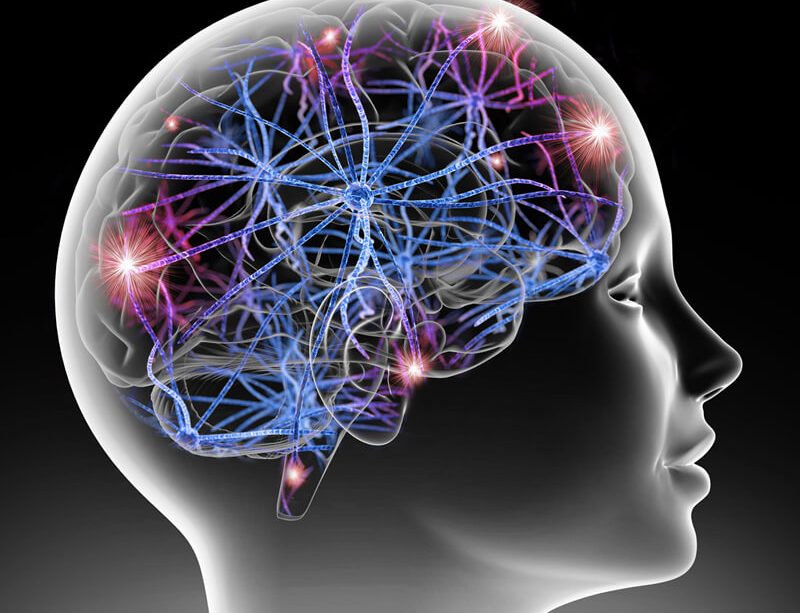
Our brains, especially our memory and learning ability, are fundamentally affected. For the functioning of these processes, the so-called synaptic plasticity, or the ability of nerve cells to form new interconnections, is essential, and it is this that decreases significantly during sleep deprivation. Even a relatively mild sleep deprivation during the learning period is enough to impair memory.
On the one hand, susceptibility to sleep deprivation is highly individual and most likely genetically determined. This is why there are some people who only need a moment of sleep to function smoothly, while others feel tired after twice that amount of time. What is certain, however, is that a prolonged lack of nightly rest will eventually harm absolutely everyone.
When sleep affects genes
The functioning of our organism is not only influenced by the genes we inherit from our parents. At the same time, it is necessary that these genes work in perfect harmony, i.e. they switch on and off exactly as needed. This is done by so-called epigenetic reactions, in particular gene methylation, histone modification and regulation by microRNAs. If these reactions are disrupted, many processes in the body malfunction, which can lead to disease and other problems. And sleep is one of the factors that influence the course of epigenetic reactions in a fundamental way.
Sleep deprivation primarily affects gene methylation. This response is particularly important in the brain, where even small disturbances lead to an impact on function. This is why mental performance is the first thing we feel when we don’t get enough sleep. But disturbances in methylation patterns can also significantly increase the risk of a range of conditions, such as cardiovascular disease, cancer and obesity.
Differences in methylation are also found in genes that control circadian rhythms, or internal clocks, during sleep deprivation, and even a single night without sleep is enough to negatively affect them. Improper activity of these genes not only increases the risk of a number of diseases, but is also the cause of the paradoxical situation where we have trouble falling asleep despite extreme sleep deprivation.
But sleep deprivation also affects another important response – histone acetylation. This leads, for example, to a reduction in the growth factor BDNF, which is essential for the formation of new nerve cells, the protection of existing ones and also for the formation of new nerve connections. This is also the reason why memory and learning ability are impaired with sleep deprivation.
Last but not least, sleep deprivation affects the production of the protein cAPM, which is necessary for the transmission of information inside cells. A lack of this substance leads to a situation where the cell receives the right signals from the environment (e.g. via nerves or hormones), but cannot react to them properly.
Lots of stress, little sleep
At this point, of course, many people will argue, “I know sleep is needed. But what can I do if I can’t fall asleep or keep waking up?” But even here it is possible to achieve improvement with the findings of epigenetics.
Perhaps everyone has heard that one of the main things that can disrupt sleep is stress. But there is a very deep connection between stress and sleep, and it also involves our immunity. In fact, stress hormones themselves play a major role in regulating our sleep rhythms. In the evening, the so-called hypothalamus-pituitary-adrenal axis is dampened, allowing us to fall asleep. In the morning, on the other hand, the production of adrenocorticotropic hormone rises sharply, which contributes to wakefulness and increased activity.
Substances called cytokines also play a role. These have come into our awareness in connection with the epidemic of covid, because the high production of inflammatory cytokines is behind many of the complications of this disease. But there are many cytokines produced in our bodies, and some of them are anti-inflammatory or serve as signalling molecules for the immune system. These include substances known as IL-1ß and TNF. And these are also essential for sleep regulation. In addition, animal experiments show that when the body faces an infection, it is through cytokine production that sleep can be disrupted.
But either way, if we try to reduce our overall stress levels, sleep will improve. One very effective way to do this is through breathing exercises, which have been shown to have a positive impact on sleep quality – not only will they relieve stress, but they will also help us stop the flow of persistent thoughts that prevent us from falling asleep. This can be a simple extension of inhalation and exhalation, ideally with an emphasis on diaphragmatic breathing (breathing into the abdomen), or breathing exercises familiar from yoga, such as inserting a pause between inhalation and exhalation. Indeed, the practice of yoga as a whole has been shown to improve sleep quality.
Light and temperature are decisive
The role of light in insomnia, which is the main regulator of circadian rhythms, is often underestimated. This process is handled by a structure in the brain called the suprachiasmatic nucleus, which influences the production of melatonin, a hormone with depressant effects. The suprachiasmatic nucleus regulates the internal clock based on information from our eyes, specifically from the ganglion cells of the retina, which transmit information about the intensity and composition of light in the environment.
It is a well-known fact that falling asleep can be disturbed by bright light in the evening, especially when it contains a high proportion of blue light. This is what suppresses melatonin production the most. However, sufficient light intensity in the morning and mid-morning hours is equally important for the proper adjustment of circadian rhythms, which in turn suppresses melatonin production – ideally, natural sunlight or at least light sources that are close to it in colour composition (i.e. with a sufficient proportion of blue component).
However, body temperature is an equally important regulator. We fall asleep best when our temperature starts to drop after the afternoon peak, and wake up when it reaches a minimum. So when the natural fluctuations in body temperature are disrupted, it can lead to insomnia. However, stress may also play a role here, as fluctuations in body temperature are closely related to the production of stress hormones.
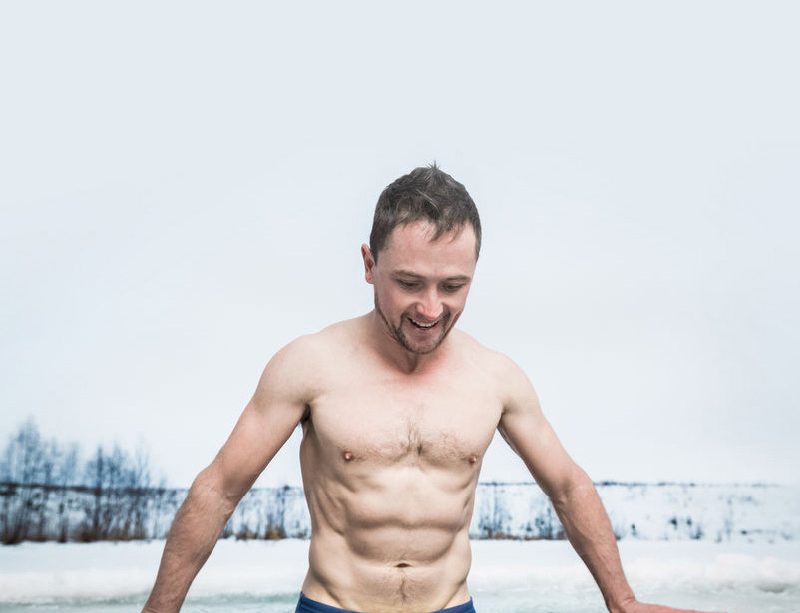
A warm shower and bath 1-2 hours before going to bed can be an interesting, yet very effective way to make it easier to fall asleep. Paradoxically, this is not for warmth, but rather because it facilitates the dissipation of heat through blood circulation to the limbs and thus the natural evening cooling of the body’s core. Cold water in the evening, on the other hand, is usually not recommended because of its stimulating effects, but there are exceptions – in one study, athletes who indulged in ice water after a hard evening’s workout experienced improved sleep quality.
Hydration matters
Very interesting associations have been shown between sleep and hydration levels. It is clear that excessive fluid intake in the evening is not beneficial to sleep, as we will simply have to go to the toilet at night. On the other hand, insufficient hydration can also significantly impair the quality of sleep, which is why it is essential to drink enough during the day.
But in addition, it turns out that the reverse relationship is also true, i.e. that sleep deprivation can increase the risk of dehydration. Because when we sleep, we can’t take in fluids. So, to defend against fluid loss, the body sends a signal during the last part of sleep to increase production of the hormone vasopressin, which promotes water retention in the body. This also makes us less likely to be woken up by the urge to urinate. However, if our circadian rhythms are disrupted, which is typical in insomnia, this increases the risk of excessive fluid loss and frequent awakenings.
If a person suffers from sleep problems, they should also avoid taking stimulants, including coffee. In fact, trying to wake up the body after a night of poor quality sleep with caffeine and other substances makes insomnia worse in the long run.
And the microbiome again…
We stress the importance of the balance of the gut microbiome very often on Epivýživa.cz and this article will be no exception. The harmony within our gut influences everything related to our brain and therefore also our sleep. Dysbiosis, i.e. a disturbance in the optimal number and species composition of the microorganism inside the gut, results in a deterioration of the ability to fall asleep and a reduction in the quality of sleep, and on the other hand, if we suffer from a sleep deficit, the state of the gut microbiome also deteriorates.
The main way to help here is to consume enough fibre or take probiotics.
Useful dietary supplements
Herbs and nutrients that have the ability to influence epigenetic processes in the body can also help significantly in the fight against insomnia.
Torture
Passion fruit is one of the most effective natural remedies for insomnia. They can effectively improve both the ability to fall asleep and the quality of sleep, and especially in some combinations, for example with hops or valerian, they show efficacy comparable to chemical drugs (e.g. zolpidem). In studies, the results were evident after just one week of use. The time to take the passion fruit is about 1 hour before going to bed. It is particularly effective in cases of anxiety and its use is also advisable for acute stress.
Baikal pine cone
This herb contains the active substances vogonin and baicalein, which can cross the barrier between the bloodstream and the brain and bind to the so-called GABA receptors in the brain. This makes rosehip very effective for anxiety, but it also promotes falling asleep and improves sleep quality.
Rhodiola
Although not a typical sleep-promoting herb, the pink stonecrop, or rhodiola, can be very helpful in this regard. It is a very effective adaptogen that reduces the body’s response to stressful stimuli and overall resistance to stress. Research has also shown that it can significantly help people who work shifts. For example, when researchers in one study administered it to doctors with extended night shifts, they experienced a reduction in fatigue and improvements in memory, concentration and mental performance. Then in another study, rhodiola was given to students during exam periods, and they not only experienced improvements in mental performance but also in their sleep patterns.
Magnesium
Difficulty falling asleep may also be related to low levels of this mineral. Magnesium helps to promote overall relaxation and calmness, which is essential for falling asleep, and is also needed for optimal regulation of circadian rhythms.
Butyrate
Butyrate is a short-chain fatty acid that is produced by certain gut bacteria, but it can also be taken as a dietary supplement, which is particularly useful when the gut microbiome is out of balance. Butyrate affects a number of processes in the body, especially those related to the function of our brain. And this also applies to sleep. A study on rodents, for example, showed that when they are given butyrate, they experience a prolongation of deep sleep phases by up to 50%!
0:00
/
0:00
Stárnutí je volba
Klíčová slova: breathing, concentration, Fatigue, insomnia, Magnesium, memory, mental performance, pine cone, relaxation, Rhodiola, sleep, stress, Torture
Komentáře
Seznam zdrojů
- Marie E. Gaine, Snehajyoti Chatterjee, and Ted Abel. Sleep Deprivation and the Epigenome. Front Neural Circuits. 2018; 12: 14. https://www.ncbi.nlm.nih.gov/pmc/articles/PMC5835037/
- Arnardottir E. S., Nikonova E. V., Shockley K. R., Podtelezhnikov A. A., Anafi R. C., Tanis K. Q., et al. (2014). Blood-gene expression reveals reduced circadian rhythmicity in individuals resistant to sleep deprivation. Sleep 37, 1589–1600.
- Brenet F., Moh M., Funk P., Feierstein E., Viale A. J., Socci N. D., et al. . (2011). DNA methylation of the first exon is tightly linked to transcriptional silencing. PLoS One 6:e14524.
- Christopher G. Vecsey, George S. Baillie,3 Devan Jaganath, Robbert Havekes, Andrew Daniels, Mathieu Wimmer, Ted Huang, Kim M. Brown, Xiang-Yao Li, Giannina Descalzi, Susan S. Kim, Tao Chen, Yu-Ze Shang, Min Zhuo, Miles D. Houslay, and Ted Abel. Sleep deprivation impairs cAMP signaling in the hippocampus. Nature. 2009 Oct 22; 461(7267): 1122–1125. https://www.ncbi.nlm.nih.gov/pmc/articles/PMC2783639/
- Alexandra Lahtinen, Sampsa Puttonen, Päivi Vanttola, Katriina Viitasalo, Sonja Sulkava, Natalia vjakova, Anni Joensuu, Perttu Salo, Auli Toivola, Mikko Härmä, Lili Milani, Markus Perola & Tiina Paunio. A distinctive DNA methylation pattern in insufficient sleep. Scientific Reports volume 9, Article number: 1193 (2019)
- Shahab Haghayegh , Sepideh Khoshnevis, Michael H Smolensky, Kenneth R Diller, Richard J Castriotta. Before-bedtime passive body heating by warm shower or bath to improve sleep: A systematic review and meta-analysis. Sleep Med Rev. 2019 Aug;46:124-135.
- Yoshiaki Tai, Kenji Obayashi, Yuki Yamagami , Kiyomi Yoshimoto , Norio Kurumatani Kenji Nishio Keigo Saeki. Hot-water bathing before bedtime and shorter sleep onset latency are accompanied by a higher distal-proximal skin temperature gradient in older adults. J Clin Sleep Med. 2021 Jun 1;17(6):1257-1266.
- Eman Fadl et al. The Effectiveness of Using Breathing Exercise on Sleep Quality Among Hospitalized Patients. American Journal of Nursing Science 9(4):272-280
- Sylvain Laborde, Thomas Hosang,Emma Mosley,and Fabrice Dosseville. Influence of a 30-Day Slow-Paced Breathing Intervention Compared to Social Media Use on Subjective Sleep Quality and Cardiac Vagal Activity. J Clin Med. 2019 Feb; 8(2): 193.
- Mangesh A. Bankar, Sarika K. Chaudhari, and Kiran D. Chaudhari. Impact of long term Yoga practice on sleep quality and quality of life in the elderly. J Ayurveda Integr Med. 2013 Jan-Mar; 4(1): 28–32.
- Maxime Chauvineau, Florane Pasquier , Vincent Guyot, Anis Aloulou, Mathieu Nedelec. Effect of the Depth of Cold Water Immersion on Sleep Architecture and Recovery Among Well-Trained Male Endurance Runners. Front Sports Act Living. 2021 Mar 31;3:659990.
- Kuem Sun Han, Lin Kim, and Insop Shim. Stress and Sleep Disorder. Exp Neurobiol. 2012 Dec; 21(4): 141–150.
- Ngan A, Conduit R. A double-blind, placebo-controlled investigation of the effects of Passiflora incarnata (Passionflower) herbal tea on subjective sleep quality. Phytother Res 2011;25:1153-9.
- Speroni E., Minghetti A. Neuropharmacological activity of extracts from Passiflora incarnata. Planta Med. 1988;54:488-91.
- Lee J, Jung HY, Lee SI, Choi JH, Kim SG. Effects of Passiflora incarnata Linnaeus on polysomnographic sleep parameters in subjects with insomnia disorder: a double-blind randomized placebo-controlled study. Int Clin Psychopharmacol 2020;35(1):29-35.
- Zhiwen Xu, Feng Wang, Shui Ying Tsang, Kwan Hang Ho, Hui Zheng, Chun Tak Yuen, Chun Yin Chow, Hong Xue. Anxiolytic-Like Effect of Baicalin and its Additivity with other Anxiolytics. Planta Med 2006; 72(2): 189-192.
- Han-Han Chang, Pei-Lu Yi, Chiung-Hsiang Cheng, Chin-Yu Lu, Yi-Tse Hsiao, Yi-Fong Tsai, Chia-Ling Li, Fang-Chia Chang. Biphasic effects of baicalin, an active constituent of Scutellaria baicalensis Georgi, in the spontaneous sleep-wake regulation. J Ethnopharmacol. 2011 May 17;135(2):359-68.
- Darbinyan V. et al., Rhodiola rosea in stress induced fatigue a double blind cross-over study of a standardized extract SHR-5 with a repeated low-dose regimen on the mental performance of healthy physicians during night duty, Phytomedicine, 2000; 7: 365-371.
- A double-blind, placebo-controlled pilot study of stimulating and adaptogenic effect of Rhodiola rosea SHR-6 extract on the fatigue of student caused by stress during examination period with repeated low-dose regimen, Phytomedicine, 2000; 7(2):78-8.
- Elmar Wienecke, Claudia Nolden. Long-term HRV analysis shows stress reduction by magnesium intake. MMW Fortschr Med. 2016 Dec;158(Suppl 6):12-16.
- Jean Durlach, Nicole Pagès, Pierre Bac, Michel Bara, Andrée Guiet-Bara. Biorhythms and possible central regulation of magnesium status, phototherapy, darkness therapy and chronopathological forms of magnesium depletion. Magnes Res. 2002 Mar;15(1-2):49-66.
- Szentirmai E, Millican NS, Massie AR, et al. Butyrate, a metabolite of intestinal bacteria, enhances sleep. Scientific Reports. 2019 ; 9:7035