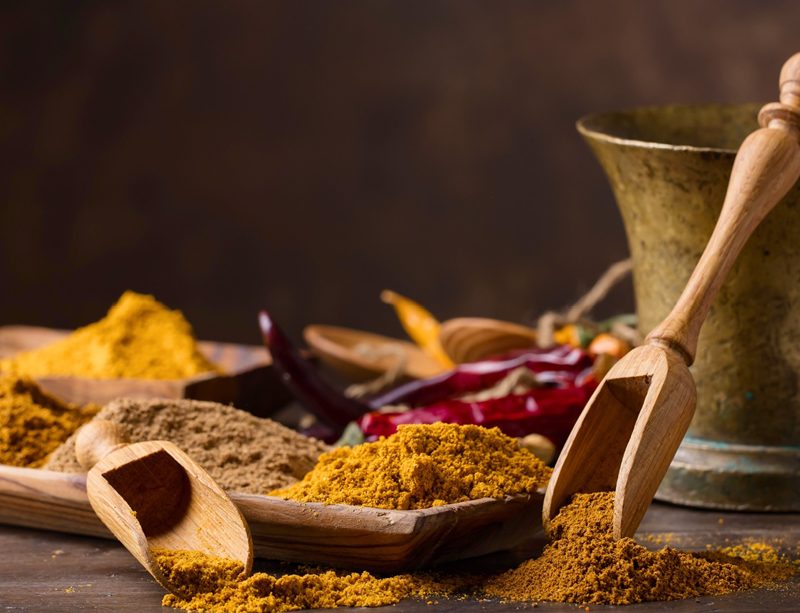
On the following lines you will find an overview of natural substances with scientifically confirmed antibacterial effects. Most of them also have epigenetic effects – with prolonged use, they are able to alter the activity of many genes in our DNA, including those responsible for our immunity (for example, the formation, differentiation and maturation of immune cells).
Most of them are a common part of our diet, we use them mainly as spices. In the context of preventing infections, this is sufficient, but in the case of fighting a specific infection, a higher dosage should be chosen (for example, a quality extract taken as a dietary supplement).
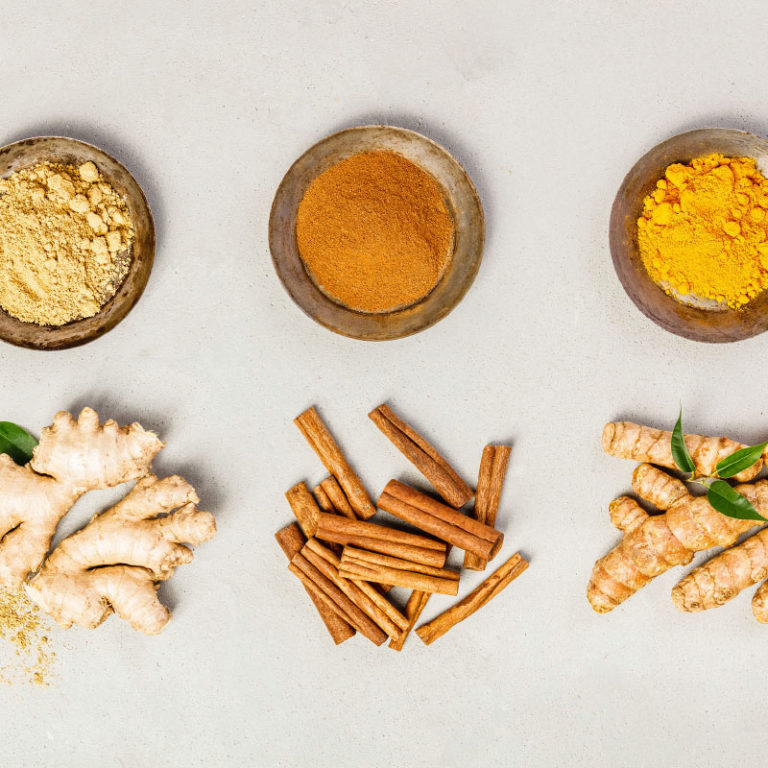
Ginger tea has been a popular drink for the colder months of the year in recent years, which is definitely a good thing. It warms the body beautifully, boosts immunity and has a direct effect against many microbes. These include a whole spectrum of bacteria, including, for example, salmonella or campylobacter (the causative agent of nasty infections resulting from eating undercooked chicken).
It also has antifungal effects – for example, in combating infections caused by the yeast Candida Albicans, it is similarly effective as chemical preparations. It also positively affects the activity of immune cells, especially T-cells and macrophages.
Surprisingly, the popular ginger tea is not the ideal way to consume ginger. While some of its positive effects are due to substances called gingerols that are found in the tea, it lacks a highly potent epigenetic substance called 6-shogaol, which is produced when ginger is cooked or dried. So a better option is to add ginger to soups and other cooked foods, for example, or to choose dietary supplements containing 6-shogaol.
Garlic contains several organic sulfur compounds that have direct antimicrobial effects and also act through epigenetic pathways. It is effective against a wide range of bacteria, including E. coli, streptococci and golden staphylococcus. Interestingly, it can also significantly inhibit bacterial growth when chopped and mixed into minced meat.
It is also antifungal and very effective in killing yeast infections. When it encounters Candida albicans cells, for example, it penetrates the cell wall and the membranes of their mitochondria, which it destroys, causing cell death. It also strengthens a large part of the immune functions, has anti-inflammatory effects, and can even inhibit inflammatory processes in fat cells, thus aiding weight loss.
Rosemary is one of the very powerful antibacterial spices. The effectiveness of the extract of this herb has been proven against 13 bacterial strains, such as golden staphylococcus, E. coli and S. enteritidis.
Rosemary is also characterized by its strong antifungal and antiyeast activity – it has been shown to kill at least six strains of yeast, including Candida albicans. This is also true for people who have developed this infection as a result of antibiotics, corticosteroids or anti-cancer therapy. It is also characterised by a strong anti-inflammatory effect.
Turmeric is popular especially in Indian cuisine, it is a traditional part of curry spice mixtures. It contains the dye curcumin, which has significant antibacterial effects – it works against a large number of bacterial strains, including, for example, golden staphylococcus, K. pneumoniae, or E. coli. It also works against 19 different types of fungal infections, including the yeast Candida albicans and fungi in food.
For sufficient absorption, curcumin should be consumed together with a substance called piperine, which is found mainly in black pepper.
Grape seed extract contains a combination of epigenetically acting oligomeric proanthocyanidins known as OPCs and vitamin E. It works against certain types of bacteria, including for example the dreaded golden staph.
A herb widely used in traditional Chinese medicine, it helps to suppress a number of bacterial infections, including those caused by golden staphylococcus, which is resistant to antibiotic treatment. It has also been shown to have antiviral effects, for example against influenza A and B viruses. The baicalein contained is even able to limit the multiplication of HIV!
Echinacea also effectively destroys the causative agent of fungal disease caused by the yeast Candida, even in cancer patients who have developed this infection after chemotherapy treatment.
This spice is very effective in combating bacterial infections affecting the oral cavity and throat, even against periodontal disease. Just chew a few pieces of cloves slowly.
A popular ingredient not only in Mediterranean cuisine, it has been shown to work against 9 types of bacteria, including salmonella, E. coli and golden staphylococcus. It also destroys the cell membranes of Candida yeasts, causing their death.
Another common spice ingredient, it is also a traditional remedy for bronchial infections in the form of tea. And rightly so. Thyme also has both direct antibacterial effects and epigenetic effects on the immune system. It acts against streptococcal and staphylococcal infections and also against yeasts of the genus Candida.
It is not only suitable for strudel, but also has very extensive antimicrobial effects. It inhibits the multiplication of bacteria in several ways: it prevents the formation of cell walls of newly emerging microbial cells, disrupts the function of their membranes and the synthesis of many enzymes necessary for the functioning of bacteria.
It also acts against urinary infections and has general anti-inflammatory effects.
The essential oils contained in this Mediterranean spice are up to 100 times more potent against some strains of bacteria than the antibiotic ampicillin, and 10-100 times more potent against fungi than commercial antifungals.
The herb, widely used in Asian cuisine, has proven to fight the very problematic bacterium Acinetobacter baumannii, which is resistant to common antibiotics. Coriander not only has a direct antibacterial effect against it, but when administered simultaneously with the antibiotic drugs chloramphenicol, ciprofloxacin and tetracycline, it has significantly reduced the resistance of the microbe to them.
But it also works against many other bacteria and fungi.
PŘIHLASTE SE K ODBĚRU NOVINEK A MĚJTE VŽDY ČERSTVÉ INFORMACE




| Cookie | Duration | Description |
|---|---|---|
| cookielawinfo-checkbox-analytics | 11 měsíců | Tento soubor cookie je nastaven pluginem GDPR Cookie Consent. Soubor cookie se používá k uložení souhlasu uživatele s používáním souborů cookie v kategorii „Analytika“. |
| cookielawinfo-checkbox-functional | 11 měsíců | Soubor cookie je nastaven na základě souhlasu s cookie GDPR k zaznamenání souhlasu uživatele pro soubory cookie v kategorii „Funkční“. |
| cookielawinfo-checkbox-necessary | 11 měsíců | Tento soubor cookie je nastaven pluginem GDPR Cookie Consent. Cookies slouží k uložení souhlasu uživatele s cookies v kategorii „Nezbytné“. |
| cookielawinfo-checkbox-others | 11 měsíců | Tento soubor cookie je nastaven pluginem GDPR Cookie Consent. Cookie se používá k uložení souhlasu uživatele s cookies v kategorii „Jiné. |
| cookielawinfo-checkbox-performance | 11 měsíců | Tento soubor cookie je nastaven pluginem GDPR Cookie Consent. Cookie se používá k uložení souhlasu uživatele s cookies v kategorii „Výkon“. |
| elementor | nikdy | Tento soubor cookie používá téma WordPress webu. Umožňuje vlastníkovi webu implementovat nebo měnit obsah webu v reálném čase. |
| viewed_cookie_policy | 11 měsíců | Soubor cookie je nastaven pluginem GDPR Cookie Consent a používá se k uložení, zda uživatel souhlasil nebo nesouhlasil s používáním souborů cookie. Neukládá žádné osobní údaje. |
| Cookie | Duration | Description |
|---|---|---|
| sb | 2 roky | Tento soubor cookie používá Facebook ke kontrole svých funkcí, shromažďování jazykových nastavení a sdílení stránek. |
| Cookie | Duration | Description |
|---|---|---|
| _ga | 2 roky | Soubor _ga cookie, nainstalovaný službou Google Analytics, vypočítává údaje o návštěvnících, relacích a kampaních a také sleduje využití webu pro analytický přehled webu. Soubor cookie ukládá informace anonymně a přiřazuje náhodně vygenerované číslo k rozpoznání unikátních návštěvníků. |
| _gat_gtag_UA_71041054_1 | 1 minuta | Nastaveno Googlem k rozlišení uživatelů. |
| _gid | 1 den | Soubor cookie _gid nainstalovaný službou Google Analytics ukládá informace o tom, jak návštěvníci používají webovou stránku, a zároveň vytváří analytickou zprávu o výkonu webu. Některá data, která jsou shromažďována, zahrnují počet návštěvníků, jejich zdroj a stránky, které anonymně navštěvují. |
| Cookie | Duration | Description |
|---|---|---|
| fr | 3 měsíce | Facebook nastavuje tento soubor cookie tak, aby uživatelům zobrazoval relevantní reklamy sledováním chování uživatelů na webu, na stránkách, které mají Facebook pixel nebo sociální plugin Facebooku. |
| _fbp | 3 měsíce | Tento soubor cookie je nastaven společností Facebook, aby po návštěvě webové stránky zobrazoval reklamy na Facebooku nebo na digitální platformě založené na reklamě na Facebooku. |
| Cookie | Duration | Description |
|---|---|---|
| pvc_visits[0] | 1 minuta | Tento soubor cookie vytváří počítadlo po zhlédnutí. Tento soubor cookie se používá k počítání počtu návštěv příspěvku. Pomáhá také zabránit opakovanému zobrazení příspěvku návštěvníkem. |