Disturbed internal clock? Adjust them with light!
epivyziva.cz/
Zobrazeno: 771
Insomnia. Learning difficulties. Weight gain. Heart and blood vessel disease. Cancer. ADHD. Depression. All of these problems have one thing in common: they can be caused by an upset internal clock. How do we adjust the “clockwork” inside our bodies? The “clockwork” that does it best is light. Let’s take a closer look at the mechanisms by which light affects our mood, energy and health, and why it is particularly important for the elderly and children.
This applies to all living organisms, from bacteria to humans: the events that take place within them fluctuate in a roughly 24-hour rhythm controlled by our internal clock. More precisely, they should fluctuate in this rhythm, because if they do not, the aforementioned problems can arise.
What happens inside cells
The most typical manifestation of the existence of internal clocks or circadian rhythms is the alternation of sleep and wakefulness: at night we (usually) sleep, during the day we work and play. However, our food intake, the intensity of our metabolic processes and our ability to learn, concentrate and remember also fluctuate with time. There has even been evidence of so-called circadian synaptic plasticity, which, in simple terms, means that the efficiency with which information is transmitted between individual nerve cells changes over time. But these are all just external manifestations. The important stuff happens inside our cells, in a structure called chromatin.
Chromatin is basically what would be left of the chromosomes if we removed the DNA from them. Its most important component are proteins called histones, which form the 3D network on which the DNA is wound. This is very important because in order for the individual genes in our DNA to be active, i.e. to make proteins, the spatial structure of the histones has to change – essentially, a section of DNA has to be ‘unwound’. When unwinding does not occur, the gene is switched off, which is effectively the same as if it were not present in the DNA at all at that moment.
This unwinding and rewinding occurs due to epigenetic reactions called histone modification (most commonly histone acetylation and histone methylation). For example, when histone acetylation occurs, the corresponding genes are switched on; when the opposite process, deacetylation, occurs, they are switched off. A large part of these changes occur in accordance with our circadian rhythms. This is particularly true for two important genes called Clock and Bmal-1. They are the source of proteins that alter the activity of more than 4 000 other genes. The activity of all these genes therefore regularly fluctuates in a 24-hour rhythm.
The Way of Light
But cells don’t have eyes. So how do their chromosomes know if it’s light or dark outside? Simple – our central internal clock, located in a brain structure called the hypothalamus, specifically in a part of the brain called the suprachiasmatic nucleus, tells them. This central internal clock runs partly on its own, independent of its surroundings. So the circadian rhythm would work even if we were in a dark cave, but it would be different from the 24-hour rhythm (it would be longer for most people). That is why the aforementioned “clockmaker” must come in and adjust the internal clock in accordance with the actual length of the day. There are several such clockmakers, but the most important one is clearly light.
The only place light enters the human body is through the eyes. Inside the eyes, it hits the retina, where, in addition to the rods and cones that provide vision, there are ganglion cells that have a direct nerve connection to the suprachiasmatic nucleus in the hypothalamus. There, the central internal clock is synchronized, which in turn adjusts the subsidiary internal clocks in the various organs and tissues of the body by means of nervous and hormonal information.
Other factors, such as the timing of food intake or physical activity or certain medications, can also influence the internal clock in both positive and negative ways. And if these interact to disrupt circadian rhythms, this can contribute significantly to the development of a number of diseases and disorders.
Light by day, dark by night
When it comes to the light that enters our eyes, our suprachiasmatic nucleus distinguishes two basic pieces of information: first, its intensity and second, its spectral or color composition. Both of these change throughout the day.
The visible part of the light consists of seven colours, with the blue component being the most important for regulating the internal clock. During the day, natural sunlight contains a high proportion of blue, which contributes to our alertness and activity, but as the sun moves towards the west, the proportion of blue decreases, which contributes to calmness.
But the problem is that this natural regulation only works for creatures that live outdoors and don’t use artificial lighting. For us humans, it’s much different these days. We spend most of our time in rooms where the light intensity is lower, and the artificial lighting we use is usually too weak and also has a different spectral composition (i.e. the ratio of the different colours is different) from that of the sun. In addition, we do not respect the natural length of the day, but stay up late, eat at inappropriate times, keep awake with caffeine and other stimulants, and when we finally go to bed, we often have light from the street coming in through the windows, which can also disrupt circadian rhythms. Even a small amount of light reduces the production of the ‘sleep’ hormone melatonin, which is also quite a serious problem – melatonin is a powerful antioxidant with strong epigenetic effects, and its deficiency has been shown in people with cancer, Alzheimer’s disease and obesity, for example.
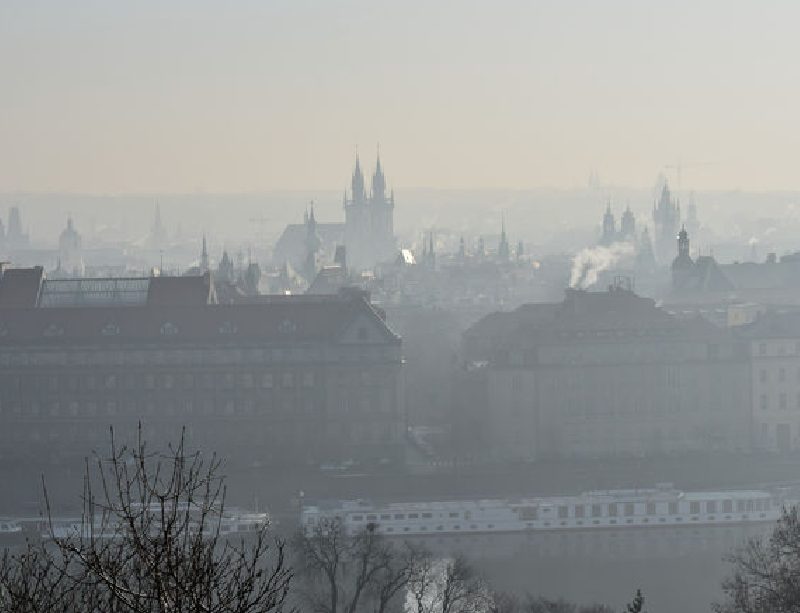
Moreover, now, at the turn of the year, the risk of disruption to the above-mentioned processes is increasing. The days are the shortest of the year, natural light is scarce, so we depend on artificial light. This can lead to what is known as Seasonal Affective Disorder (SAD), a complex of symptoms including fatigue, mood disorders to depression, loss of motivation, mental performance problems, reluctance to have sex and weight gain. Conversely, at night, Christmas decorations increase the level of light smog, which disrupts our sleep.
Imitate the sun
So how to cope with the lack of light and disturbed circadian rhythms? The most natural thing for our body and mind will always be natural sunlight. So at any time of year we should spend time outdoors regularly. It is especially good to take advantage of all the rare moments of clear skies. Staying on snow cover, which reflects the light and thus significantly increases its overall intensity, also works well.
However, the time we can spend outdoors is limited for most of us, so we should try to mimic the natural course of the day as much as possible, even when indoors. This means, among other things, observing the following principles of “light hygiene”:
- During the active part of the day, we should use sufficiently bright lighting that mimics the spectral composition of sunlight as closely as possible. In particular, a sufficiently high proportion of the blue component is important. Ideally, this should be full-spectrum light. The first is the Ra index, which expresses the percentage similarity to sunlight, which should be higher than 90. The second important value is the chromaticity temperature, which expresses the shade of the light. This should be above 5 300 K in the active part, but not above 6 000 K. This hue is called ‘daylight white’.
- In the morning and late afternoon, when the sun is lower on the horizon, it is possible to use light with a chromaticity temperature of 3,300-5,300 K (shade “neutral white”).
- After dark, weaker light of a warmer shade (2,700-3,300 K, i.e. warm white) is preferable.
- At night, you should sleep in a dark room, i.e. get blackout curtains and eliminate all light sources, including, for example, electronics lights.
On the contrary, improperly chosen lighting disturbs the body, overloads the eyes and promotes the production of stress hormones. Children, in particular, respond well to the quality of lighting, which can even affect their school performance.
Other factors affecting circadian rhythms
Perhaps it is clear to everyone that if they pour themselves coffee in the evening, they can expect to have trouble falling asleep. However, poor timing of meals can also play a fairly significant role. In particular, eating late in the evening and at night contributes to the disruption of circadian rhythms, and can cause not only insomnia but also obesity. In fact, research has shown that food eaten late in the evening leads to more weight gain than food of the same caloric value eaten during the day. It is therefore important to direct food intake exclusively to the daytime or early evening hours.
Another important factor is physical activity, which affects the internal clock directly at the molecular level. For example, sport increases the activity of the enzyme AMPK, which is essential for the absorption of glucose from the blood into the muscles, and this enzyme in turn influences the activity of genes involved in the internal clock.
It has long been known that circadian rhythms affect physical performance – for example, strength is usually higher in the late afternoon than in the morning, and oxidative capacity, which is important for endurance athletes, even peaks in the evening. However, the reverse is also true – while physical activity in the morning will boost metabolic functioning and thus mental and physical freshness, higher workloads in the late evening can disrupt circadian rhythms and interfere with falling asleep.
The effect of the timing of exercise on energy metabolism can influence both physical performance and the body’s willingness to lose or gain weight. Recent research on mice fed a high-fat diet, for example, showed that those who completed physical activity in the late afternoon gained less weight than those who exercised in the morning. Other interesting research in mice has shown that a large disruption of circadian rhythms leads to a significant deterioration in endurance performance – animals that were artificially extended their internal day to more than 27 hours performed 49% worse in a treadmill test! But on the other hand, it was exercise that, in further research, was able to straighten out the disrupted circadian rhythms in mice over four weeks.
Therapeutic possibilities of light
But let us return to light as the most important factor in the regulation of the internal clock. In addition to the above-mentioned principles of “light hygiene”, there is one more very powerful weapon for regulating circadian rhythms and treating a number of ailments, and that is light therapy using sun simulators.
A sun simulator or light box is a special lamp that emits a very bright light – it should be white, ideally full spectrum. Its use is very simple: just be near it for a certain period of time every day (usually 30 minutes), while doing basically anything – reading, working on the computer, exercising… The effectiveness of light therapy is very high, especially for psychological problems, but it has also been shown to have an effect on diseases of the body.
Light therapy is an approved method of treatment, which, if carried out in specialised clinics, is covered by health insurance for selected diagnoses. However, there are also sun simulators for home use.
And which problems can it help with?
Seasonal Affective Disorder (SAD)
This illness is also called “winter depression”, but it is far from just depression. As we have already mentioned, it is a complex of problems including fatigue, increased need for sleep, depression, loss of motivation, reluctance to socialise, weight gain, deterioration in physical and mental performance and other symptoms that occur exclusively in autumn and winter. The main cause of the disease is lack of light, which is why light is the most effective form of treatment.
Light therapy using sun simulators for SAD usually works well on its own, without the need to take antidepressants or other medications. It helps not only people who suffer from SAD, but also those with milder forms of the condition, who may only experience increased fatigue and drowsiness. The most effective way to treat this is with light in the morning. For greater effect, light therapy should be combined with frequent outdoor exercise and regular physical activity of moderate to moderate intensity.
Insomnia
Sleep problems are usually related to disturbances in circadian rhythms. Therefore, the basis should be the principles of “light hygiene”, with more serious problems it is again advisable to choose a stronger “caliber” in the form of a sun simulator. The appropriate time of use depends on the type of problem: if we have trouble falling asleep in the evening, exposure to bright light in the early morning hours is ideal; if we wake up very early, on the other hand, it is advisable to use the sun simulator in the evening.
Light therapy is very effective for sleep disorders and circadian rhythms in teenagers. This is because at this age, the internal clock slows down significantly, so teens tend to go to bed late, have difficulty falling asleep and have trouble getting up for school in the morning. In addition, this misalignment of the internal clock increases the risk of psychological problems. The effect of bright light in the morning is exploited here.
Shift work and jet lag syndrome
Even well-adjusted internal clocks sometimes need to be shifted – an example is shift work or jet lag syndrome, i.e. difficulties arising when crossing multiple time zones.
When we want to move the internal clock to an earlier time, we use the effect of bright light immediately after waking up and gradually move the moment of awakening forward. On the other hand, bright light in the evening will help us to move the time later.
ADHD
In Attention Deficit Hyperactivity Disorder (ADHD), disruption of circadian rhythms is very common and can lead to sleep disturbances. If the internal clock is aligned, this will have a positive effect on the symptoms of ADHD. The key is to ensure proper lighting during the day, plenty of exercise in the fresh air and light therapy in the morning hours.
Premenstrual syndrome (PMS)
Unpleasant mental and physical conditions in the days before menstruation can also be alleviated with the help of light, and this also applies to the extreme variant of PMS, the so-called premenstrual dysphoric disorder. Most effective here is the use of a sun simulator for one week after ovulation – that is, starting about the 14th day after the first day of menstruation.
Unseasonal depression
Therapy using the full-spectrum sun simulator can also be successfully used for classic, non-seasonal depression and bipolar disorder. It is particularly effective for chronic depression lasting more than two years, and also for depression in pregnancy, when the use of antidepressants is not recommended. For depression, light therapy is applied in the morning; for bipolar disorder, it is more likely to be applied at midday.
Light therapy in the elderly
With age, the lens of the eye becomes cloudy, so less light enters the eye, especially the blue component, which is essential for regulating the internal clock. This is extreme in the case of cataracts. This is why seniors are much more sensitive to lack of light than younger people, and the problem arises especially when they have mobility or other problems that prevent them from going outside. For these reasons too, both sleep problems and mood disorders are more common in the elderly.
Light therapy will not only help seniors improve sleep, but is also suitable for Alzheimer’s and Parkinson’s disease. In people with dementia, it improves not only sleep but also brain function, and in Parkinson’s disease, studies have shown its ability to slow down degenerative processes in the brain and improve motor function.
0:00
/
0:00
Stárnutí je volba
Komentáře
Seznam zdrojů
- Ignacio Pacheco-Bernal, Fernando Becerril-Pérez & Lorena Aguilar-Arnal. Circadian rhythms in the three-dimensional genome: implications of chromatin interactions for cyclic transcription. Clinical Epigenetics volume 11, Article number: 79 (2019)
- Reinke H, Asher G. Crosstalk between metabolism and circadian clocks. Nature Rev Mol Cell Biol. 2019;20(4):227-41.
- Kyriacou CP, Hastings MH. Circadian clocks: genes, sleep, and cognition. Trends Cogn Sci. 2010;14(6):259–67.
- Kelly RM, Healy U, Sreenan S, McDermott JH, Coogan AN. Clocks in the clinic: circadian rhythms in health and disease. Postgrad Med J. 2018;94(1117):653–8.
- West AC, Bechtold DA. The cost of circadian desynchrony: evidence, insights and open questions. Bioessays. 2015;37(7):777–88.
- The Endocrine Society. “Eating later in the day may be associated with obesity.” ScienceDaily. ScienceDaily, 23 March 2019. <www.sciencedaily.com/releases/2019/03/190323145204.htm
- B.A. Hodge, X. Zhang, M.A. Gutierrez-Monreal, Y. Cao, D.W. Hammers, Z. Yao, C.A. Wolff, P. Du, D. Kemler, A.R. Judge, K.A. EsserMYOD1 functions as a clock amplifier as well as a critical co-factor for downstream circadian gene expression in muscle. eLife, 8 (2019)
- Tahara, S. ShibataEntrainment of the mouse circadian clock: effects of stress, exercise, and nutrition
- Free Radic Biol Med, 119 (2018), pp. 129-138,
- Kuusmaa, M. Schumann, M. Sedliak, W.J. Kraemer, R.U. Newton, J.P. Malinen, K. Nyman, A. Hakkinen, K. HakkinenEffects of morning versus evening combined strength and endurance training on physical performance, muscle hypertrophy, and serum hormone concentrations
- Appl Physiol Nutr Metab, 41 (2016), pp. 1285-1294
- J.H. Um, J.S. Pendergast, D.A. Springer, M. Foretz, B. Viollet, A. Brown, M.K. Kim, S. Yamazaki, J.H. ChungAMPK regulates circadian rhythms in a tissue- and isoform-specific manner
- PLoS One, 6 (2011), Article e18450
- D.M. Edgar, W.C. DementRegularly scheduled voluntary exercise synchronizes the mouse circadian clock
- Am J Physiol, 261 (1991), pp. R928-R933
- Christopher AWolff, Karyn AEsser. Exercise timing and circadian rhythms. Current Opinion in Physiology, Volume 10, August 2019, Pages 64-69
- FUKSA, Antonín a kol. Chronobiologická fototerapie v praxi. 1. vydání. Praha: Blue step, 2015.
- Anna Würtz Justice, Francesco Benedeti, Michael Terman. Chronotherapeutics for Affective Disorders – A Clinican´s Manual for Light and Wake Therapy. 2nd revised edition. S. Karger AG, 2013.
- Eastman CI: Circadian rhythms and bright light: recommendations for shift work. Work and Stres 1990a
- Lam RW: Seasonal Affective Disorder and Beyond, American Psychiatric Press, Inc., 1998
- Lam RW, EM Tam: A Clinician´s Guide to Using Lihgt Therapy, Cambridge University Press, 2009
- Norman E. Rosenthal. Winter Blues: Everything You Need to Know to Beat Seasonal Affective Disorder. The Guilford Press 2006
- Masri S, Sassone-Corsi P. (2013). The circadian clock: a framework linking metabolism,epigenetics and neuronal function. Nat Rev Neurosci. 2013 Jan;14(1):69-75.
- Jürgen A. Ripperger, Martha Merrow (2011) “Perfect timing: Epigenetic regulation of the circadian clock”, FEBS Letters, 585, 10, 2011, 1406-1411.
- Mantele, S.; Otway, D.T.; Middleton, B.; Bretschneider, S.; Wright, J.; Robertson, M.D.; Skene, D.J.; Johnston, J.D. Daily rhythms of plasma melatonin, but not plasma leptin or leptin mRNA, vary between lean, obese and type 2 diabetic men. PLoS One 2012, 7, e37123
- Anadi Martel. Light Therapies – A Complete Guide to the Healing Power of Light. Healing Art Press, 2018.
- John Ott. Health and Light.John Ott Pictures. 1973