Hidden poisons around us: how do they affect our genes?
epivyziva.cz/
Zobrazeno: 586
When you say “environmental pollutants”, most of us think of air pollution. But this is only a small part of the risks that await us. In fact, toxic chemicals can be all around us – in the water we drink, the food we eat, the items we use every day. And many of them can cause serious changes in our genes. How do we effectively navigate this?
Exhalations from transport and industry are, of course, a serious problem. Not only do they cause respiratory problems, but they trigger a cascade of epigenetic changes in the body – reactions that affect the activity of certain genes in our DNA. The consequence can be an increased risk of some serious diseases, including heart and blood vessel disease, lung cancer and Alzheimer’s disease.
But the pollutants that affect us are all around us, and often in places we wouldn’t think of.
Danger lurks in plastics
Recently, we have been inundated with images of huge floating islands of plastic waste and sad photos of animals whose encounters with it have cost them their lives. But this is far from the only serious consequence of plastic pollution. Plastics do not decompose in nature, they just break down into billions of microscopic particles that gradually infest the planet and enter our bodies.
This problem has only been studied briefly so far, so we are far from knowing all the implications it may have. But it is already clear, for example, that plastic microparticles can disrupt the gut microbiome. The disturbed balance within our gut can then contribute to the development of a number of serious diseases (more here: https://www.epivyziva.cz/tajemny-svet-uvnitr-nasich-strev-bakterie-ovlivnuji-nase-zdravi-i-genetickou-informaci/).
Watch out for bisphenol A
However, the substances added to plastics for various reasons are equally dangerous. One of the particularly dangerous ones is bisphenol A (BPA). Evidence of its harmfulness has long been known, even leading to a ban on its use in baby bottles, but it is still found in many everyday items: It can be found in plastic bottles and food containers, toys, sports equipment, it is applied to the inside of cans to prevent corrosion, and it is also found in large quantities in thermal paper on which, for example, shop receipts are printed. It enters the body mainly through food that has come into contact with it, but it can even penetrate the skin, for example by coming into contact with receipts.
Bisphenol A is a significant hormone disruptor that competes with the body’s own steroid hormones because it binds to the same receptors. In addition, it has significant epigenetic effects – so far, scientists have observed more than 1,200 types of interactions with genes and proteins! In particular, it significantly reduces gene methylation in DNA and also affects another epigenetic response, histone acetylation. For example, it has been shown to have negative effects on fertility, erectile capacity, risk of cardiovascular disease, obesity or diabetes, as well as the ability to cause severe epigenetic changes in the DNA of liver cells. In children, it can cause learning and behavioural disorders.
Phthalates also have negative epigenetic effects and act as hormone disruptors. They pose a serious threat to reproductive health and can cause developmental defects in the foetus (especially in the genital area) if exposed during pregnancy. There are several types of phthalates – some are used to soften plastics (e.g. PVC), others are added to adhesives, cosmetics or solvents.
It is also true that when phthalates and bisphenol A act together on the body, their negative effects are multiplied and become dangerous even at low concentrations.
Health and disease are born in the field
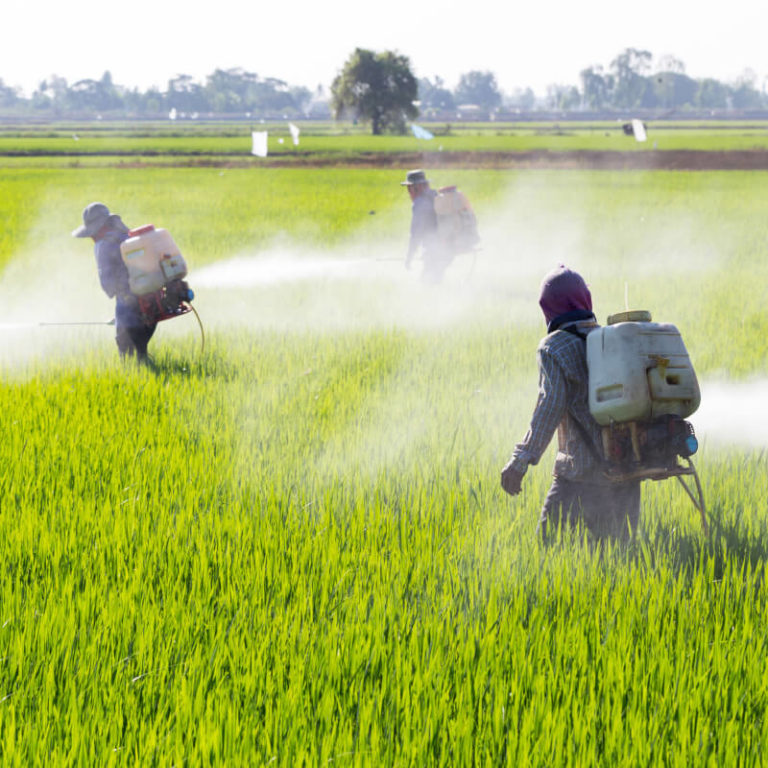
Substances used in agriculture are a separate chapter. Many of them have a serious impact on health, yet they continue to be used.
Typical examples are glyphosate herbicides such as Roundup. The harmfulness of glyphosate has been talked about for a very long time. Already in 2015, the International Agency for Research on Cancer identified it as a potential carcinogen. Then last year, a study was published showing that exposure to glyphosate increases the risk of a cancer called non-Hodkin’s lymphoma by an alarming 41%.
Glyphosate is the most widely used herbicide worldwide, it has been used since 1950 and its principle of action is epigenetic. It blocks the production of an enzyme in plants that is essential for protein metabolism. Plants then suffer from a lack of it and die. Animals do not have this enzyme, so glyphosate was long considered harmless to them. However, it has been shown to cause epigenetic changes in animals, including humans, particularly in gene methylation and histone acetylation, which in turn increase the risk of a number of serious diseases, including many cancers.
Unfortunately, these changes are also passed on to the offspring at conception – for example, the offspring of rats exposed to glyphosate have developed kidney (up to 40%), prostate and ovarian disease and have been shown to have a higher incidence of obesity and birth defects.
Despite all these findings, and despite several thousand lawsuits filed by cancer patients against Monsanto in the USA, for example, there has not yet been a blanket ban on glyphosate. In our country, since last year, only a ban on the use of glyphosate to accelerate the ripening and drying of rape and cereals has been in force.
Negative epigenetic effects have also been demonstrated for several classes of pesticides and other substances used in agriculture. Heavy metals are another category of pollutants with negative epigenetic effects that are often found in food.
How to defend yourself?
As can be seen, the consequences of exposure to environmental pollutants can be severe, not only for those directly exposed, but also for their offspring. There are two ways to counteract this. The first is to make a concerted effort to mitigate the effects of these poisons, although unfortunately they cannot be avoided altogether today. The second is to try to correct as many of the epigenetic changes caused by them as possible.
For the first trip, it is advisable to follow the following principles, for example:
- Buy food that hasn’t been exposed to pesticides, herbicides and other harmful substances, whether it’s labeled organic or from local farmers you trust.
- Avoid areas with polluted environments. If this is not possible, watch the news and limit outdoor exposure and physical activity in poor dispersion conditions.
- Reduce the use of plastic bottles, food containers and plastic packaging, or choose those free of bisphenol A and phthalates. Do not heat food in plastic containers or pour hot liquids into them. Sort used plastics consistently.
- Do not buy canned food.
- If you take receipts in the store, limit the amount of time you touch them and wash your hands afterwards.
- Carefully observe the composition of the cosmetic products you buy.
- Support initiatives to reduce the use of toxic substances in industry, agriculture and other areas.
Bet on a healthy lifestyle
As we have already mentioned, while we can significantly reduce the exposure to environmental pollutants, it is unfortunately impossible to avoid them completely. Therefore, we should also try to mitigate their negative impacts as much as possible. Negative epigenetic changes are largely reversible, and the factors that influence them affect our lifestyle in particular.
Focusing on the quality of the diet, not only in terms of choosing foods with a minimum of harmful substances, but also in terms of nutrient content, should be the absolute basis. Not only is nutrition one of the most important epigenetic factors, but epigenetic changes resulting from exposure to environmental toxins can also significantly increase the body’s susceptibility to dietary excesses.
For example, in an interesting recent study, scientists exposed baby rats to bisphenol A shortly after birth, which caused epigenetic changes in their liver cells. When the pups were two months old, these changes were still present, but were not outwardly apparent. But that’s when the next blow came: the scientists started feeding some of these animals a typical Western diet rich in carbohydrates, saturated fat and cholesterol.
Such a diet is of course harmful at any time and for anyone, but here it was worse. The liver, marked by epigenetic changes, could not process the fat load, causing damage at the cellular level and overall enlargement of this organ. At the same time, a gene called Egr1 was activated, which subsequently initiated a cascade of changes in the activity of a number of other important genes. At that point, the risk of metabolic-related diseases (cardiovascular disease, diabetes, etc.) increased significantly in the affected rats, as did their overall accelerated ageing.
Other important positive epigenetic factors are regular exercise or sufficient sleep, while negative ones are obesity, smoking and stress.
Useful dietary supplements
Some natural substances that have the ability to mitigate the effects of environmental pollutants and possibly even partially eliminate the negative epigenetic changes resulting from them may also be a suitable choice. Here is a small selection:
Genistein
The substance contained mainly in soybeans has epigenetic effects and also acts as a phytoestrogen. As a result, it can, for example, reduce the negative effects of bisphenol A.
Curcumin
This substance is characterized by its broad-spectrum positive epigenetic effects, supports liver and kidney health and has been shown to protect the body from the negative effects of certain environmental pollutants, especially heavy metals and nicotine.
Omega-3
Several studies have confirmed that these essential unsaturated fatty acids protect the body from the effects of heavy metals and airborne pollutants. When administered to children, they also significantly reduce the risk of asthma, which is greatly increased in children living in polluted areas. They are particularly effective in combination with vitamin D3.
Vitamins
The ability to protect the body against the negative effects of environmental toxins has been demonstrated for vitamins D3, C, E, A, carotenoids and B vitamins. Of the latter, folic acid is particularly important as it acts as a methyl donor and is therefore able to prevent dangerous hypomethylation caused, for example, by bisphenol A. This is particularly important during pregnancy, when folic acid deficiency causes serious damage to the fetal nervous system.
Chlorella
This unicellular freshwater algae is one of the most effective natural detoxifying agents. It helps to remove heavy metals, polychlorinated biphenyls and other toxins from the body, and also supports the regeneration of the liver as the main detoxifying organ.
0:00
/
0:00
Stárnutí je volba
Klíčová slova: bisphenol A, chlorella, curcumin, detoxification, epigenetics, Genistein, healthy nutrition, Kurperin, omega-3, pesticides, plastics
Komentáře
Seznam zdrojů
- V Bollati, A Baccarelli. Environmental epigenetics. Nature. 24 February 2010. https://www.nature.com/articles/hdy20102
- T. Whyand, J. R. Hurst, M. Beckles, and M. E. Caplin. Pollution and respiratory disease: can diet or supplements help? A review. Respir Res. 2018; 19: 79.
- Li, R. et. al. (2020). Sex-dependent effects of ambient PM 2.5 pollution on insulin sensitivity and hepatic lipid metabolism in mice. Particle and Fibre toxicology 17.1-14.
- Qiao, R. et. al. (2019) Accumulation of different shapes of microplastics initiates intestinal injury and gut microbiota dysbiosis in the gut of zebrafish. Chemosphere 236. 124334.
- Treviño, L.S. et. al. (2020). Epigenome environment interactions accelerate epigenomic aging and unlock metabolically restricted epigenetic reprogramming in adulthood. Nature Communications 11(1). 1-14.
- Kubsad, D. et al (2019). Assessment of Glyphosate Induced Epigenetic Transgenerational Inheritance of Pathologies and Sperm Epimutations: Generational Toxicology. Scientific Reports 2019, Apr 23;9(1):6372.
- LuopingZhang, IemaanRana, Rachel M.Shaffer, EmanuelaTaiol, LianneSheppard. Exposure to glyphosate-based herbicides and risk for non-Hodgkin lymphoma: A meta-analysis and supporting evidence. Mutation Research. Volume 781, July–September 2019, Pages 186-206.
- https://www.theguardian.com/business/2019/feb/14/weed-killing-products-increase-cancer-risk-of-cancer?CMP=twt_gu
- Shelby M.D. NTP-CERHR monograph on the potential human reproductive and developmental effects of bisphenol A. NTP CERHR MON. 2008;22:v, vii–ix, 1–64. passim.
- Talsness C.E., Andrade A.J.M., Kuriyama S.N., Taylor J.A., vom Saal F.S. Components of plastic: Experimental studies in animals and relevance for human health. Phil. Trans. Biol. Sci. 2009;364:2079–2096.
- Lang I.A., Galloway T.S., Scarlett A., Henley W.E., Depledge M., Wallace R.B., Melzer D. Association of urinary bisphenol a concentration with medical disorders and laboratory abnormalities in adults. J. Am. Med. Assoc. 2008;300:1303–1310. [PubMed] [Google Scholar]
- Welshons W.V., Nagel S.C., vom Saal F.S. Large effects from small exposures. III. Endocrine mechanisms mediating effects of bisphenol A at levels of human exposure. Endocrinology. 2006;147:s56–s69.
- Shelby M.D. NTP-CERHR monograph on the potential human reproductive and developmental effects of di-(2-ethylhexyl) phthalate (DEHP) NTP CERHR MON. 2006;18:v, vii–7. II-iii-xiii passim.
- Martino-Andrade A.J., Chahoud I. Reproductive toxicity of phthalate esters. Mol. Nutr. Food Res. 2010;54:148–157.
- Singh S., Li S.S.-L. Phthalates: Toxicogenomics and inferred human diseases. Genomics. 2011;97:148–157.
- Sher Singh and Steven Shoei-Lung Li. Epigenetic Effects of Environmental Chemicals Bisphenol A and Phthalates. Int J Mol Sci. 2012; 13(8): 10143–10153.
- M Collotta , P A Bertazzi, V Bollati. Epigenetics and Pesticides. Toxicology. 2013 May 10;307:35-41.
- Sen, A., Heredia, N., Senut, M., Land, S., Hollocher, K., Lu, X., Dereski, M.O., Ruden. D.M. (2015). Multigenerational epigenetic inheritance in humans: DNA methylation changes associated with maternal exposure to lead can be transmitted to the grandchildren. Scientific Reports, 5: 14466.
- Guo R, Du Y, Zheng F, Wang J, Wang Z, Ji R, Chen J. Bioaccumulation and elimination of bisphenol a (BPA) in the alga Chlorella pyrenoidosa and the potential for trophic transfer to the rotifer Brachionus calyciflorus. Environ Pollut. 2017 Aug;227:460-467.
- AndrzejBajguz. Blockade of heavy metals accumulation in Chlorella vulgariscells by 24-epibrassinolide. Plant Physiology and Biochemistry. Volume 38, Issue 10, October 2000, Pages 797-801.
- Medina-Franco JL, Lopez-Vallejo F, Kuck D, Lyko F (2010) Natural products as DNA methyltransferase inhibitors: a computer-aided discovery approach. Mol Divers