Morning or evening? With food or on an empty stomach? Or a guide to taking dietary supplements
epivyziva.cz/
Zobrazeno: 707
Dietary supplements are not exactly a cheap affair. So when we invest in them, it is important not only to choose the really good ones, but also to make sure that we take them correctly – that is, at the optimal time, in the optimal form and in the right combinations. The difference in how much our body can use in such a case can be really significant.
Herbs: principally on an empty stomach
If we choose to use any medicinal plants to support our health, whether in the form of a tea, extract or tincture, one important rule applies: the level of their effectiveness increases if we take them on an empty stomach – ideally when not only the stomach is empty, but also the immediately following parts of the digestive system.
The most favourable situation from this point of view occurs in the morning: Take the plant or mixture immediately after waking up (the extract or tincture form is preferable here, as teas require longer preparation) and do not eat for at least 20 minutes afterwards. In herbal cures, it is of course more effective if the herb or mixture is taken more than once a day – usually 2 or 3 times. In that case, we follow the same procedure: take it as far apart as possible from the previous meal and at least 20 minutes before the next one.
However, if for some reason this fails, it is better to take the herbal preparation with food than not to take it at all. In fact, unlike epigenetic nutrients, which are often taken long-term, herbs are more often taken as part of time-limited treatments where consistency and regularity are important.
The expected effect is also decisive
However, the appropriate daily use of herbal preparations may also depend on their specific effect. For example, adaptogens that have a vitalising and energising effect are logically better taken in the first half of the day – typical examples are rhodiola “, maral root “, valerian “ or ginseng (both true and five-leaved) “. The same goes for plants that significantly improve blood circulation – for example, ginger “ or ginkgo biloba “. On the other hand, herbs to promote sleep, such as passionflower “, hops “ or bayberry ” , will be directed more towards the time before falling asleep (30-60 minutes).
The aforementioned ginger is also often used to alleviate travel sickness – in this case, it is consumed 30 minutes to two hours before travel. And to relieve migraines and other headaches, it can be taken continuously, for example every 3 or 4 hours.
Combination for better absorption
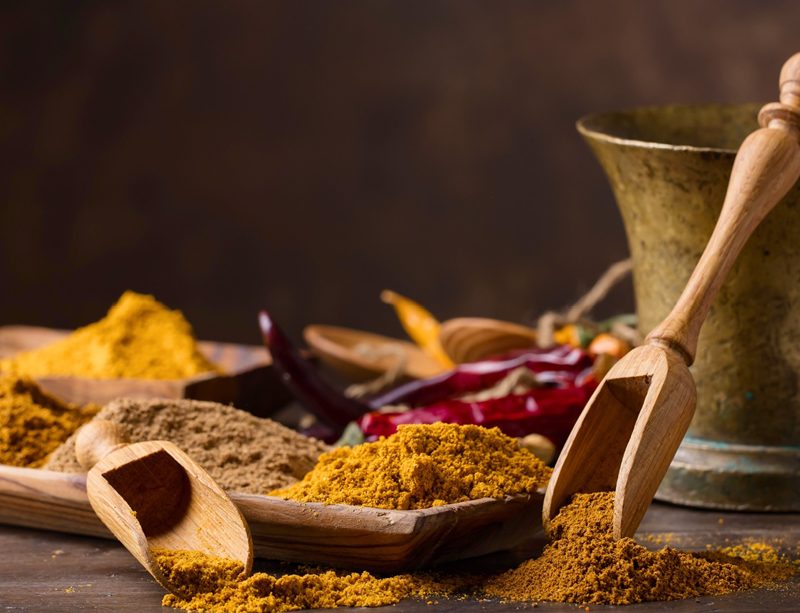
Certain combinations can also improve the bioavailability of herbs. It is important to know that although the epigenetic action of a given plant is based on one or more specific substances (e.g. rosmarinic acid and carnosol in the case of rosemary, astragalosides in valerian, or baicalein and scutellarin in baikal coneflower), there are many other substances that support the bioavailability of the “main” ones. These compounds are called bioenhancers. Thus, when taking herbs in extract form, it is not worth choosing the purest form of the main active ingredient, but rather an extract containing a broad spectrum of compounds (some dietary supplements combine an extract with powder from the plant in capsules for this very reason).
However, a bionenhancer does not have to be just a substance contained in the plant in question. It can also be compounds that the herb does not contain, but can be combined with it to improve bioavailability. Here is an overview of the most interesting bioenhancers.
Piperine – it is the first scientifically confirmed bioenhancer, these effects were described in 1979. It affects the bioavailability of herbs and many epigenetically acting nutrients in several ways: it reduces the activity of enzymes involved in the breakdown of active substances (this applies to herbs, nutrients and some drugs). Furthermore, it promotes changes in the digestive system that lead to better absorption of beneficial substances: it improves blood circulation in the digestive tract, modifies the cells of the intestinal epithelium and thus improves the permeability of the intestinal wall, and also lengthens the so-called microcracks that enlarge the inner surface of the intestine. It can also improve the binding of certain compounds to cell receptors and make cell signalling more efficient.
Quercetin ” – this polyphenol has interesting epigenetic effects in higher concentrations, but in small amounts it is found in a huge range of herbs and foods, where it improves the bioavailability of other substances. And in the form of a dietary supplement, it can also be combined with a range of herbal preparations or epigenetically active nutrients. It also significantly improves the absorption of active substances from the digestive tract and helps to maintain their higher concentration in the blood plasma for a longer period of time. Like piperine, quercetin improves the bioavailability of not only natural preparations but also some drugs.
Genistein ” – for its phytoestrogenic action, it is most often used as a dietary supplement in menopause, but it also increases the bioavailability of herbs, nutrients and drugs.
Glycyrrhizin – it is an epigenetic substance contained in licorice root. Licorice is often used in Traditional Chinese Medicine preparations and its ability to act as a bioenhancer shows that it is not just for its better taste.
Naringin – one of the main active substances of grapefruit also acts as a bionhancer.
Some herbs also act synergistically, i.e. they increase each other’s effectiveness. For example, a combination of marali root and rhodiola is used to support athletic performance, while a combination of valerian and angelica works to support immunity and menopause.
Utilisation of epigenetically acting nutrients
Even more complicated is improving the bioavailability of epigenetically acting nutrients – i.e. substances that occur naturally in food but are contained in a more concentrated form in dietary supplements.
Their wide-ranging health benefits are undeniable, but are often limited by their limited bioavailability. Pharmacological research is therefore devoting a great deal of effort to finding truly effective forms of them – for example, drugs using nanostructures and other sophisticated forms are being tested. However, even in the case of epigenetically acting nutrients, their utility can be greatly enhanced by natural means – either by choosing the right time of use or by using bioenhancers.
In the following lines you will find examples of optimal nutrient use that have been best studied from this perspective, while unfortunately very few studies have been conducted on others.
EGCG
Epigallocatechin gallate, abbreviated as EGCG’, along with other catechins, is found abundantly, especially in green tea. All catechins are best absorbed when consumed in the morning on an empty stomach: In studies, volunteers have been measured to have 3.5 times higher levels of catechins in their blood than when taken at other times of the day or with food.
EGCG is also unstable in high temperature environments – which is why it is not advisable to pour boiling water over green tea. The stability is also reduced by the alkaline pH, so it may be advantageous to administer it together with vitamin C. The bioavailability of EGCG is also increased by the presence of caffeine, which is why it is worth, for example, washing it down with tea (but not hot tea).
The most effective bioenhancers, i.e. substances that improve the bioavailability of EGCG, include quercetin’, curcumin, piperine, rutin and genistein.
Curcumin
The dye obtained from the turmeric root “ has a very low bioavailability in its pure form, which is mainly due to the fact that it is not soluble in water but in fats. One way to improve absorption is therefore to eat it with a fatty meal – ideally it should contain at least 15 g of fat. Combining it with omega-3s, for example, can also help, but only to a limited extent due to the low fat content of a regular capsule. If turmeric is used as a spice, longer cooking (more than 15 minutes) will also improve the utilisation of the curcumin contained.
Another option to improve bioavailability is to use it together with bioenhancers. The most commonly used here is the aforementioned piperine, which, according to studies, can increase the concentration of curcumin in blood plasma by up to 2000% after ingestion. Quercetin’ is also very effective, improving curcumin ‘s availability by 147%.
The effect of time of day on the absorption of curcumin has not been proven, but as it is a substance that improves blood circulation to all body tissues, it is usually taken in the first half of the day.
Resveratrol
Resveratrol “ is a dye from the stilbenoid group, found mainly in grape skins but also in many other foods. Even its bioavailability is limited when taken alone. Unlike curcumin, it is relatively well absorbed (about 75 %), but then degrades very rapidly, so that its actual bioavailability is around 1 %.
If taken with food, it will slow down absorption but have little effect on bioavailability. Combination with different foods has not yet been studied, but in the case of flavonoids, which have a similar structure to stilbenoids, it is generally true that proteins, fibre and minerals impair their availability, while easily digestible carbohydrates, vitamins, carotenoids and alkaloids improve it. It can therefore be assumed that resveratrol will do the same.
The highest bioavailability has been shown when taken in the morning, but repeated use during the day is also advisable to maintain a higher concentration in the body.
Of the bioenhancers, piperine can also improve the availability of resveratrol, but quercetin and curcumin are very good alternatives. In studies, the addition of quercetin improved the absorption of resveratrol by 310%, the addition of curcumin by 300%, and when the combination curcumin + piperine + quercetin was added to resveratrol, its absorption improved by 350% compared to resveratrol alone.
However, resveratrol alone may in turn contribute to better utilisation of other epigenetically acting substances such as apigenin or berberine (this combination, for example, effectively lowers cholesterol). It then acts synergistically together with oligomeric proanthocyanidins or OPCs”.
Astaxanthin
Ataxanthin “ is a dye from the carotenoid family that is found in a wide range of marine organisms. Its best-known source is animals with pinkish-orange flesh (salmon, lobster, shrimp, etc.), and for the manufacture of food supplements it is usually obtained from the alga Haematococcus pluvialis.
The bioavailability of astaxanthin, as with other carotenoids, is limited mainly by its low solubility in water. These substances dissolve predominantly in fats. It is therefore essential to take astaxanthin together with fat (e.g. with a fatty meal), but it is preferable to take it after a meal rather than before – absorption is thus improved by up to 2.4 times. However, the absorption also depends on sufficient bile acid production.
The combination of astaxanthin with omega-3 “ unsaturated fatty acids is very beneficial. Together, they have a significantly better effect on immunity and the cardiovascular system than either astaxanthin or omega-3s alone. It is also possible to administer it together with olive oil.
Smoking also reduces the bioavailability of astaxanthin – smokers have lower blood levels of all carotenoids than non-smokers.
It is also true that higher doses of astaxanthin (and other carotenoids) are also absorbed much better than lower ones. The effect of time of day has not been demonstrated.
Vitamin D3
Vitamin D3 “ is also a fat-soluble compound, and for optimal absorption it is therefore necessary to consume it with fat, for example with a fatty meal (again, ideally just after eating). However, not all fats are equally suitable – for example, long-chain fatty acids impair its utilisation. Absorption is also higher with supplements in which the ‘fat’ is placed in, for example, micelles, microcapsules or liposomes.
The absorption of vitamin D3 is significantly reduced in people with a removed gallbladder. Being overweight also has a major negative effect – people with a higher body fat content have lower levels of beneficial vitamin D3 metabolites in their blood after taking vitamin D3 supplements than lean people.
Vitamin D3 absorption can also be impaired by many medications – so it is generally best to take vitamin D3 supplements as far away from these medications as possible.
Vitamin D3 is usually taken together with calcium because it is essential for the absorption of this mineral. However, the reverse relationship does not hold true – the presence of calcium does not affect the bioavailability of the “diac”.
Vitamin D3 is sometimes recommended to be taken at the time of day when it is naturally produced in the body by interaction with sunlight – i.e. between the morning and afternoon. However, no study has yet confirmed the relationship between bioavailability and time of use.
Zinc
According to the WHO, a third of the world’s population is at risk of deficiency of this trace element. Often, however, the reason is not its insufficient content in the diet, but its reduced bioavailability.
The absorption of zinc “ is significantly impaired by phytic acid and its salts. These substances are present in plant foods, mainly whole grain cereals, legumes, seeds and nuts. With zinc, they form hard-to-degrade compounds that hinder its absorption. And this applies not only to zinc ingested in the diet, but also to that released into the digestive tract from the body’s own stores.
While sheep or pigs, for example, can break down phytate using the stomach enzyme phytase, the level of this enzyme is low in humans. However, it is possible to use processes that activate phytase directly in the food – in particular, soaking or fermentation for long enough. However, if zinc is taken in the form of dietary supplements, it is not advisable to do so with a high plant-based diet. This is especially true for vegans. Conversely, adding animal protein to a meal greatly improves zinc absorption, although the reason here is not directly animal origin, but rather the higher proportion of protein in animal foods. In fact, the products of protein digestion form complexes with zinc that facilitate its absorption. Thus, if zinc is taken with a high-protein meal, its bioavailability is enhanced.
However, high iron intake has a negative effect. Therefore, we never take zinc together with iron-containing dietary supplements, but separate them by at least two hours. The same applies to supplements with copper. Conversely, zinc alone negatively affects the absorption of some antibiotics, such as tetracycline. Here too, therefore, use should be separated.
The effect of time of day on zinc absorption has not yet been demonstrated.
Various factors within the body also have an effect on zinc absorption – for example, sufficient production of intestinal mucus (the same applies to iron and calcium absorption), which in turn is related to the balance of the gut microbiome. Intestinal absorption of zinc is also positively influenced if there is enough of the protein albumin in the bloodstream. Dairy products are the main source of albumin.
Zinc absorption from supplements is generally much higher than from the diet, but it also depends on the type of supplement. Inorganic zinc salts are the worst, bisglycinate and citrate are the best.
There is also an important fact to note about zinc: While other vitamins, minerals and trace elements can be determined by blood tests, zinc is very difficult to determine. Only 1% of all zinc in the body is found in blood plasma, and zinc levels only decrease in the event of a serious deficiency. Moreover, the level of zinc in the blood naturally fluctuates – it varies after meals, for example, but also in response to stress or inflammation.
Magnesium
The absorption of magnesium “ does not depend much on whether it is taken alone or with food. Alone, however, it can cause digestive problems such as stomach irritation or diarrhoea, so it is preferable to take it with food. However, it should not be taken with zinc, which interferes with its absorption.
Bioavailability is greatly influenced by the form of the supplement. It is very poor in inorganic forms, which also have the highest risk of digestive problems. In contrast, organic forms, especially bisglycinate, citrate, malate and threonate, are very well absorbed.
The absorption of magnesium is virtually unaffected by the time of day at which it is taken, but it may be appropriate to adjust this according to the primary purpose for which it is taken. For a significant relaxation effect, magnesium is often recommended before bedtime, but for supporting immunity, mental performance and energy levels, it may be more beneficial to take it in the first half of the day.
Like zinc, magnesium can interfere with the absorption of antibiotics. Therefore, the latter should never be taken 2 hours before and 4-6 hours after taking a dietary supplement with magnesium.
0:00
/
0:00
Stárnutí je volba
Klíčová slova: absorption, astaxanthin, Baikal pine cone, bioavailability, Chinese angelica, curcumin, dietary supplements, egcg, epigenetics, Fenugreek blanched, ginger, Ginkgo biloba, Herbs, hops, Magnesium, maral root, piperine, quercetin, resveratrol, Rhodiola, Torture, zinc
Komentáře
Seznam zdrojů
- Kritika Kesarwani and Rajiv Gupta. Bioavailability enhancers of herbal origin: An overview. Asian Pac J Trop Biomed. 2013 Apr; 3(4): 253–266.
- https://www.rxlist.com/ginger/generic-drug.htm
- Joshua D. Lambert, Seok-Joo Kwon,Jihyeung Ju,Mousumi Bose, Mao-Jung Lee, Jungil Hong, Xingpei Hao, and Chung S. Yang. Effect of genistein on the bioavailability and intestinal cancer chemopreventive activity of (-)-epigallocatechin-3-gallate. Carcinogenesis. 2008 Oct; 29(10): 2019–2024.
- Vicente Andreu Fernández, Laura Almeida Toledano,Nieves Pizarro Lozano, Elisabet Navarro Tapia, María Dolores Gómez Roig, Rafael De la Torre Fornell, and Óscar García Algar. Bioavailability of Epigallocatechin Gallate Administered with Different Nutritional Strategies in Healthy Volunteers. Antioxidants (Basel). 2020 May; 9(5): 440.
- Zhuo-Yu Cai, Xu-Min Li, Jin-Pei Liang, Li-Ping Xiang, Kai-Rong Wang, Yun-Long Shi, Rui Yang, Meng Shi, Jian-Hui Ye, Jian-Liang Lu, Xin-Qiang Zheng, and Yue-Rong Liang. Bioavailability of Tea Catechins and Its Improvement. Molecules. 2018 Sep; 23(9): 2346.
- Somers-Edgar T.J., Scandlyn M.J., Stuart E.C., Le Nedelec M.J., Valentine S.P., Rosengren R.J. The combination of epigallocatechin gallate and curcumin suppresses ERα-breast cancer cell growth in vitro and in vivo. Int. J. Cancer. 2010;122:1966–1971.
- Nakagawa K., Nakayama K., Nakamura M., Sookwong P., Tsuduki T., Niino H., Kimura F., Miyazawa T. Effects of co-administration of tea epigallocatechin-3-gallate (EGCG) and caffeine on absorption and metabolism of EGCG in humans. Biosci. Biotechnol. Biochem. 2009;73:2014–2017.
- Mangala Hegde, Sosmitha Girisa, Bandari BharathwajChetty, Ravichandran Vishwa, and Ajaikumar B. Kunnumakkara. Curcumin Formulations for Better Bioavailability: What We Learned from Clinical Trials Thus Far? ACS Omega. 2023 Mar 28; 8(12): 10713–10746.
- Saman Sabet, Ali Rashidinejad, Laurence D. Melton, Duncan J. McGillivray. Recent advances to improve curcumin oral bioavailability. Trends in Food Science & Technology. Volume 110, April 2021, Pages 253-266
- https://www.consumerlab.com/answers/best-way-to-take-curcumin-and-turmeric-supplements-to-increase-absorption/best-way-to-take-curcumin/
- https://www.takecareof.com/articles/when-is-the-best-time-to-take-turmeric
- Lund, Kaleb C.; Pantuso, Traci. Combination Effects of Quercetin, Resveratrol and Curcumin on In Vitro Intestinal Absorption. Journal of Restorative Medicine, Volume 3, Number 1, 4 January 2014, pp. 112-120(9)
- Ondrej Vesely, Simona Baldovska, and Adriana Kolesarova. Enhancing Bioavailability of Nutraceutically Used Resveratrol and Other Stilbenoids. Nutrients. 2021 Sep; 13(9): 3095.
- Kaleb Lund, Traci Pantuso, Combination Effects of Quercetin, Resveratrol and Curcumin on In Vitro Intestinal Absorption. April 2014, Journal of Restorative Medicine 3(1):112-120
- Yifeng Gao, Trygve O Tollefsbol. Combinational Proanthocyanidins and Resveratrol Synergistically Inhibit Human Breast Cancer Cells and Impact Epigenetic⁻Mediating Machinery. Int J Mol Sci. 2018 Jul 27;19(8):2204.
- Christakis Sergides, Marinela Chirilă, Luigi Silvestro, Daphne Pitta, and Andreas Pittas. Bioavailability and safety study of resveratrol 500 mg tablets in healthy male and female volunteers. Exp Ther Med. 2016 Jan; 11(1): 164–170.
- Doddabele Madhavi, PhD, Daniel Kagan, PhD, and Supriya Seshadri, PhD. A Study on the Bioavailability of a Proprietary, Sustained-release Formulation of Astaxanthin. Integr Med (Encinitas). 2018 Jun; 17(3): 38–42.
- Yumika OKADA, Masaharu ISHIKURA, Takashi MAOKA. Bioavailability of Astaxanthin in Haematococcus Algal Extract: The Effects of Timing of Diet and Smoking Habits. Bioscience, Biotechnology, and Biochemistry, Volume 73, Issue 9, 23 September 2009, Pages 1928–1932.
- Ranga Rao Ambati, Phang Siew Moi,1 Sarada Ravi,and Ravishankar Gokare Aswathanarayana. Astaxanthin: Sources, Extraction, Stability, Biological Activities and Its Commercial Applications—A Review. Mar Drugs. 2014 Jan; 12(1): 128–152.
- Egidijus Šimoliūnas, Ieva Rinkūnaitė, Živilė Bukelskienė, and Virginija Bukelskienė. Bioavailability of Different Vitamin D Oral Supplements in Laboratory Animal Model. Medicina (Kaunas). 2019 Jun; 55(6): 265.
- Indra Ramasamy. Vitamin D Metabolism and Guidelines for Vitamin D Supplementation. Clin Biochem Rev. 2020 Dec; 41(3): 103–126.
- Maria Maares and Hajo Haase. A Guide to Human Zinc Absorption: General Overview and Recent Advances of In Vitro Intestinal Models. Nutrients. 2020 Mar; 12(3): 762.
- K Michael Hambidge, Leland V Miller, Jamie E Westcott, Xiaoyang Sheng, and Nancy F Krebs. Zinc bioavailability and homeostasis. Am J Clin Nutr. 2010 May; 91(5): 1478S–1483S.
- https://www.healthline.com/nutrition/best-time-to-take-magnesium#interactions
- https://whatsgood.vitaminshoppe.com/best-time-to-take-different-types-of-magnesium/