How to combine epigenetic dietary supplements
epivyziva.cz/
Zobrazeno: 563
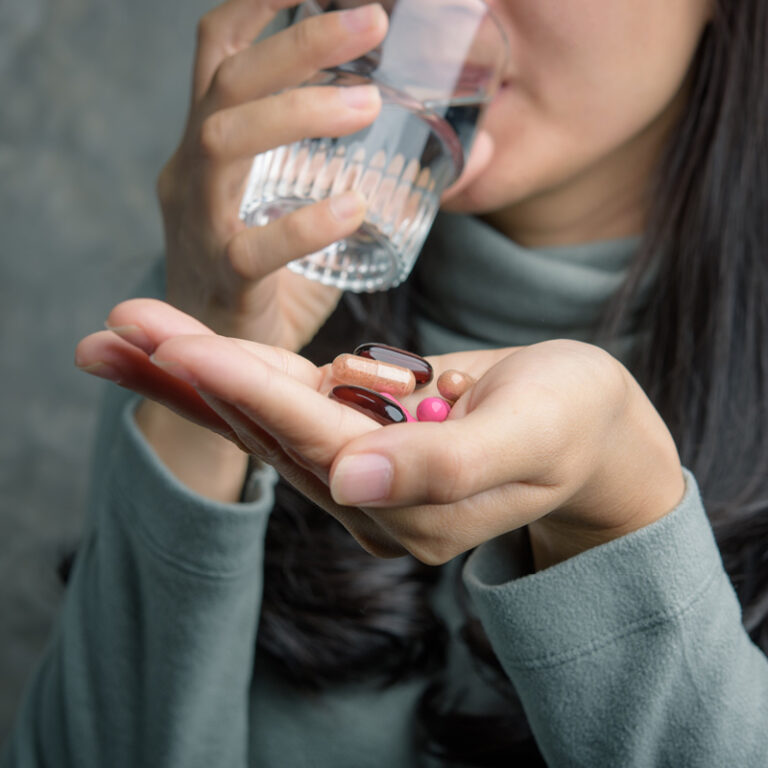
Herbs and nutrients capable of influencing the activity of genes in our DNA are a good choice for anyone who wants to improve their health, physical and mental performance. However, if we take them in the right combinations, we can significantly increase their effectiveness. Here is an overview of the basic principles of how to combine epigenetically acting herbs and nutrients, including examples of some effective blends.
Epigenetic substances can be divided into nutrients, i.e. substances naturally present in food and drink, and herbs. In the case of nutrients, the situation is somewhat simpler, both in terms of the action of a particular nutrient and in terms of their combinations. There, it is usually a single substance, a single specific molecule, so it is easy to map its action in research.
In the case of herbs, the situation is considerably more complicated. They contain dozens of active substances, and even within a single herb they interact with each other, thus affecting their absorption and effectiveness. In the case of combinations of several herbs, the number of interactions is many times higher, making them very difficult to study from a scientific point of view. This is also why there is very little research on this topic.
The view of traditional Chinese medicine
Traditional Chinese Medicine (TCM) has a great tradition of using herbal combinations, and many of the herbs used in this system have confirmed epigenetic effects, i.e. they are able to influence the activity of individual genes in DNA.
Within the TCM pharmacopoeias there are a number of mixtures, many of which have been used for many centuries. Most of them were created empirically, not so much addressing the biochemistry (that was not even possible in the past), but rather their effect on the energetic principles and the five basic elements in the body. Here are some examples of the principles that are used in TCM blends:
Additive and synergistic effect – a combination of two or more herbs whose effect is more or less equivalent. In the case of additive action, their effects add up, while synergistic action means that they work better together than the sum of their effects would. An example is the synergistic action of valerian and angelica.
Combination of main and auxiliary herbs – here one herb acts as the main one, while the other is auxiliary and only increases the effectiveness of the first one. An example of this is the combination of ginseng and honeysuckle.
Hierarchical mixtures – for some multicomponent mixtures there is also a hierarchy. The most important herb here is referred to as “emperor”, other herbs are labeled “minister”, “assistant” and “servant” according to their functions.
Mixtures based on the principle of detoxification – some herbs used in TCM can have toxic effects on the organism alone, and therefore they are supplemented with others that suppress their toxic effects.
Many combinations – traditional and modern – are of course also used in Western phytotherapy, but compared to TCM it is not nearly as sophisticated a system. There is even less research on the subject than there is on TCM combinations.
But whether it’s European or overseas herbs, it’s always true that it’s almost impossible to come up with a truly workable combination without experience and knowledge of the deeper context.
Combining nutrients
In the case of epigenetically acting substances, the situation is much simpler. There are, of course, also cases of synergy, where some nutrients work significantly better together and often promote their absorption and availability to the body. In these cases, knowledge of them is of course necessary. However, there are two basic principles that can be used to create a working combination, even by a layman.
If you are not sure how to create combinations in the “About Nutrition” section of this website, you will find articles on individual nutrients and herbs, and at the end of most of them there are also examples of scientifically proven combinations that work (we will list a few interesting ones at the end of this text). But now for the promised principles:
Does this occur together?
When combining epigenetically acting nutrients, you won’t go wrong if you choose substances that occur together in nature. On the contrary, this often supports their absorption as well. Here are some examples:
- Vitamin D3 occurs naturally in fish oil and can therefore be combined with omega-3s. These will also provide the extra fat that is essential for vitamin D3 absorption.
- In salmon or shrimp meat, omega-3s are found together with the carotenoid astaxanthin, a powerful antioxidant with anti-inflammatory and anti-cancer effects and positive effects on the eyes, brain, heart and blood vessels or athletic performance. So if you need to support these areas, this is a great combination.
- Especially menopausal women will appreciate the combination of genistein and nattokinase. Genistein is a polyphenol contained in soybeans, which is probably the strongest natural phytoestrogen and therefore helps with all the unpleasant symptoms of menopause. Nattokinase is an enzyme that is produced in the production of the soy food natto and has a significant positive effect on the cardiovascular system.
- An interesting dietary supplement from the point of view of combining is quercetin. This polyphenol alone can effectively slow aging, support immunity, weight loss and athletic performance, but it is also a substance that is found in small amounts in almost all plants. Therefore, it can be safely combined with many nutrients and herbs, and often even significantly improves their absorption. This is the case, for example, with resveratrol, which, together with quercetin, is found particularly in grape wine.
Are they eating together?
Another possible guideline is to consider the combinations that are common within different traditional cuisines. Here, combinations may also include herbs that are used as spices in the area.
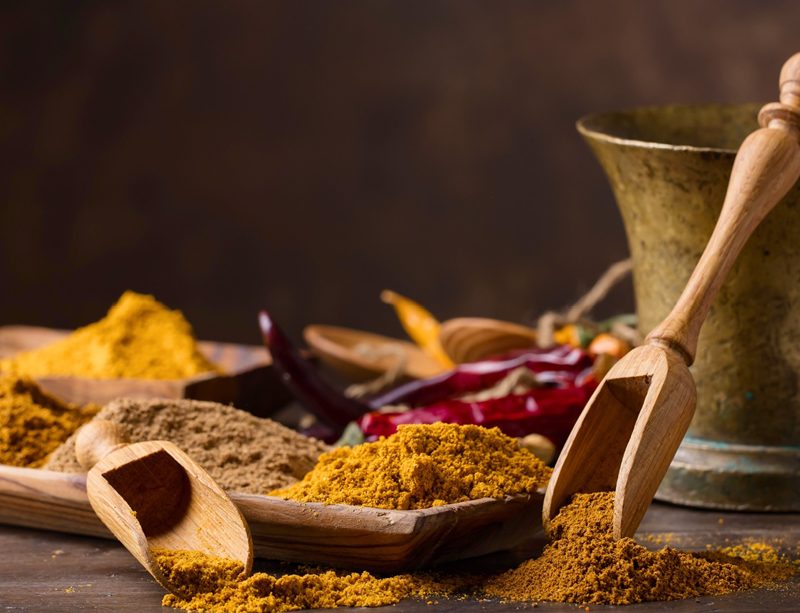
- Probably the best known in this respect is the mixture of curcumin and piperine, where piperine improves the absorption of curcumin up to 2,000 times. Their natural sources – turmeric and black pepper – are traditional components of curry spices.
- Mediterranean cuisine is characterised by a combination of fish, red wine and herbs. So you won’t go wrong if you combine omega-3s, resveratrol, OPCs and rosemary. This will support the functioning of your brain or heart and boost your physical and mental performance.
- The Japanese diet is rich in soy, fish and green tea. Therefore, in addition to nattokinase, you can also combine genistein from soy with omega-3 or EGCG. This will slow down the aging process, support heart health, brain function and weight loss.
Examples of other possible combinations
Arthrosis: boswellia + curcumin (both components here significantly improve their absorption), genistein + curcumin
Autoimmune diseases: boswellia + curcumin, boswellia + coneflower, vitamin D3 + curcumin
Liver: chicory + ginger, chicory + curcumin, OPC + milk thistle, ginkgo biloba + milk thistle
Weight loss: chicory + curcumin, fenugreek + ginger
Sports performance: pomegranate + curcumin, pomegranate + quercetin, rhodiola + ginkgo biloba, maral + rhodiola
Anti-age effect: quercetin + resveratrol, quercetin + EGCG, selenium + resveratrol
Immunity: quercetin + EGCG, quercetin + curcumin, bayberry + curcumin, ginger + curcumin, valerian + bayberry, valerian + quercetin, zinc + EGCG
Heart and blood vessels: quercetin + resveratrol, quercetin + EGCG, OPC + resveratrol, resveratrol + omega-3, vitamin D3 + astaxanthin, vitamin D3 + omega-3, valerian + ginseng
Insomnia: passionflower + hops
Anxiety: passionflower + bayberry
Depression: rhodiola + saffron, omega-3 + saffron, bayberry + rhodiola
Diabetes: curcumin + boswellie, curcumin + quercetin, resverastrol + quercetin, vitamin D3 + resverastrol
Prostate: curcumin + pomegranate, pomegranate + zinc, resveratrol + zinc
Alzheimer’s disease: selenium + EGCG + vitamin E, selenium + resveratrol
Osteoporosis: vitamin D3 + vitamin K2, vitamin D3 + resveratrol
Mental performance: ginkgo biloba + rhodiola, ginkgo biloba + rosemary, valerian + rhodiola
Stress: maral + rhodiola
Testosterone: zinc + vitamin D3,
Thyroid: zinc + iodine + selenium
Eyes: lutein + zeaxanthin + omega-3, lutein + zeaxanthin + astaxanthin
0:00
/
0:00
Stárnutí je volba
Komentáře
Seznam zdrojů
- Chun-Tao Che, Zhi Jun Wang, Moses Sing Sum Chow, and Christopher Wai Kei Lam. Herb-Herb Combination for Therapeutic Enhancement and Advancement: Theory, Practice and Future Perspectives. Molecules. 2013 May; 18(5): 5125–5141.
- Khayyal et al. Micellar solubilisation enhances the anti-inflammatory activities of curcumin and boswellic acids in rats with adjuvant-induced arthritis. Nutrition 54:189-196, 2018
- Brian D Shelmadine, Rodney G Bowden , Jennifer J Moreillon , Matthew B Cooke , Peiying Yang, Erika Deike , Jackson O Griggs , Ron L Wilson. A Pilot Study to Examine the Effects of an Anti-inflammatory Supplement on Eicosanoid Derivatives in Patients with Chronic Kidney Disease. J Altern Complement Med. 2017 Aug;23(8):632-638.
- Latella, R. Sferra, A. Vetuschi, G. Zanninelli, A. D’Angelo, V. Catitti, R. Caprilli, E. Gaudio. Prevention of colonic fibrosis by Boswellia and Scutellaria extracts in rats with colitis induced by 2,4,5‐trinitrobenzene sulphonic acid. European Journal of Clinical Investigation. 16 May 2008
- Hayder M. Al-Kuraishy. Central additive effect of Ginkgo biloba and Rhodiola rosea on psychomotor vigilance task and short-term working memory accuracy. J Intercult Ethnopharmacol. 2016 Jan-Feb; 5(1): 7–13.
- Rasha Sarhan, Samy A. Abd El-Azim, Tarek M.K. Motawi and Mohamed A. Hamdy. Protective Effect of Turmeric, Ginkgo biloba, Silymarin Separately or in Combination, on Iron-Induced Oxidative Stress and Lipid Peroxidation in Rats. International Journal of Pharmacology, 3: 375-384.
- Bibhuti Bhusan Kakoti, Diana G. Hernandez-Ontiveros, Manjir Sarma Kataki, Kajri Shah, Yashwant Pathak, and Siva Kumar Panguluri. Resveratrol and Omega-3 Fatty Acid: Its Implications in Cardiovascular Diseases. Resveratrol and Omega-3 Fatty Acid: Its Implications in Cardiovascular Diseases.
- https://www.nutraingredients-asia.com/Article/2019/02/14/Combined-vitamin-D3-and-omega-3-supplementation-may-have-bone-heart-and-kidney-benefits
- https://www.healthline.com/nutrition/turmeric-and-ginger#what-they-are
- http://nopr.niscpr.res.in/handle/123456789/46926
- Adriana J. van Ballegooijen, Stefan Pilz, Andreas Tomaschitz, Martin R. Grübler, and Nicolas Verheyen. The Synergistic Interplay between Vitamins D and K for Bone and Cardiovascular Health: A Narrative Review. Int J Endocrinol. 2017; 2017: 7454376.
- Barnali Maiti a kol. An effect of combination of resveratrol with vitamin D3 on modulation of proinflammatory cytokines in diabetic nephropathy induces rat. May 2018. Oriental Pharmacy and Experimental Medicine 18(2)
- https://supp.ai/i/curcumin-vitamin-d/C0010467-C0042866
- Ping Liu, Haiping Zhao, and Yumin Luo. Anti-Aging Implications of Astragalus Membranaceus (Huangqi): A Well-Known Chinese Tonic. Aging Dis. 2017 Dec; 8(6): 868–886.
- https://www.rxlist.com/astragalus/supplements.htm
- https://patentscope.wipo.int/search/en/detail.jsf?docId=US318499760&docAn=16969410
- Guojun Yin, Galina Jeney, Timea Racz, Pao Xu, Xie Jun, Zsigmond Jeney. Effect of two Chinese herbs (Astragalus radix and Scutellaria radix) on non-specific immune response of tilapia, Oreochromis niloticus. Aquaculture, Volume 253, Issues 1–4, 31 March 2006, Pages 39-47.
- Zhi-Peng Li, Hong-Bing Liu, Quan-Wei Zhang, Li-Feng Li, Wan-Rong Bao, Dik-Lung Ma, Chung-Hang Leung, Zhao-Xiang Bian, Ai-Ping Lu, and Quan-Bin Han. Interference of Quercetin on Astragalus Polysaccharide-Induced Macrophage Activation. Molecules. 2018 Jul; 23(7): 1563
- Fiona Limanaqi, Francesca Biagioni, Carla Letizia Busceti, Maico Polzella, Cinzia Fabrizi, and Francesco Fornai. Potential Antidepressant Effects of Scutellaria baicalensis, Hericium erinaceus and Rhodiola rosea. Antioxidants (Basel). 2020 Mar; 9(3): 234.
- Karolína Varmužová, Marta Elsheimer Matulová, Lenka Gerzová, Darina Čejková, Delphine Gardan-Salmon, Marina Panhéleux, Fabrice Robert, František Šišák, Hana Havlíčková, Ivan Rychlík. Curcuma and Scutellaria plant extracts protect chickens against inflammation and Salmonella Enteritidis infection. Poultry Science. Volume 94, Issue 9, 1 September 2015, Pages 2049-2058.
- Shoba at al. Influence of Piperine on the Pharmacokinetics of Curcumin in Animals and Human Volunteers. Planta Med 1998; 64(4): 353-356.
- Brekhman II and Dardymov IV: New substances of plant origin which increase nonspecific resistance. Annu Rev Pharmacol. 9:419–430. 1969.
- Marie Bangratz, Samira Ait Abdellah, Aurélie Berlin Claude Blondeau, Angèle Guilbot, Michel Dubourdeaux, Patrick Lemoine. A preliminary assessment of a combination of rhodiola and saffron in the management of mild-moderate depression. Neuropsychiatr Dis Treat. 2018 Jul 13;14:1821-1829.
- Pool-Zobel, B. L. Inulin-type fructans and reduction in colon cancer risk: review of experimental and human data. Br J Nutr 2005;93 Suppl 1:S73-S90.
- Katarzyna Janda, Izagela Gutowska, Malgorzata Geszke-Moritz, Karolina Jakubczyk. The Common Cichory (Cichorium intybus L.) as a Source of Extracts with Health-Promoting Properties—A Review. Molecules 2021, 26(6), 1814;
- Aida Ghaffari, Maryam Rafraf, Roya Navekar, Bita Sepehri, Mohammad Asghari-Jafarabadi, Seyyed-Mostafa Ghavami. Turmeric and chicory seed have beneficial effects on obesity markers and lipid profile in non-alcoholic fatty liver disease (NAFLD). Int J Vitam Nutr Res. 2019 Nov;89(5-6):293-302.
- Piwen Wang, David Heber, and Susanne M. Henning. Quercetin increased the antiproliferative activity of green tea polyphenol (−)-epigallocatechin gallate in prostate cancer cells. Nutr Cancer. 2012 May; 64(4): 580–587.
- Marta Cosín-Tomàs, Júlia Senserrich, Marta Arumí-Planas, Carolina Alquézar, Mercè Pallàs, Ángeles Martín-Requero, Cristina Suñol, Perla Kaliman, and Coral Sanfeliu. Role of Resveratrol and Selenium on Oxidative Stress and Expression of Antioxidant and Anti-Aging Genes in Immortalized Lymphocytes from Alzheimer’s Disease Patients. Nutrients. 2019 Aug; 11(8): 1764.
- Balsam Rizeq, Ishita Gupta, Josephine Ilesanmi, Mohammed AlSafran, MD Mizanur Rahman, Allal Ouhtit. The Power of Phytochemicals Combination in Cancer Chemoprevention. Journal of Cancer 2020, Vol. 11, 4521-4533.
- David Christopher Nieman, Kendra R Maxwell, Ashley Silberman Williams, Effects of Quercetin and EGCG on Mitochondrial Biogenesis and Immunity. August 2009. Medicine and Science in Sports and Exercise 41(7):1467-75.
- Mümtaz Güran , Gizem Şanlıtürk, Namık Refik Kerküklü, Ergül Mutlu Altundağ, A Süha Yalçın Combined effects of quercetin and curcumin on anti-inflammatory and antimicrobial parameters in vitro. Eur J Pharmacol, 2019 Sep 15;859:172486.
- Fatemeh Abharzanjani , Mohammad Afshar, Mina Hemmati, Maryam Moossavi. Short-term High Dose of Quercetin and Resveratrol Alters Aging Markers in Human Kidney Cells. Int J Prev Med. 2017 Aug 31;8:64.
- Kohji Yamaki, Yoko Takahashi. Additive Beneficial Effect of Epigallocatechin Gallate and Quercetin on the Arteriosclerosis Index in Mice. Food Science and Technology Research. https://www.jstage.jst.go.jp/article/fstr/23/2/23_355/_html/-char/ja
- Von Eiff M, Brunner H, Haegeli A, and et al. Hawthorn / passion flower extract and improvement in physical exercise capacity of patients with dyspnoea Class II of the NYHA functional classifications. Acta Therapeutica 1994;20:47-66.
- Niteeka Maroo, Avijit Hazra, and Tapas Das. Efficacy and safety of a polyherbal sedative-hypnotic formulation NSF-3 in primary insomnia in comparison to zolpidem: A randomized controlled trial. Indian J Pharmacol. 2013 Jan-Feb; 45(1): 34–39
- Azza A Ali, Ahmed and Karema Abu-Elfotuh. The potential effect of Epigallocatechin-3-gallate alone or in combination with Vitamin E and selenium on Alzheimers disease induced by aluminum in rats. Journal of Alzheimers Disease & Parkinsonism. 2015, 5:3
- Sridhar Radhakrishnan, Lavanya Reddivari, Robert Sclafani, Undurti Das. Resveratrol potentiates grape seed extract induced human colon cancer cell apoptosis. January 2011. Frontiers in bioscience (Elite edition) 3(4):1509-23
- Yifeng Gao, Trygve O Tollefsbol. Combinational Proanthocyanidins and Resveratrol Synergistically Inhibit Human Breast Cancer Cells and Impact Epigenetic⁻Mediating Machinery. Int J Mol Sci. 2018 Jul 27;19(8):2204.
- Etxeberria et al. (2015) Etxeberria U, Arias N, Boqué N, Macarulla MT, Portillo MP, Martínez JA, Milagro FI. Reshaping faecal gut microbiota composition by the intake of trans-resveratrol and quercetin in high-fat sucrose diet-fed rats. Journal of Nutritional Biochemistry. 2015;26:651–660.
- Zhang JJ, et al. Effect of resveratrol and zinc on intracellular zinc status in normal human prostate epithelial cells. Am J Physiol Cell Physiol. 2009;297:C632–644
- Rémi Roumanille a kol. Acute and chronic effects of Rhaponticum carthamoides and Rhodiola rosea extracts supplementation coupled to resistance exercise on muscle protein synthesis and mechanical power in rats. Journal of the International Society of Sports Nutrition (2020) 17:58.
- Rémi Roumanille, Barbara Vernus, Thomas Brioche, Vincent Descossy, Christophe Tran Van Ba, Sarah Campredon, Antony G. Philippe, Pierre Delobel, Christelle Bertrand-Gaday, Angèle Chopard, Anne Bonnieu, Guillaume Py & Pascale Fança-Berthon. Acute and chronic effects of Rhaponticum carthamoides and Rhodiola rosea extracts supplementation coupled to resistance exercise on muscle protein synthesis and mechanical power in rats. Journal of the International Society of Sports Nutrition volume 17, Article number: 58 (2020)
- S.T.Ahn, S.W.Kim, J.W.Kim, J.J.Kim, D.G.Moon. 196 The Efficacy of Vitamin D/Zinc Supplementation on Erectile Dysfunction: A 3-month Pilot Study. The Journal of Sexual Medicine. Volume 16, Issue 4, Supplement 1, April 2019, Pages S96-S97
- https://www.healthline.com/nutrition/thyroid-vitamins#general-thyroid-health
- M.J. SAADH, S.M. ALDALAEN. Inhibitory effects of epigallocatechin gallate (EGCG) combined with zinc sulfate and silver nanoparticles on avian influenza A virus subtype H5N1. European Review for Medical and Pharmacological Sciences, 2021; 25: 2630-2636.
- Chew E.Y., Clemons T.E., SanGiovanni J.P., Danis R., Ferris F.L., Elman M., Antoszyk A., Ruby A., Orth D., Bressler S., et al. Lutein + zeaxanthin and omega-3 fatty acids for age-related macular degeneration: The Age-Related Eye Disease Study 2 (AREDS2) randomized clinical trial. JAMA. 2013;309:2005–2015.
- Lutein and Zeaxanthin: 2020 and Beyond. May 20, 2020. Clinical Education. https://www.clinicaleducation.org/resources/reviews/lutein-and-zeaxanthin-2020-and-beyond/