Evidence that light has a direct effect on certain genes is in front of our eyes every autumn. The spectacular play of colours in the treetops, culminating in the loss of leaves, is due to epigenetic processes that are mainly regulated by a combination of temperature and shortening days. In fact, these two factors in particular influence the intensity of virtually all basic epigenetic reactions (gene methylation, histone acetylation and microRNA regulation), leading to the “sleeping” of genes related to, for example, growth.
Although nothing falls off us humans in autumn, that doesn’t mean that the light doesn’t affect us. On the contrary, to see it only as something that allows us to see would be a big mistake.
One of the mediators by which light affects our body is the hormone melatonin, produced by a part of the brain called the pineal gland. It is normally secreted at night, in the dark, and its important role is to induce relaxation, allowing us to fall asleep and regenerate the whole body during sleep. In response to morning light, the pineal gland stops its production, allowing us to be fully active again.
But the role of melatonin is far from over. Like most hormones in our body, it has epigenetic effects. It influences the so-called signaling pathways, with the help of which the cells of the body receive information from the environment and regulate their behavior based on it.
Recently, there has been much talk that sleeping in an inadequately darkened room may increase the risk of cancer. The reason for this is precisely because even such a weak light source as the street light outside the bedroom window seriously interferes with melatonin production. The epigenetic changes that low levels of melatonin cause, for example, reduce the activity of genes with protective functions against cancer, thus increasing the risk of cancer.
Melatonin is also very likely related to the aging process – in fact, its production decreases significantly with age. Some animal studies even suggest that melatonin supplementation could lead to a prolonged life. Melatonin is related to the production of sirtuin enzymes, which have a significant impact on the aging process.
It is interesting to note that the decline in melatonin production is particularly pronounced in people with Alzheimer’s disease. Melatonin interferes quite significantly with the system that enables nerve cells to obtain energy, and it is the lack of energy for basic functioning that is a major contributor to many neurodegenerative diseases. But it is also related to the normal decline in cognitive function that is typical of ageing. In particular, insulin-related disturbances in cell signalling and low levels of IGF-1 play an important role. The so-called insulin resistance that occurs in type II diabetes is one of the risk factors for Alzheimer’s disease.
Animal experiments suggest that melatonin levels may also be related to obesity. For example, when scientists removed the pineal gland of experimental rats, they began to gain weight significantly, and when they were subsequently supplemented with melatonin, their weight returned to normal. In humans, melatonin production has also been linked to levels of the hormone leptin, which regulates satiety.
However, lower melatonin levels and epigenetic changes affecting the receptors for this hormone have also been observed in people with type II diabetes and cardiovascular disease. However, it may also be related to psychological disorders – the breakdown of melatonin produces the neurotransmitter serotonin, whose insufficient production is typical of depression, for example.
Understandably, melatonin deficiency also impairs the ability to fall asleep and the quality of sleep, which in turn has a number of other negative epigenetic consequences.
From the above, it is clear that sufficient melatonin production is essential for the health and fitness of our brain. The basic way to support it is to get enough rest at night, which should take place in complete darkness. Melatonin production can also be disrupted by the light from lamps outside the windows, so blackout curtains or blinds are advisable, as is turning off all the lights on your home electronics. Similarly, shining lights late into the night is problematic.
The use of melatonin itself has certain risks, and it is not even allowed as a dietary supplement in the Czech Republic. On the other hand, taking L-tryptophan, an amino acid from which both melatonin and serotonin are produced in the body, can be effective. Several studies have shown that increasing the level of L-tryptophan in the body leads to an increase in melatonin (and serotonin) production, as well as alleviating insomnia or depression.
Unfortunately, the above findings have recently led to the launch of a campaign against the blue component of light, but this is a fundamental misunderstanding of the whole problem. Indeed, blue light is an important biological signal that regulates a number of important processes in the body. As the intensity of light of all wavelengths, but especially its blue component, increases and decreases during the day, the intensity of certain epigenetic reactions (especially histone acetylation) also changes. These reactions regulate, for example, the activity of genes related to the control of circadian rhythms, such as CLOCK, BMAL, Per1 and Per2. In connection with this, the production of a number of important proteins in the 24-hour rhythm is also altered. Disrupting circadian rhythms can significantly increase the risk of a number of problems such as insomnia, weight gain and even cancer.
However, for the proper regulation of our internal clock, it is not only important that it is dark at night (where light with a high proportion of blue is particularly problematic), but also that we are exposed to light during the day not only with sufficient intensity, but also with an optimal spectral (i.e. colour) composition. And the blue component must not be absent.
A typical problem related to lack of light is Seasonal Affective Disorder (SAD), for which the term winter depression is often used. It is a set of symptoms including not only mood disturbances, but also extreme fatigue, sleepiness, loss of motivation, appetite and sex and social contact, weight gain, impaired concentration, memory and other cognitive abilities…
Typically, SAD complicates people’s lives exclusively in autumn and winter, when the insufficient light intensity in sensitive people is not enough to stop melatonin production during the day. At the same time, the production of the enzyme that ensures the daily conversion of melatonin to serotonin is reduced, the lack of which then contributes to the development of depressive symptoms.
The problem is that not only are the days short in autumn and winter, but the daylight also contains a lower proportion of the blue component. This is because it has to pass through a thicker layer of atmosphere that absorbs short wavelengths. Add to this the fact that we spend time in rooms where we shine light with insufficient intensity and inappropriate spectral composition, and it is easy for susceptible people to find that nocturnal melatonin production is not completely shut down, leading to the development of the symptoms mentioned above.
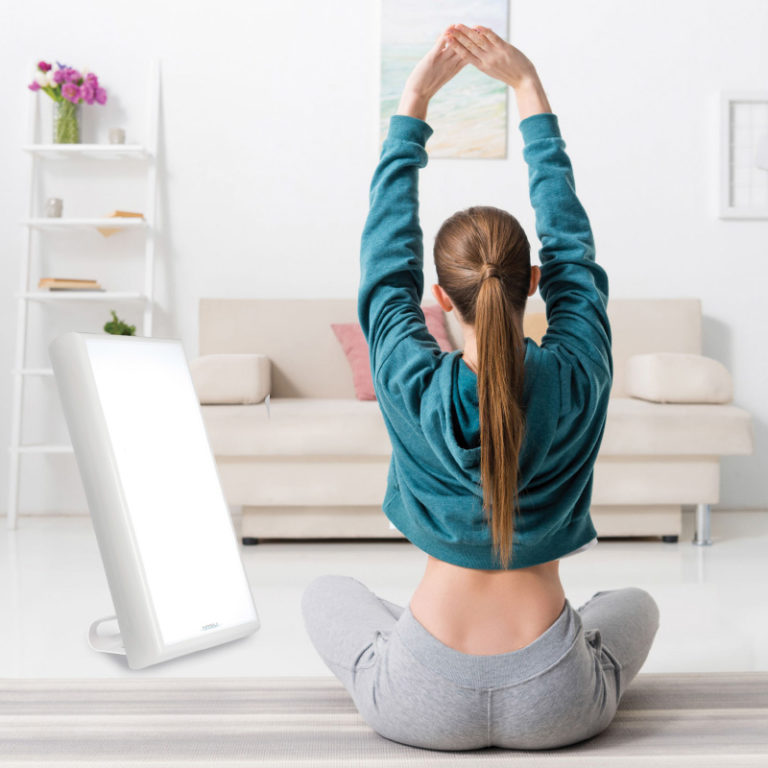
The most effective treatment for SAD, which is also already covered by health insurance in our inpatient facilities, is the so-called light therapy. It consists of patients staying in the morning for a precisely defined period of time near special radiators that emit light of very high intensity. Ideally, the light should be full-spectrum light, which is as close as possible to natural sunlight. In addition, light therapy also has positive effects for classic depression or eating disorders.
Full-spectrum light is also suitable for use in homes. At the same time, however, we should respect the natural alternation of day and night as much as possible and adjust the lighting accordingly.
PŘIHLASTE SE K ODBĚRU NOVINEK A MĚJTE VŽDY ČERSTVÉ INFORMACE
| Cookie | Duration | Description |
|---|---|---|
| cookielawinfo-checkbox-analytics | 11 měsíců | Tento soubor cookie je nastaven pluginem GDPR Cookie Consent. Soubor cookie se používá k uložení souhlasu uživatele s používáním souborů cookie v kategorii „Analytika“. |
| cookielawinfo-checkbox-functional | 11 měsíců | Soubor cookie je nastaven na základě souhlasu s cookie GDPR k zaznamenání souhlasu uživatele pro soubory cookie v kategorii „Funkční“. |
| cookielawinfo-checkbox-necessary | 11 měsíců | Tento soubor cookie je nastaven pluginem GDPR Cookie Consent. Cookies slouží k uložení souhlasu uživatele s cookies v kategorii „Nezbytné“. |
| cookielawinfo-checkbox-others | 11 měsíců | Tento soubor cookie je nastaven pluginem GDPR Cookie Consent. Cookie se používá k uložení souhlasu uživatele s cookies v kategorii „Jiné. |
| cookielawinfo-checkbox-performance | 11 měsíců | Tento soubor cookie je nastaven pluginem GDPR Cookie Consent. Cookie se používá k uložení souhlasu uživatele s cookies v kategorii „Výkon“. |
| elementor | nikdy | Tento soubor cookie používá téma WordPress webu. Umožňuje vlastníkovi webu implementovat nebo měnit obsah webu v reálném čase. |
| viewed_cookie_policy | 11 měsíců | Soubor cookie je nastaven pluginem GDPR Cookie Consent a používá se k uložení, zda uživatel souhlasil nebo nesouhlasil s používáním souborů cookie. Neukládá žádné osobní údaje. |
| Cookie | Duration | Description |
|---|---|---|
| sb | 2 roky | Tento soubor cookie používá Facebook ke kontrole svých funkcí, shromažďování jazykových nastavení a sdílení stránek. |
| Cookie | Duration | Description |
|---|---|---|
| _ga | 2 roky | Soubor _ga cookie, nainstalovaný službou Google Analytics, vypočítává údaje o návštěvnících, relacích a kampaních a také sleduje využití webu pro analytický přehled webu. Soubor cookie ukládá informace anonymně a přiřazuje náhodně vygenerované číslo k rozpoznání unikátních návštěvníků. |
| _gat_gtag_UA_71041054_1 | 1 minuta | Nastaveno Googlem k rozlišení uživatelů. |
| _gid | 1 den | Soubor cookie _gid nainstalovaný službou Google Analytics ukládá informace o tom, jak návštěvníci používají webovou stránku, a zároveň vytváří analytickou zprávu o výkonu webu. Některá data, která jsou shromažďována, zahrnují počet návštěvníků, jejich zdroj a stránky, které anonymně navštěvují. |
| Cookie | Duration | Description |
|---|---|---|
| fr | 3 měsíce | Facebook nastavuje tento soubor cookie tak, aby uživatelům zobrazoval relevantní reklamy sledováním chování uživatelů na webu, na stránkách, které mají Facebook pixel nebo sociální plugin Facebooku. |
| _fbp | 3 měsíce | Tento soubor cookie je nastaven společností Facebook, aby po návštěvě webové stránky zobrazoval reklamy na Facebooku nebo na digitální platformě založené na reklamě na Facebooku. |
| Cookie | Duration | Description |
|---|---|---|
| pvc_visits[0] | 1 minuta | Tento soubor cookie vytváří počítadlo po zhlédnutí. Tento soubor cookie se používá k počítání počtu návštěv příspěvku. Pomáhá také zabránit opakovanému zobrazení příspěvku návštěvníkem. |